
🔭 OVERSIGHT (or lack thereof) 👮🏼
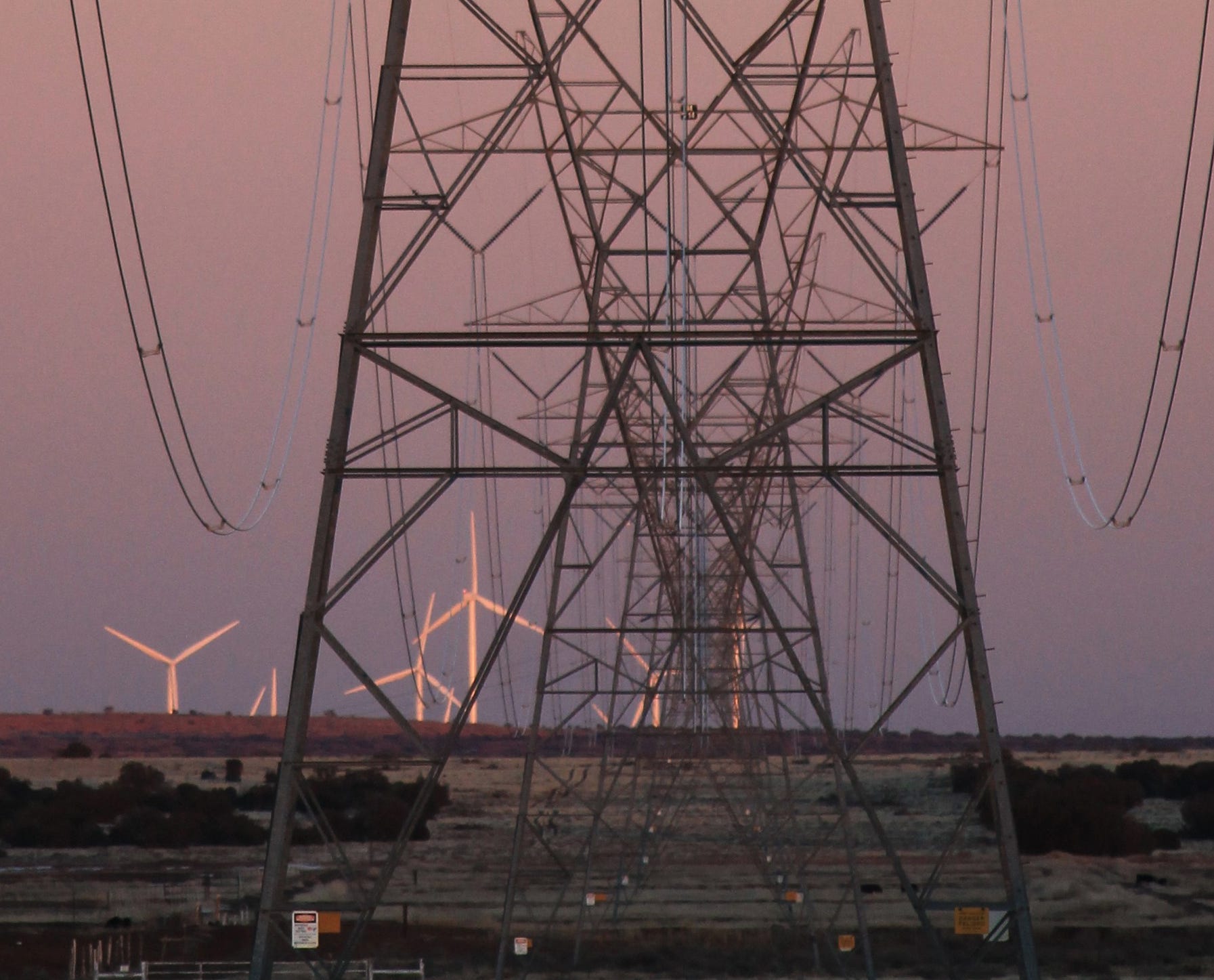
The Senate on Thursday voted 62-33 to pass the Bipartisan American Affordability and Jobs Act (BAAJA), or permitting reform bill, amid growing opposition from the environmental community and tribal nations, and waning support from Democrats. The vote sends the contentious legislation to the House.
The legislation, whose sponsors include Sen. Martin Heinrich (D-NM) and Sen. Mike Lee (R-UT), aims to remove federal permitting barriers to and provide more regulatory certainty for energy infrastructure development, especially the long-distance transmission lines clean energy advocates say are necessary to decarbonize the nation’s power sector. But it would also weaken bedrock environmental and historic preservation laws, would benefit fossil fuel projects as well as renewable ones, and could make it easier to build data centers on public lands.
I wrote an analysis of how BAAJA would “defang” these laws for High Country News, with an expanded, more detailed version at the Land Desk.

The rhetoric around the legislation reached a fevered pitch, especially within the larger environmental movement, with both sides resorting to hyperbole and personal attacks in the days and hours leading up to the final vote. To watch it all unfold on social media, a cynic might get the impression that the developers of the bill don’t care about permitting at all, and actually created it to inflame the smoldering conflict pitting Abundance adherents who believe building more clean energy is the only way to tackle the climate crisis, against those concerned about impacts of any development on front-line communities and the environment.
The pro-BAAJA side has portrayed the federal permitting system, especially the National Environmental Policy Act, or NEPA, as an impenetrable morass of red tape that has brought clean energy development, especially much-needed transmission, to a virtual standstill. This is clearly false. Dozens of very large, utility-scale wind and solar projects have been permitted on federal lands over the past two decades across the West, such as the Chokecherry Sierra Madre wind facility and the Gemini, Arlington, Oberon, Desert Quartzite, and Desert Sunlight solar installations, to name just a few.
Heinrich and other pro-BAAJAers hold up the SunZia transmission project’s 17-year permitting journey as evidence of why permitting reform is needed. Yet it is now under construction, for better or worse. Meanwhile, other major lines were also approved, including TransWest Express, Ten West Link, Gateway South, and Boardman-to-Hemingway.
The anti-BAAJA crowd has said the legislation will “gut” and “eviscerate” bedrock environmental laws (I may have used similar language) and would “supercharge” the data center boom, leading to “environmental catastrophe.”
In fact, the legislation would tweak and weaken NEPA, NHPA, the Clean Water Act, the Endangered Species Act, and make the General Mining Law even more permissive than it already is. Michael B. Gerrard, Andrew Sabin Professor of Professional Practice at Columbia Law School, described it as pulling “NEPA’s principal teeth,” by precluding the possibility of a court order blocking a project. While losing one’s teeth isn’t as bad as losing one’s guts, it does suck, and these changes would rob the public of their say over how its lands are managed.
BAAJA’s only data center-specific provision would require that data centers pay the full cost of associated grid and infrastructure upgrades to ensure that utility ratepayers are not stuck with the tab; even the most vehement anti-BAAJA groups like this aspect of the legislation.
Beyond that, it’s not clear that BAAJA would have much effect on data center development. So far, the Big Data Center Buildup has occurred largely outside the federal permitting system. The huge projects going up or being proposed all over the West, from Project Stratos to Project Jupiter to Valar Atomic’s Raceway Energy, are all on private or state land, and don’t have a federal component, meaning they are not subject to NEPA, meaning BAAJA would have no or little effect on them. Unless, that is, the facility requires a transmission line or gas pipeline or some other infrastructure that crosses federal land or affects Waters of the United States, and would therefore be subject to NEPA, NHPA, the CWA, and/or the ESA. In that case, the associated infrastructure, and therefore the data center itself, would benefit from BAAJA.
And, of course, if a developer were to formally propose a data center on public land, BAAJA would limit the public’s ability to block it. Only one data center project has formally been proposed for public lands, and the Trump administration simply ignored NEPA and any environmental review requirements and secretly gave it the go-ahead (which was later revoked). But other developers have expressed interest in public lands, and the administration has signaled its desires to hand those lands over to the developers, so this certainly could become an issue in the future, which is why Sen. Jeff Wyden introduced an amendment to the bill that would ban data centers on public land. It did not pass.
Et tu, Martin?
The internecine feud over the bill risks eroding environmental support for Democrats like Heinrich, who previously were known to stand up for public lands and tribal sovereignty. One Land Desk reader, in a comment, wondered what Heinrich’s motivations were, adding: “ … it seems like he is blowing up his previous environmental record with this … .”
I certainly can’t speak for Heinrich, nor do I have any desire to be an apologist for him, but from my perspective it seems that support for this bill is not only sincere, but is in line with his previous record on these issues.
The effort to streamline federal permitting to benefit clean energy has been underway for decades. During the early days of the energy transition, wind and solar developers in places like Wyoming and eastern New Mexico ran up against a lack of transmission capacity to get the energy from the windy and sunny spaces to the places it is needed, such as the urban Southwest. It’s one thing to build a big wind or solar installation on a patch of BLM land or private land, quite another to permit a 300-mile transmission line that crosses a dozen different jurisdictions. While the federal Natural Gas Act gives companies certain bludgeons to build interstate pipelines — including the power of condemnation, it doesn’t do the same for big transmission, and permitting a major project can take a decade or more.
That difficulty — and the need not only for more transmission, but also for an integrated Western power grid — spawned a movement aimed at developing long-distance power lines to facilitate solar and wind development. New organizations such as Americans for a Clean Energy Grid sprung up to support the effort, while some existing environmental groups got on board in a more limited fashion, such as the National Resources Defense Council and Western Resource Advocates. Heinrich, who was elected to the Senate in 2012, was one of the few federal lawmakers to really embrace this concept and to advocate for a 100% clean energy grid. He was a big proponent of the SunZia transmission line that carries wind power from New Mexico to the Phoenix area, and uses its interminable route to approval as evidence that permitting reform is necessary to achieve a clean energy transition and tackle climate change.
Heinrich has introduced and backed other legislation aimed at encouraging transmission development and grid modernization. The Biden-era Infrastructure and Jobs and Inflation Reduction acts allocated billions of dollars to transmission lines, and in September Heinrich introduced a bill that would incentivize new transmission development. Now some Biden administration officials have said that permitting delays prevented some of the subsidized projects from getting built before the Trump administration clawed back much of the funds, killing the projects altogether.
If one believes that a major and rapid transmission buildout is necessary to bring more clean energy online to tackle the climate crisis (and to keep the grid from collapsing under increased energy demand), and if one believes that the primary hindrance blocking these projects is an outdated and overly rigorous permitting process that favors lawsuit-filing advocacy groups, then it would logically follow that streamlining the process would require weakening or partially dismantling the legal framework governing that process. Or to mix some metaphors: You’ve got to pull some teeth, or at least file them down, to keep the beast from killing your project (even if it ultimately harms the beast).
I imagine Heinrich, an old-school, pragmatic Democrat who prides himself on bipartisanship, felt he was signing onto the best chance at reform he could get in a Republican-dominated Congress, even if it was deeply compromised. He was able to get the GOP to sign on to decent provisions on transmission, including the one requiring data centers to pay their own way, despite strong objections from the utility industry. He had been on this path for so long that when he reached a destination — even if it wasn’t the one he originally had in mind — he immediately and stubbornly staked his flag there, largely ignoring constituents’ and colleagues’ protests.
Heinrich and his colleagues introduced amendments aimed at making the legislation more palatable to tribal nations. While one made it into the bill, it was not enough, according to the National Congress for American Indians, which still called on the Senate to kill the entire legislation. A later effort to further amend the bill was blocked, sparking yet another conflict between environmental and tribal advocates.
In doing so, he basically threw his lot into the same bet all of the environmentally minded, pro-BAAJA side is making: That the climate benefits of a clean energy buildout under a reformed permitting system will offset resulting direct harms to front-line communities, the landscape, the water, and the air. It’s a gamble, maybe even an act of faith, faith that when put on a level playing field, clean energy will always win out over fossil fuels, and a faith that even a weakened, toothless system will continue to protect the nation’s natural and cultural resources, even though it’s overseen by an ethically compromised administration. It’s a big and perilous leap, and we’ll all be forced to pay if Heinrich loses the bet.
Earlier this week, Heinrich sat down for an interview with The Hill’s Alex Bolton and they got to talking about the SunZia transmission project. Heinrich’s statement provides some insight into how his skewed view of how the project unfolded determines how he sees the permitting process:
“My guess is that project could have probably been completed in five or six years as opposed to seventeen. That’s a big, big difference, and, you know, that’s a project that I would argue was one of the best-designed projects because the developers actually listened. They avoided the places I warned them were, you know, were to be avoided for other values. We are a big public land state. People love their wilderness and their wilderness study areas, their refuges, and so they were very smart about how they designed the transmission route. It was a clean energy project. They came in and they actually protected a bunch of habitat in order to compensate for the impacts that building has. And yet, if you have all the boxes checked, like this is one of the best-designed projects that I’ve had to engage with, and it still took 17 years.”
Heinrich has it backwards here. SunZia was not a well-sited project that got delayed by the permitting process, it was a mediocre project that was vastly improved by the rigorous and long permitting process. If BAAJA becomes law, it would allow developers to skirt the very framework that ended up making the SunZia one of the “best-designed” projects Heinrich worked on.
🤖 DATA CENTER DIGEST 👾
Carbon County, Utah’s commissioners approve a conditional land-use permit for Valar Atomic’s proposed Raceway Energy Campus and data center complex on 640 acres of state land east of Price. The complex — which still requires state permits — would include data centers with a combined power load of 2.1 to 3.5 gigawatts; a gas-fired power plant; 40 to 120 small modular nuclear reactors; nuclear fuel fabrication facilities; and a spent nuclear fuel depository (i.e. a radioactive waste dump). This is a smaller version of Valar’s Project Beehive, which the Land Desk reported on in early October. (Salt Lake Tribune, Valar Atomics)
🌵 PUBLIC LANDS 🌲
The Native American Rights Fund files two lawsuits on behalf of five tribal nations challenging President Donald Trump’s proclamations shrinking Bears Ears and Grand Staircase-Escalante national monuments. “Once again, the Trump administration is trying to revoke these National Monuments, this time by disregarding Tribal sovereignty and again in violation of federal law,” said NARF Deputy Director Matthew L. Campbell. “The Antiquities Act of 1906 authorizes the president to declare national monuments. It does not give the president the power to revoke existing monuments. That power lies with Congress alone. The court should block implementation of these unlawful directives.” (NARF)
The San Juan National Forest acquires 320 acres of previously private land on Lizard Head Mesa north of Rico in southwestern Colorado from The Conservation Fund. The newly public parcel is less than 1/4 mile from the Lizard Head Wilderness. “This purchase fills in the map on one of the truly amazing places on the Dolores Ranger District,” said Nick Mustoe, Dolores District Ranger for the San Juan National Forest. (San Juan National Forest)
The Bureau of Land Management seeks public input until Dec. 14 on a proposal to expand Class 1 e-bike access on designated mountain bike trails in the Colorado River Valley Field Office in western Colorado. (BLM)
🌨️🦦🚣🏽 WATER WATCH 🌊
A reader wondered whether this year’s deluge marked the largest ever non-snowmelt flows into Lake Powell. It’s a little too early for a definitive answer, but this year’s October inflows — 1.28 million acre-feet — were, much to my surprise, slightly behind October 2006’s (1.3 MAF), according to the Bureau of Reclamation’s Lake Powell dashboard. I was skeptical, since I don’t remember any big floods in the autumn of 2006. So I checked the flows for that month in the San Juan and Colorado rivers and they were, indeed, quite high in early October that year. This year, of course, the deluge did not end in October, so it’s almost certain that this year’s combined October-November inflows will far exceed any other year’s autumnal flows. Check back at the end of the month for the reveal! (USBR, USGS)
Residents of Lower Moencopi, a Hopi village near Tuba City, Arizona, work to recover from multiple bouts of devastating flooding of fields and homes over the last two months. (Arizona Republic)
Farmington, New Mexico, rafting company Desert River Guides employees report rescuing stranded and trapped pets and sheltering more than 45 dogs — plus chickens, rabbits, and cats — amid the recent flooding in the area. (KOB)
Good interview about the flooding in San Juan County, New Mexico, which came not only from the San Juan River, but also the Animas, the La Plata, and Largo Canyon:
Arizona utility Salt River Project estimates its reservoir system captured about 370,000 acre-feet, or 120 billion gallons, of water during the recent flooding after combined inflows into Roosevelt Lake from the Salt River and other streams peaked at about 145,000 cubic feet per second. (SRP)
Sampling shows e. coli levels in the San Juan River and Cottonwood Wash near Bluff, Utah, shot up to 10 times the health advisory threshold levels in the wake of late October and early November flooding. Levels of the waterborne pathogens have dropped in the river, but officials warn that mud and water deposited during flooding may still be contaminated. (ABC4)
Journalist Mitch Tobin, on his snow.news Substack, has an excellent photo essay of the Durango-area flooding and its aftermath. (snow.news)
🥵 ARIDIFICATION WATCH 🐫
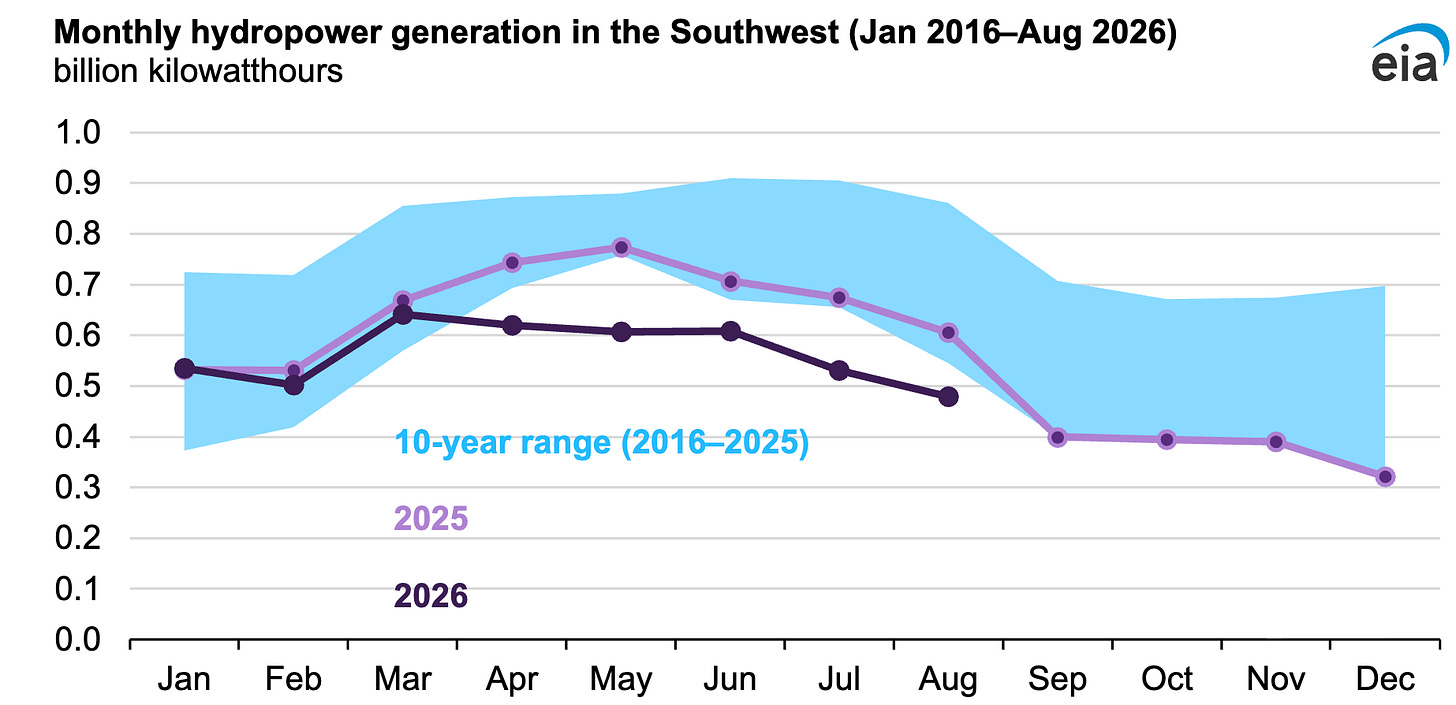
Federal data show persistent drought and aridification in the Southwest shrunk rivers and reservoirs and led to record-low hydropower output from dams and other facilities in 2026. The Energy Information Administration found that hydropower generation from April through August 2026 was down 19% from the previous year, and 28% lower than the ten-year average. The region’s two largest generators — Glen Canyon and Hoover dams — led the losses. (EIA)
🛢️ FOSSIL FUEL FOLLIES 📈
The Environmental Integrity Project identifies 193 proposed or under-development pipelines nationwide, totaling 17,000 miles, including ones in Colorado, Utah, Montana-Wyoming, Nevada, Arizona, New Mexico, and California, representing the largest pipeline capacity expansion since the early days of the “fracking” boom two decades ago. These pipelines will be facilitated not only by the Trump administration’s deregulatory agenda, but also by the BAAJA permitting reform bill, if it passes as currently written. And they’re being built even as the Trump administration’s Pipeline and Hazardous Materials Safety Administration (which is overseen by Transportation Secretary Sean Duffy) has been weakening pipeline safety rules. In 2025, the PHMSA initiated the fewest enforcement cases on record, and early this year a policy directive ordered regulators to “refrain from taking any enforcement action” against pipeline companies in Alaska and on the West Coast seeking waivers from some safety rules. (EIP)
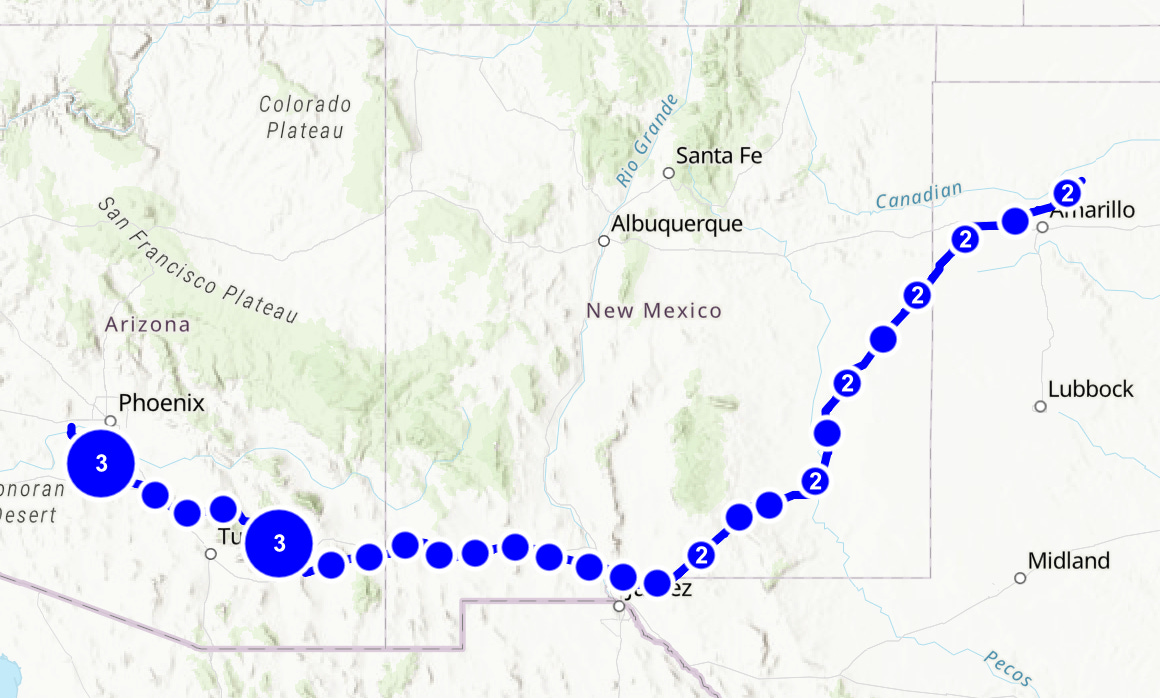
The Bureau of Land Management launches its environmental review of the proposed 887-mile Western Gateway petroleum pipeline that would run from Borger, Texas, to Buckeye, Arizona, crossing vast swaths of public land on the way. The line is being developed by Phillips 66, Kinder Morgan, and HF Sinclair to carry refined fuels to California and the Southwest. Initial public scoping comments will be accepted until Dec. 17. (BLM, Albuquerque Journal)
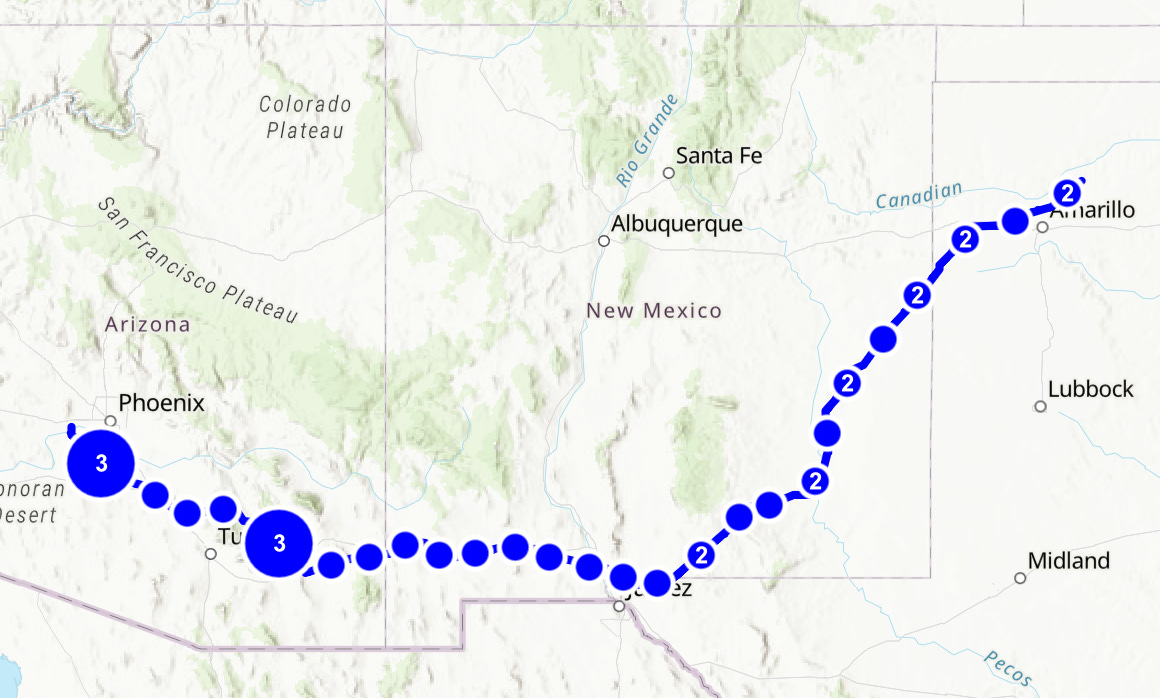
The proposed Western Gateway petroleum pipeline’s route. Source: BLM. Trammell Crow proposes a 1,050 MW gas-fired power plant and microgrid project near Los Lunas, New Mexico. The firm says it has not secured a customer for the power, but many residents suspect it would be a data center; Meta has a facility in Los Lunas that it is in the process of expanding. (KOAT, Data Center Dynamics)
📸 PARTING SHOT 🎞️