


⛏️ MINING MONITOR ⛏️
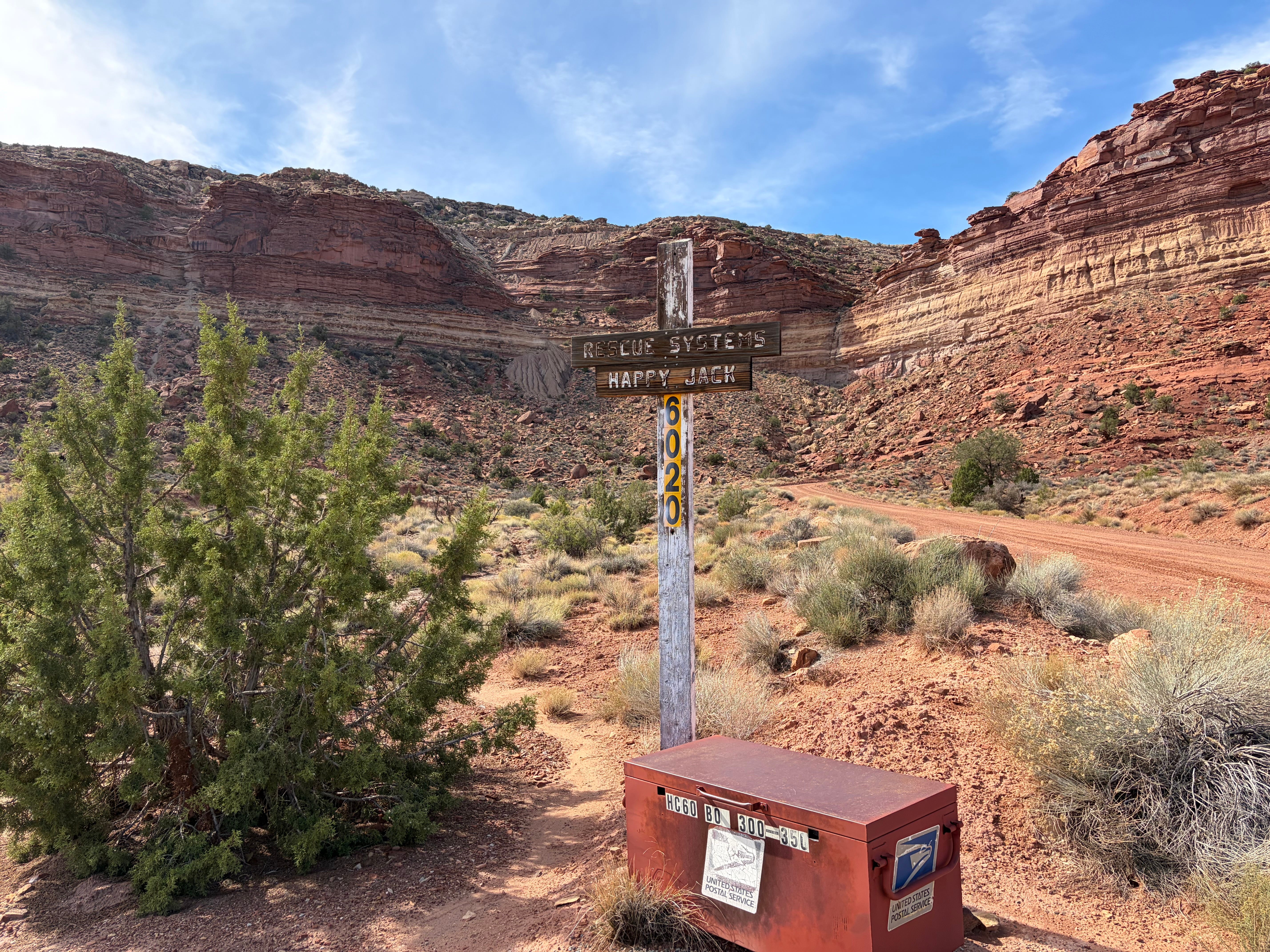
The rush to stake mining claims in areas removed from Bears Ears National Monument in July continues, even as more lawsuits are filed challenging the legality of President Donald Trump’s shrinkage of the monument.
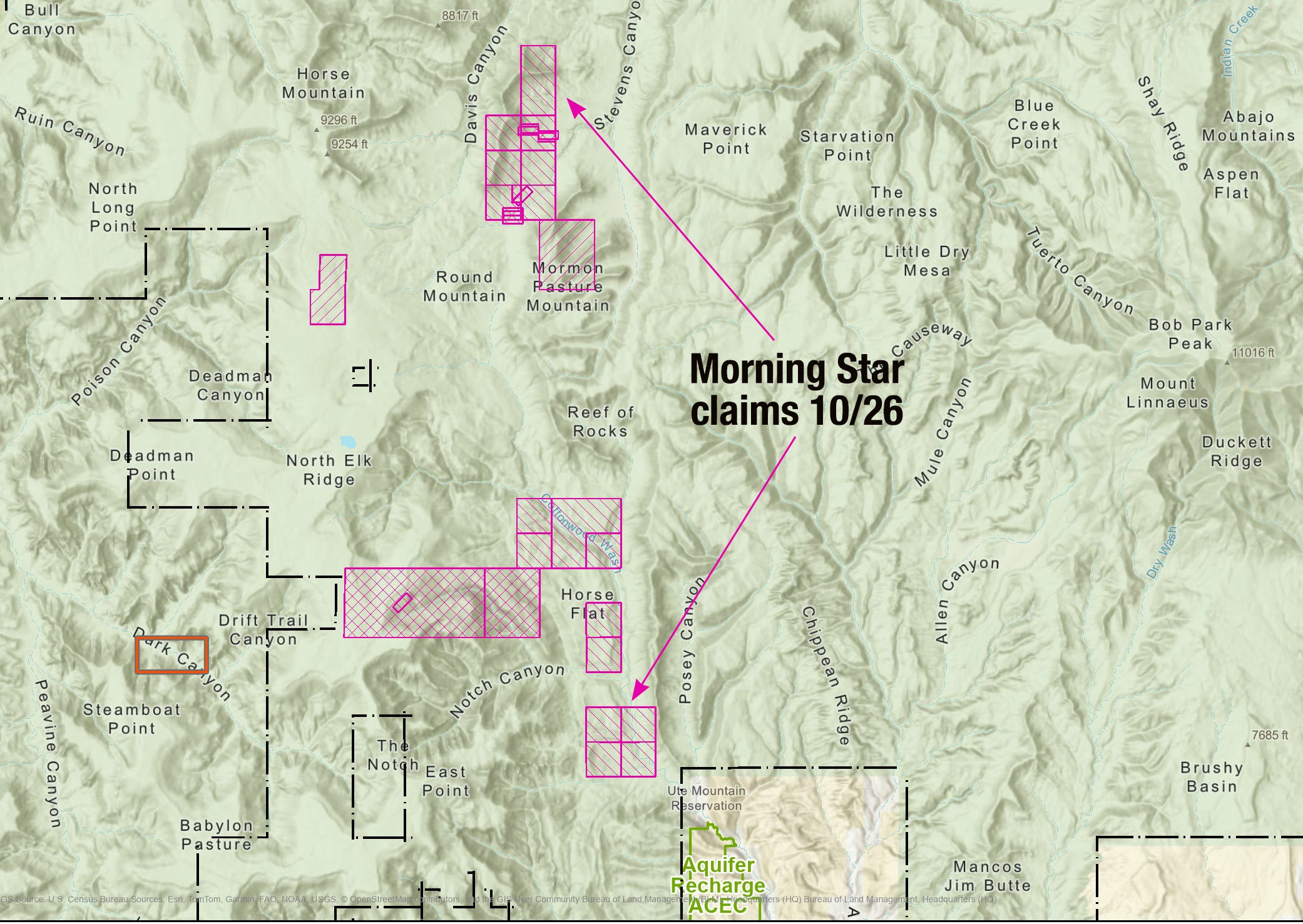
Last month, an entity calling itself Morning Star filed 16 new 20.66-acre lode claims within the original BENM boundaries, and two additional claims just east of the boundary. This brings the grand total of new claims staked since the shrinkage took effect on Sept. 11 to 88. Fifty-two of those have been filed with the BLM. An additional 36 were filed with the San Juan County Clerk, but have yet to be added to the BLM’s database.
Morning Star’s new claims are in four different clusters. One is in the White Canyon drainage on Wingate Mesa; another is between Davis and Stevens Canyons adjacent to a cluster of new claims filed in September by Land Survey Associates; and a third is in the North Cottonwood Creek drainage west of Posey Canyon just outside the Allen Canyon Ute Mountain Ute land. The fourth cluster is about one mile outside of the original BENM boundaries and east of Cottonwood Wash.
As is often the case with mining claimants, Morning Star is somewhat enigmatic, and could very well be acting on behalf of a different entity. It provides only a residential Blanding address on its BLM filing and no other information.
Its certificate of location filed with San Juan County is signed by Ben Carden, apparently Morning Star’s agent, as well as Kelly Dearth. While I could find no link between Carden and any mining activity, I did find that a Kelly Dearth was an officer with NX Uranium up until 2018, when the firm abandoned the mining business and went into cannabis production. Dearth appears to have been involved with a Morning Star Inc. out of Grand Junction, though that entity is no longer registered with the state.
The Diggings, a comprehensive mining website, lists Kelly Dearth of Grand Junction as the claimant on 38 active mining claims in Emery County, Utah, and another 13 in San Juan County.
These new claims appear to be Morning Star’s only active claims on BLM land, though other firms with the same name but different address have held claims elsewhere in Utah in the past. (BLM, San Juan County, The Diggings)
Wyoming-based DISA Uranium, the newish firm that uses something called high-pressure slurry ablation to extract minerals from old waste dumps, is working to stake its own sort of claim on the Four Corners landscape.
It has touted numerous agreements with other firms to reprocess their waste dumps and hopes to use its process at abandoned mines on the Navajo Nation. So far, however, it has only been fully permitted for one project, at the Mary Ann Mine on BLM land in western Colorado. It invited local, regional, and tribal leaders and pro-nuclear advocates to a site visit in late October to promote its patented technology.
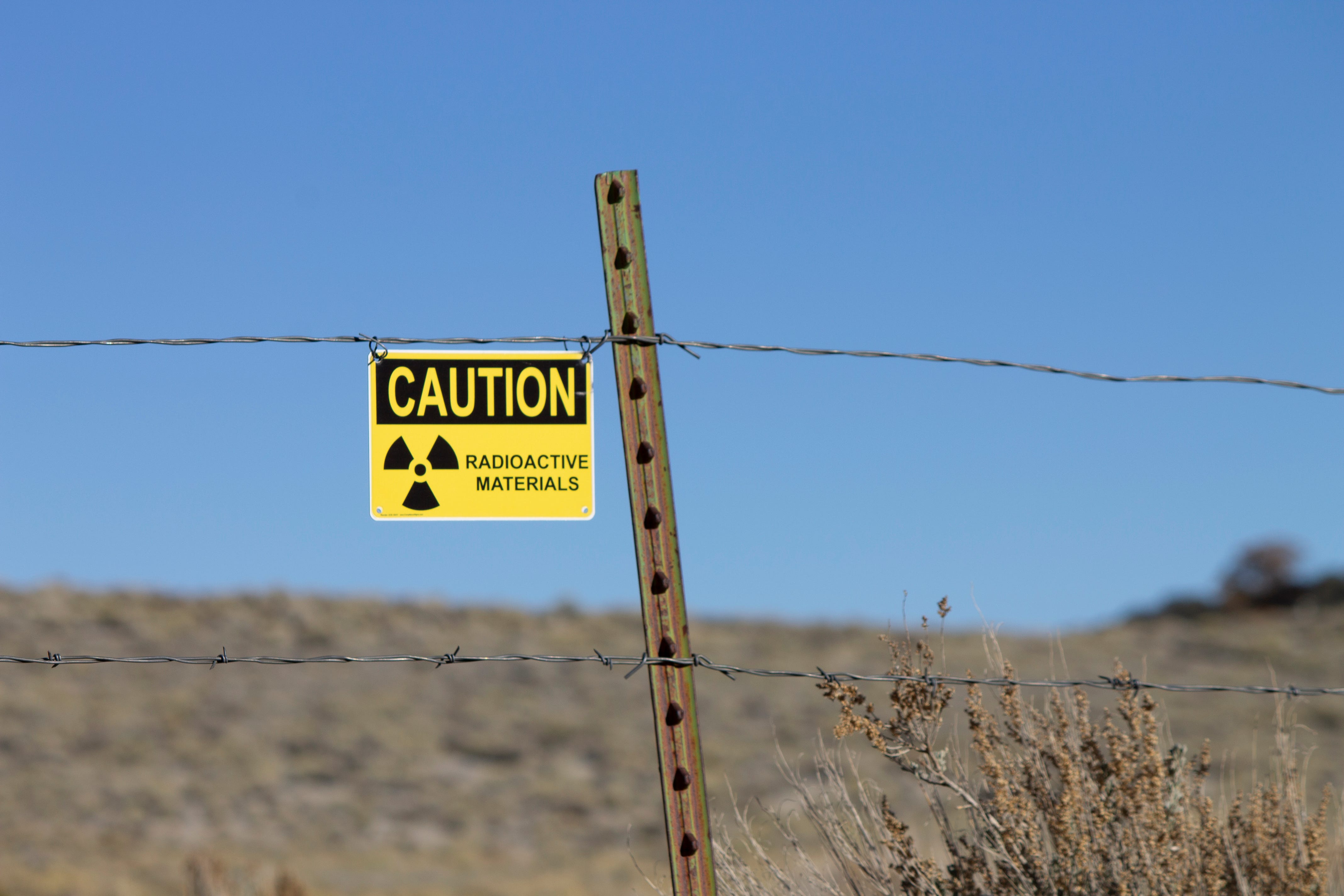
Now the company is proposing to construct its own conventional uranium mill in the Lisbon Valley in southeastern Utah. The preliminary location would be at the defunct and reclaimed Rio Algom Lisbon Valley Mill, where a plume of contaminated groundwater continues to spread out from the large tailings depositories still at the site.
The concept is in its very early stages, and the company hasn’t formally initiated the permitting process with federal or state agencies yet, according to Sarah Fields, of Uranium Watch. Energy Fuels’ White Mesa mill near Blanding, Utah, is currently the only operating uranium mill in the U.S.. Anfield Energy has said it hopes to reopen its Shootaring Mill near Ticaboo, but the timeline keeps getting pushed back (it is now shooting for 2028), and Western Uranium and Vanadium has proposed new mills in both Green River and in the Paradox Valley in Colorado, but has not made any progress on either venture.
DISA merged with IsoEnergy in August to form DISA Uranium, with Iso bringing its Tony M, Diners, Rim, Sage Plain, and Flatiron mines to the partnership. The company has received backing from the likes of BHP Ventures and Halliburton Labs.
Thirty-six of the new mining claims staked by Land Survey Advisors in areas removed from Bears Ears National Monument were on historic mining sites with associated waste piles, leading to speculation that DISA is behind the claims. DISA did not respond to Land Desk queries concerning the matter.
The Atomic Safety and Licensing Board grants New Mexico’s Justice Department’s petition to intervene in Laramide Resources’ application to renew the Crownpoint Uranium Project’s federal license for its in-situ operations near Crownpoint and Church Rock. This is considered a victory for advocates and residents opposed to the project, which would occur near the site of the disastrous 1979 Church Rock Uranium Mill spill that contaminated the Rio Puerco and associated groundwater wells for miles downstream. “This is a significant and unprecedented step forward in holding uranium mining companies accountable for the risks their projects pose to New Mexico communities,” said New Mexico Attorney General Raúl Torrez. (NM DoJ)
Gamma Resources stakes an additional 12 mining claims at its Mesa Arc uranium project in the Chama Basin in northern New Mexico, bringing its total landholdings to 238 lode claims covering about 4,760 acres of national forest land. Although only in its exploratory phase, the project has elicited strong local and regional opposition. (Junior Mining Network)
Anson Resources says it has completed permitting for its Green River lithium extraction project, allowing the company to move into the financing phase and conduct its definitive feasibility study. (TipRanks)
Southwest Wyoming braces for an economic blow as WE Soda announces it will lay off 350 workers from its trona mine and soda ash complex in Sweetwater County as it transitions from underground mining to less labor-intensive drill-and-pump extraction methods. The London-based firm blames a soda ash glut caused by product from China and Mongolia flooding the global market. (WyoFile)
🤖 DATA CENTER DIGEST 👾
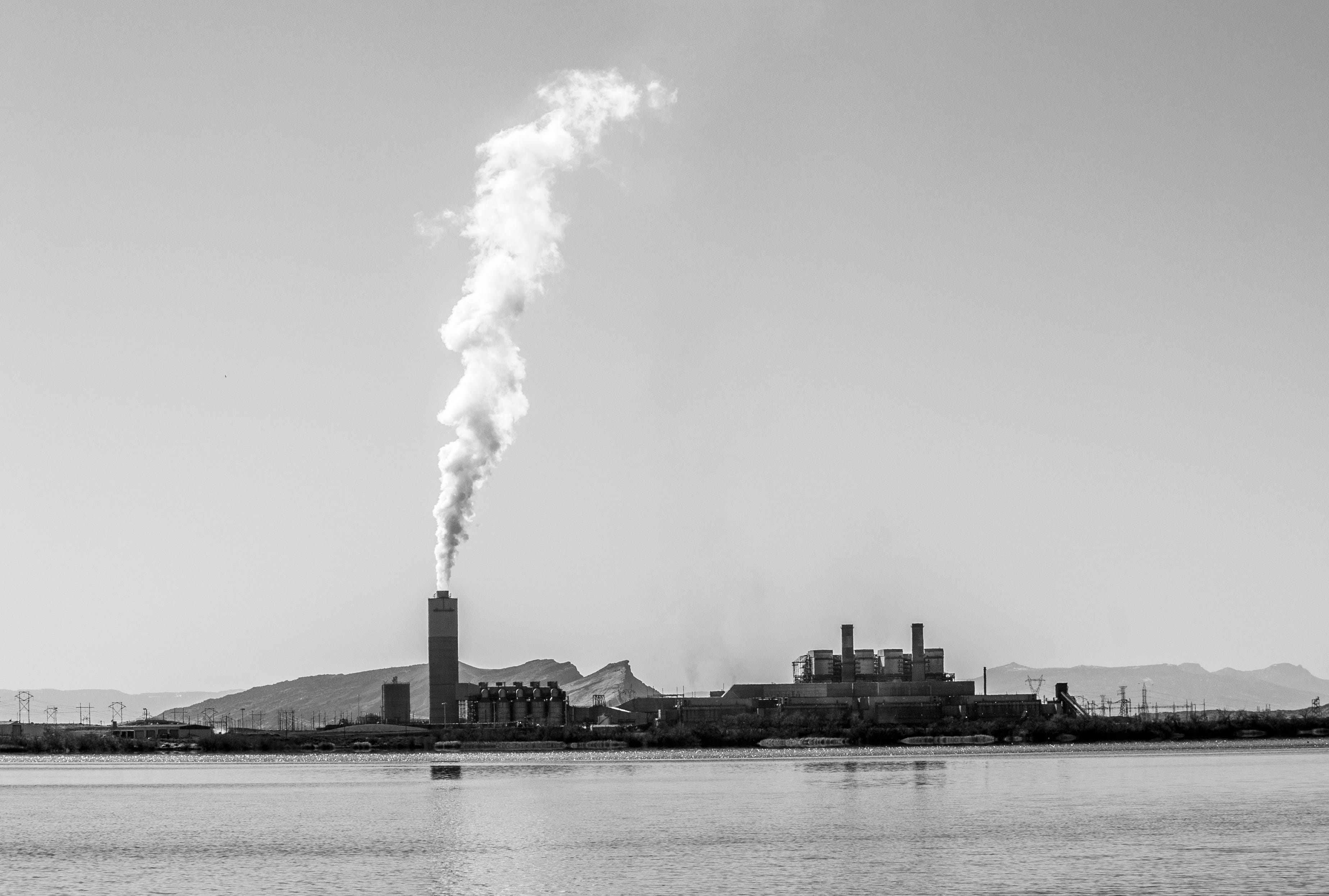
The Navajo Tribal Utility Authority looks to develop a “multi-function energy park” on almost 600 acres in the Nenahnezad Chapter of the Navajo Nation in northwestern New Mexico adjacent to the Four Corners coal plant. The proposed project would include a data center, a natural gas plant, a solar-plus-battery-storage installation, and an advanced energy component manufacturing facility. The Navajo Nation Tribal Council is expected to take up the issue in coming weeks. Diné CARE has pushed back on the proposal, raising concerns about water and energy use, and the climate and air quality impacts of the gas plant. (Diné CARE, Searchlight New Mexico)
🐟 COLORADO RIVER CHRONICLE 💧
The Center for Biological Diversity plans to file a lawsuit challenging federal operations at Glen Canyon Dam, saying they are violating the Endangered Species Act by imperiling native Colorado River fish. Lower reservoir levels increase the risk that nonnative, warm water fish will escape Lake Powell and enter the river downstream from the dam, where they compete with and prey on endangered native fish. Yet federal dam operators have ceased “cool-mix flows” designed to limit invasive fish reproduction downstream from the dam, choosing instead to send all releases through the hydroelectric turbines. That could further harm the humpback chub and razorback sucker. (Center for Biological Diversity)
🦫 WILDLIFE WATCH 🦅
The National Park Service partners with the BLM, Utah’s Division of Wildlife Resources, and Utah State University on a comprehensive study of desert bighorn sheep — including disease, population, and habitat — in and around Arches, Canyonlands, and Capitol Reef national monuments in southern Utah. (The Insider)
🛢️ FOSSIL FUEL FOLLIES 📈
Transwestern, an Energy Transfer subsidiary, proposes the 124-mile Springerville Lateral natural gas pipeline project stretching from around Thoreau, New Mexico, to the Coronado and Springerville coal plants in eastern Arizona. The line, which is in the pre-filing phase with the Federal Energy Regulatory Commission, is designed to support Salt River Project’s conversion of the plants to run on methane rather than coal. It would cross the Zuni Mountains, pass just west of El Morro National Monument, and skirt around Zuni Pueblo land. The project and others like it would benefit from the permitting reform legislation making its way through Congress. (FERC)
🏠 RANDOM REAL ESTATE ROOM 🤑
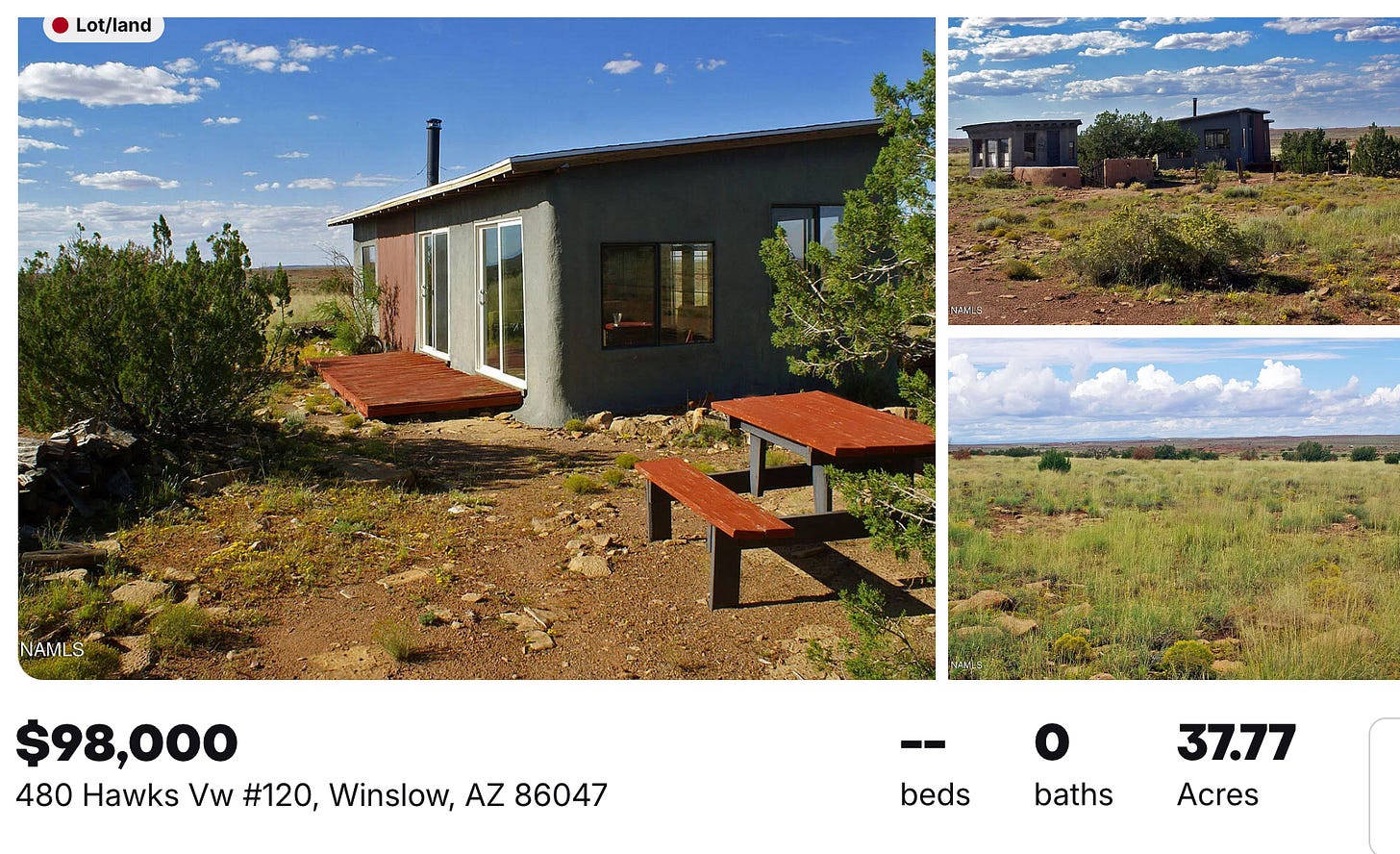
That old procrastination-hobby of mine — surfing Zillow in search of affordable and not-so-crappy housing in the West — has mostly lost its shine in these gentrified days. The lowest priced housing in even the old affordability strongholds is usually in the $200k to $300k neighborhood. But every once in a while you can still stumble onto a slightly affordable gem, as long as being off-the-grid, in the middle of nowhere, is appealing. Here’s one that’s in the desert south of Winslow, Arizona, that’s being peddled as a glamping retreat. Screw that, it’s a pretty nice home, if you ask me, with 38 acres to boot. And it comes in just under $100,000 — a rarity in this day and age. (Zillow)
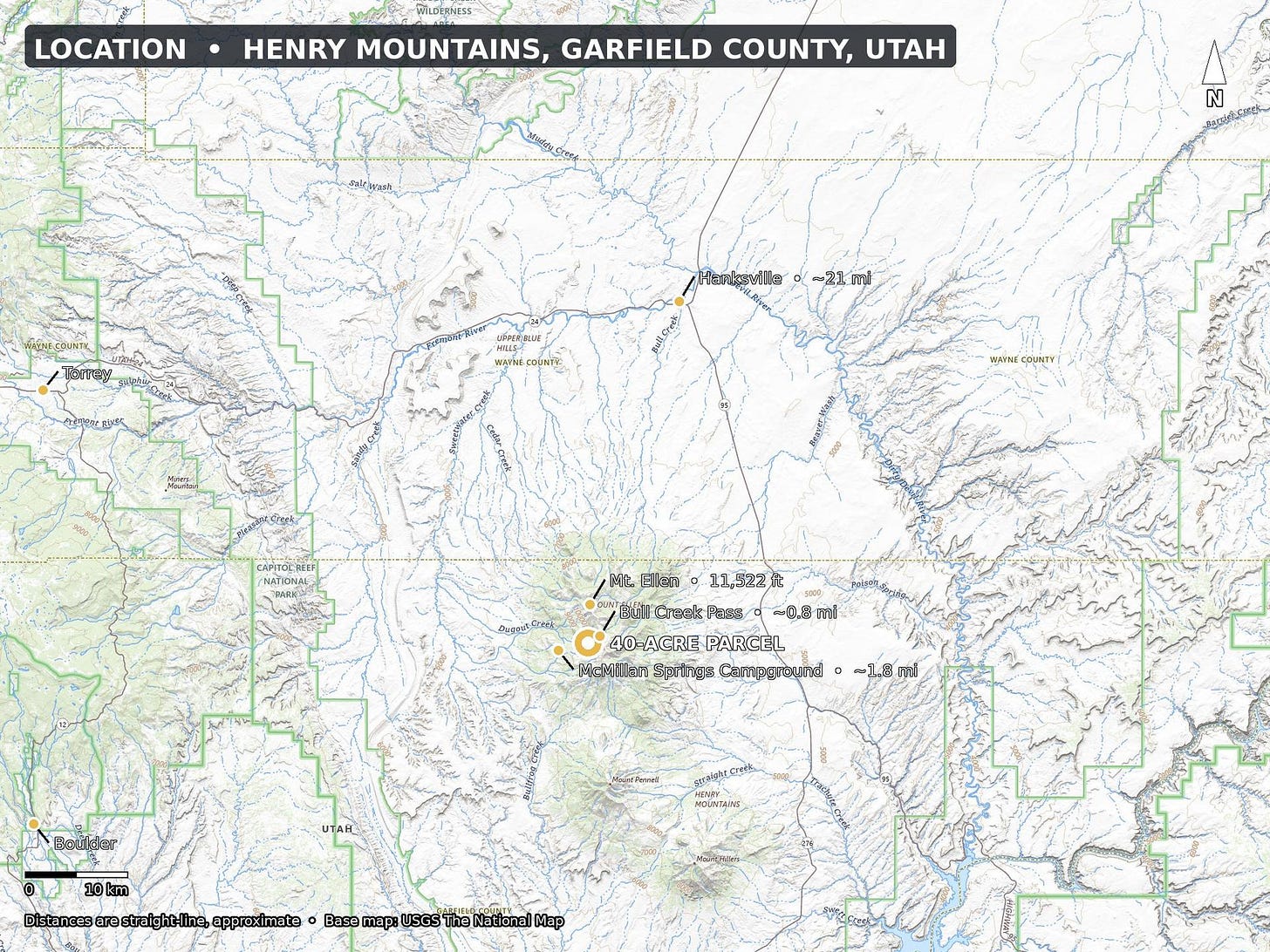
I’m always a little taken aback when I see a parcel of land for sale in a place like the Henry Mountains in southern Utah. It just doesn’t seem right that anyone could own a piece of that landscape, let alone sell it for cash. But what should be is often not the same as what is, and actually there are quite a few blocks of private and state land in the Henries, along with oodles of unpatented mining claims, and one 40-acre plot south of Mt. Ellen is for sale for $44,900. (Exp Realty)
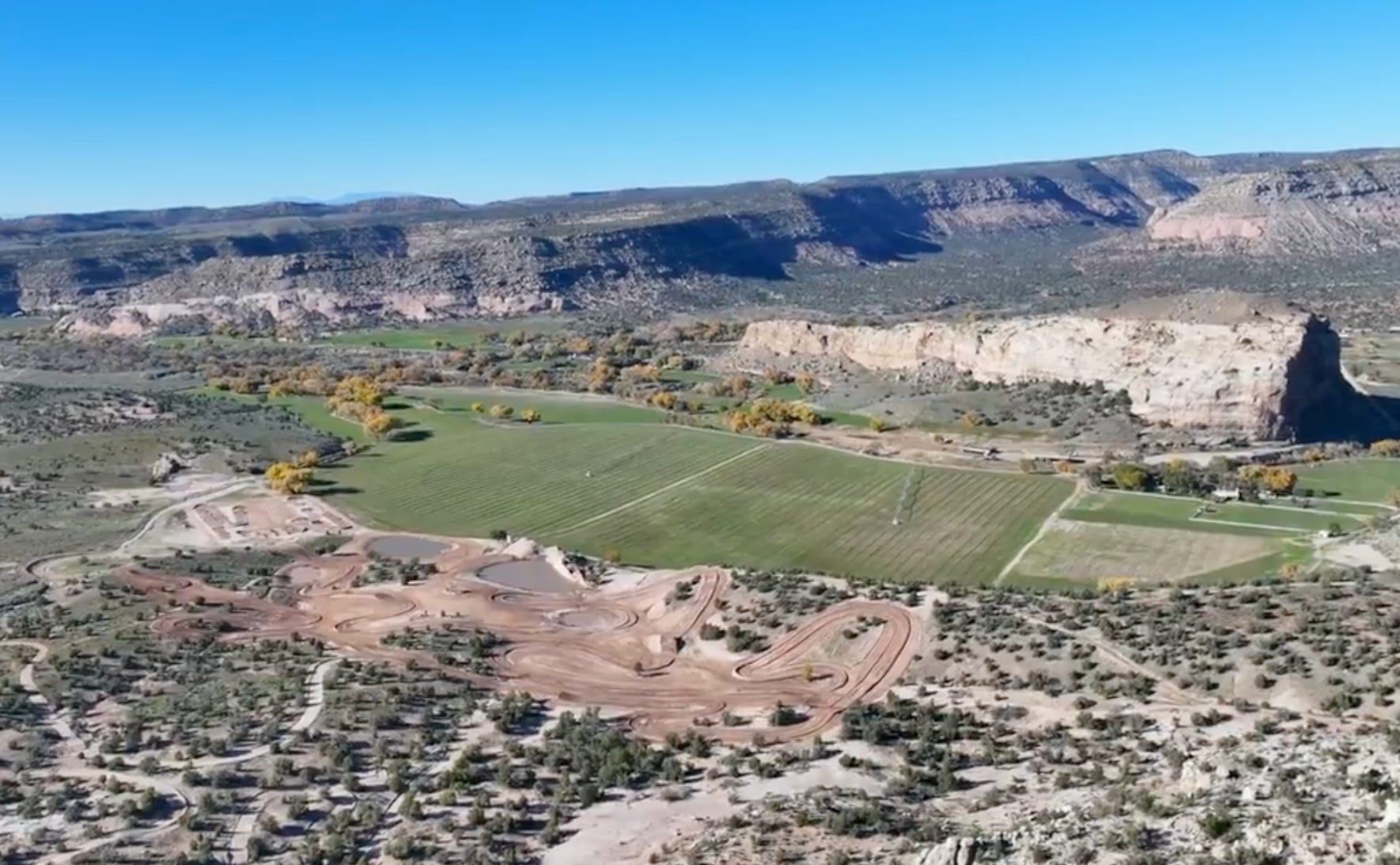
Oh, and if you happen to have an extra $7.5 million lying around, you can be the next steward of 800 acres in McElmo Canyon. It’s not just any ol’ ranch, either, it’s mountain bike legend John Tomac’s Flying T ranch, complete with a motocross track, a trail network, a huge workshop, a vineyard, a hay operation, and a fancy house. If you happen to buy it, you could donate (tax deductible!) a little corner to the Land Desk for its HQ. Just saying. (Sotheby’s)
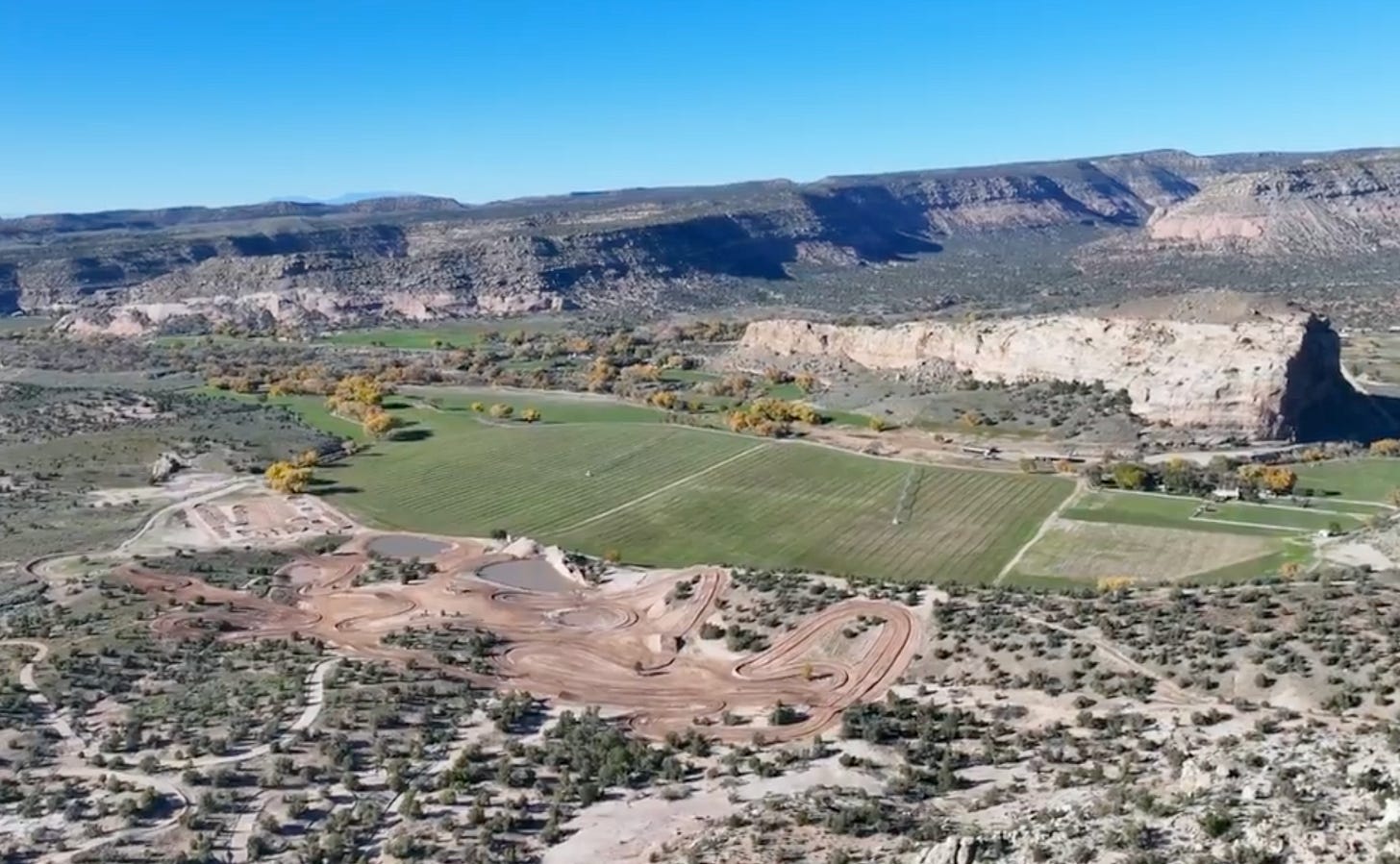
Screenshot from Sotheby’s real estate listing for John Tomac’s Flying T ranch in McElmo Canyon, Colorado.


📸 PARTING SHOT 🎞️
Damn! You sure know how to do research!
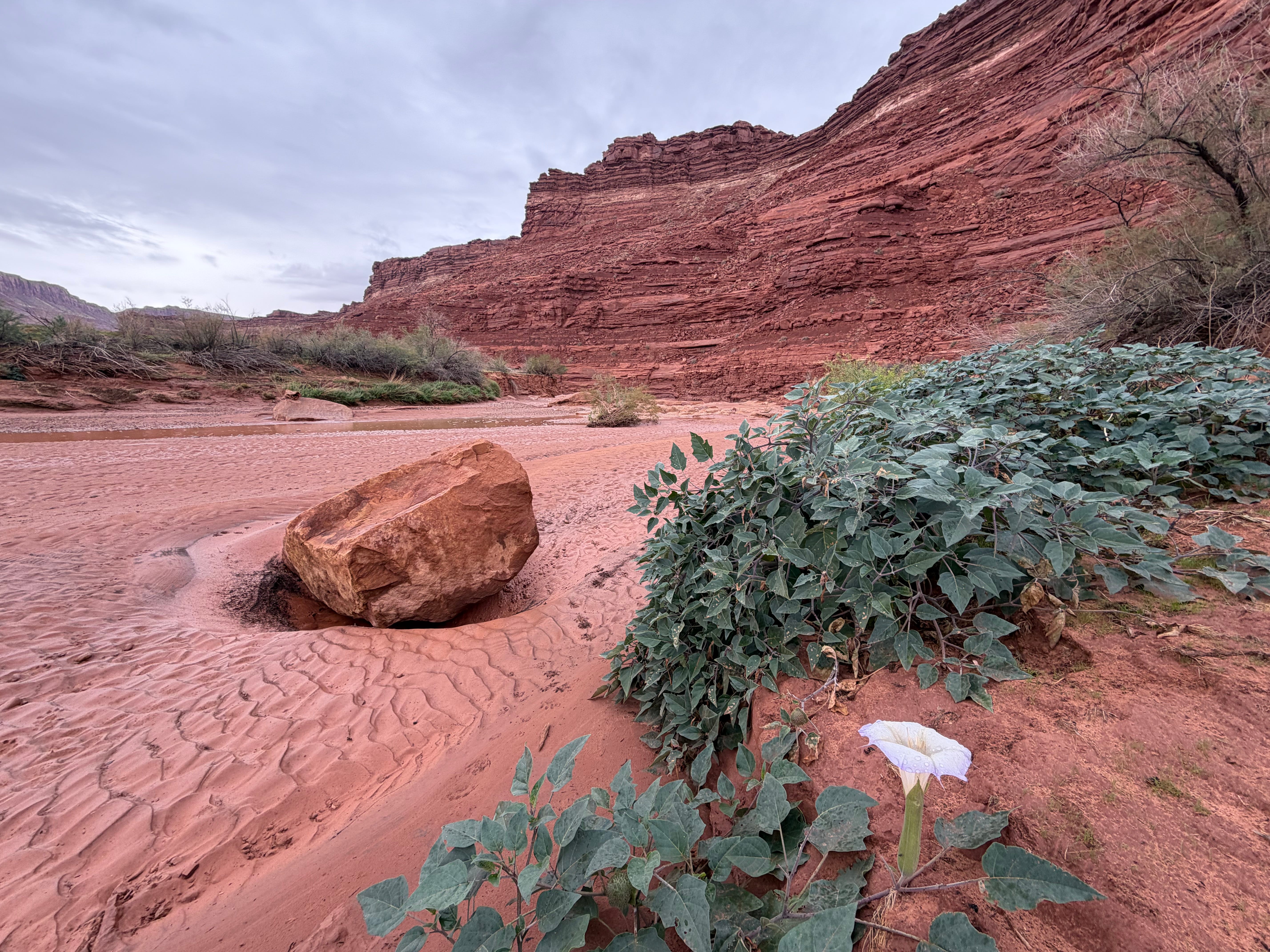
A couple of years ago, after a long drive across the desert and the up the west slope of the Henries above McMillan Campground, I was startled to see a standard real estate for sale sign just below the pass, just like the ones in my city neighborhood.