

Hey, guess what! I friggin’ hate putting Tr*)*p in the headline of this newsletter once again. It makes me nauseous. But the thing is, his administration has significantly stepped up its attacks on the environment, public lands, and wildlife over the last few months. I don’t know if this is an attempt to distract from ridiculous wars and crazy gasoline prices, or if it’s a rush to roll back as many protections as possible before the midterms. Whatever it is, I have to respond and cover the news, especially when it’s as big and consequential as today’s.
🦫 Wildlife Watch 🦅 🐓 Regulatory Capture Chronicles 🦊
Last week, U.S. Fish and Wildlife Service Director Brian Nesbit sent out a memo to directing agency leadership to effectively eviscerate the Endangered Species Act by exempting industry from its purview, leaving imperiled wildlife vulnerable to slaughter and even extinction, so long as the action wasn’t “intentionally directed against a particular animal or animals.”
The Endangered Species Act declares it “unlawful for any person” to “take” — meaning to harass, harm, pursue, hunt, shoot, wound, kill, trap, capture, or collect — any species listed under the ESA. Since the law was passed in 1973, “take” has always been unqualified and absolute, meaning that killing or harming one of these animals is illegal whether the animal is targeted or not. This not only protects the animals from hunters, say, but also from industrial activities that may incidentally kill protected species.
The Sept. 14 memo, however, directs the agency to adopt U.S. Supreme Court Justice Antonin Scalia’s interpretation of “take” in his dissenting opinion on a 1995 case, where he wrote that “take is a term of art” that “describes a class of acts (not omissions) done directly and intentionally (not indirectly and by accident) to particular animas (not populations of animals).”
Scalia expanded by writing that setting out poison with the intention of killing a wolf or other particular animal or chopping down a tree in which a bird is nesting would be a take if the “actor acted to reach the animal.” He then went on:
“When that purpose is absent, there is no take, however serious the resulting injury may be. A vessel that inadvertently strikes a whale has not taken it, because the vessel’s course was not set against the whale. Felling a tree is not a take of the bats roosting in it unless the tree is felled for the purpose of killing or capturing them. In each instance the conduct is directed at the water or at the timber and reaches the animal only ‘indirectly and accidentally.’”
What this means is that hunting and killing a Valley Dixie toad to eat it would be a prohibited take. Wiping out the entire species with a lithium mine or geothermal operation would not constitute a take under this new interpretation because it isn’t targeting a specific animal. Therefore it would be acceptable under the ESA. The Trump administration gutted the Migratory Bird Act in a similar fashion last year.
To be clear, industry has killed endangered wildlife and migratory birds even under the stricter interpretation of “take.” But the prohibition on doing so, and the sometimes substantial fines that go along with it, incentivize industries to take measures to avoid incidental takes.
The new interpretation essentially gives industry carte blanche to harm or kill endangered species without accountability or recourse and reduces the ESA to no more than a ban on hunting certain species of wildlife. If this directive holds, the consequences will be dire.
🌵 Public Lands 🌲

President Donald Trump’s unlawful shrinkage of Bears Ears and Grand Staircase-Escalante national monuments went into effect Sept. 11. That same day, two separate parties filed 16 new mining claims with the San Juan County recorder in the reopened areas (but they are not yet in the BLM’s records).
George W. Schultz filed three claims in the Lockhart Basin area, which is on the northern end of the pre-shrinkage monument below and north of Needles Overlook. And Kimmerle Mining staked 13 claims in the Cottonwood Creek drainage near the Cheese & Raisins Hills (they had previously filed seven claims in that same area).
Schultz owns and operates a Jeep tour outfit in Moab and is active in the off-road vehicle advocacy community. His father was a geologist who staked dozens of claims in southeastern Utah, and the younger Schultz has also staked claims in the past, including several inactive ones in Lockhart Basin, near the new ones. While the area had a few prospects, it was not an especially active area for uranium mining historically.
The Kimmerle family and its various firms hold hundreds of mining claims across southern and eastern Utah, including several within Bears Ears National Monument. Kyle Kimmerle proposed mining unpatented claims within the monument, but did not go through the process of proving the claim’s validity that was a prerequisite for obtaining an operating permit. Kimmerle then joined Utah’s lawsuit seeking to block the Biden administration’s restoration of the monument’s original boundaries.
Kyle Kimmerle’s firm, Three Step Resources, was the underground contractor at Energy Fuels’ La Sal Complex uranium mine in 2024 and early 2025, when the federal Mine Safety & Health Administration issued 16 citations for violations related to radon concentration and radon monitoring requirements, worker training, personal protection equipment use, and explosive material storage. In late 2024 Kimmerle was appointed to the board of Urano Energy, now Manhattan Uranium, which holds claims in the Lisbon Valley and near the San Rafael Swell.
In 2024, Sassy Gold was set to acquire 345 uranium mining claims on 8,206 acres in La Sal Creek, the Lisbon Valley, the Uravan Mineral Belt, and on the San Rafael Swell from Kimmerle Mining and its associated firm, Three Step Partnership. But a few months later, Sassy retracted its offer, saying it “identified a number of material political, environmental and technical risks associated with the properties” that “fundamentally altered the value of the proposed transaction.”
Kimmerle’s new claims are in an area that was heavily mined historically.
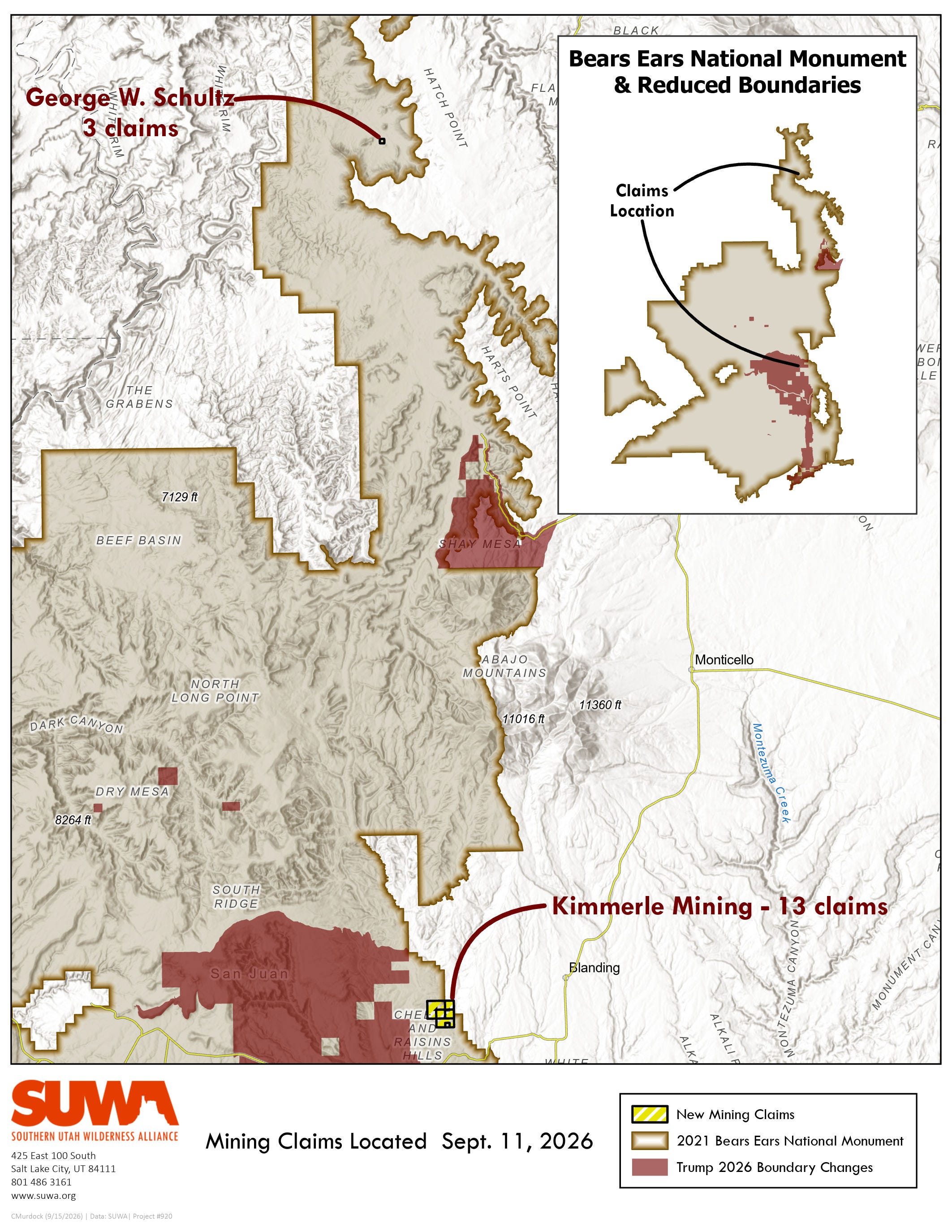
Check out the Land Desk Mining Monitor Map.
Also, to get a better idea of where uranium has happened in the past, see the Land Desk’s Uranium Mining in the Four Corners Country Map.
📈 Dataviz of the Day 📊
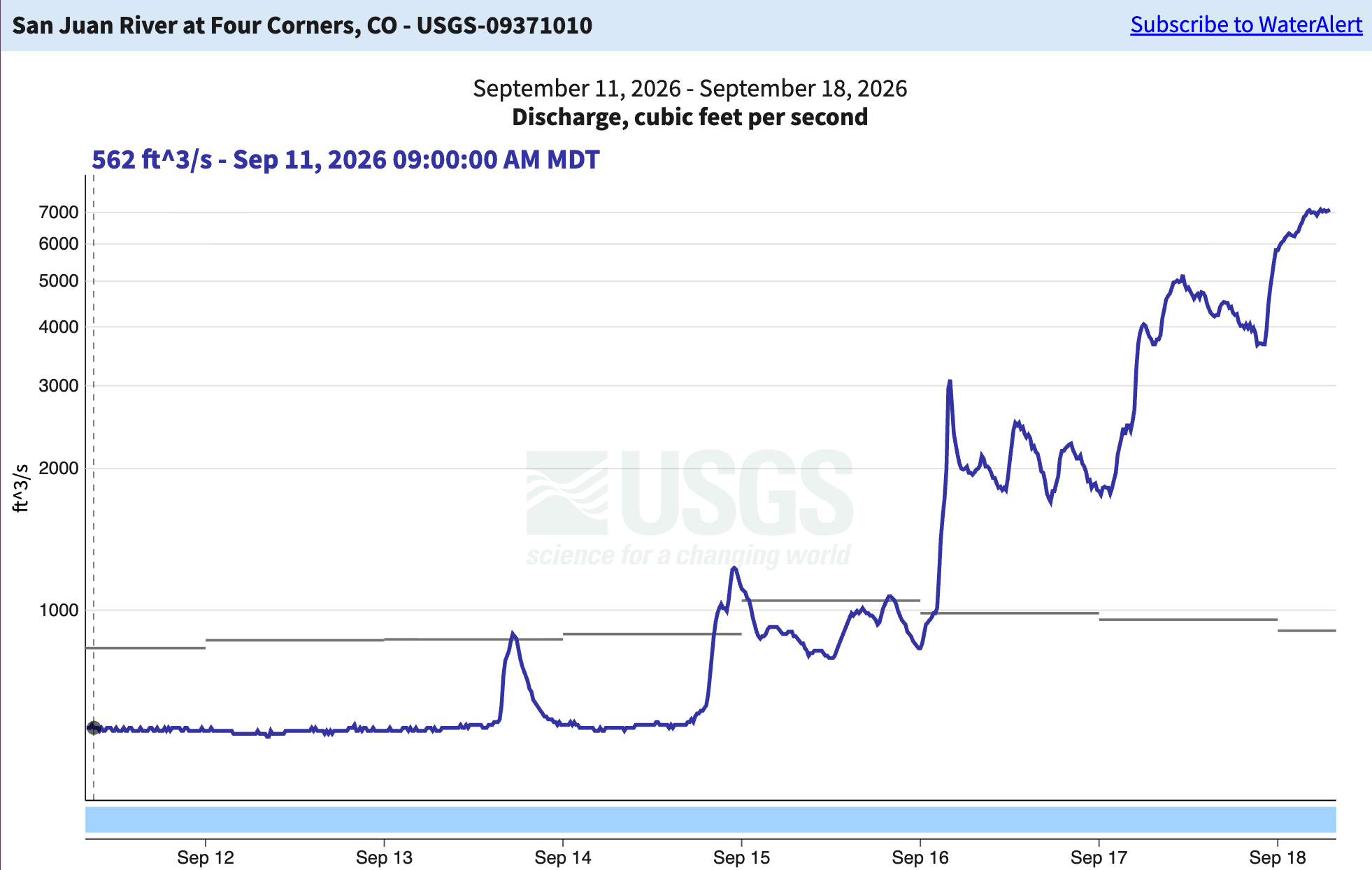
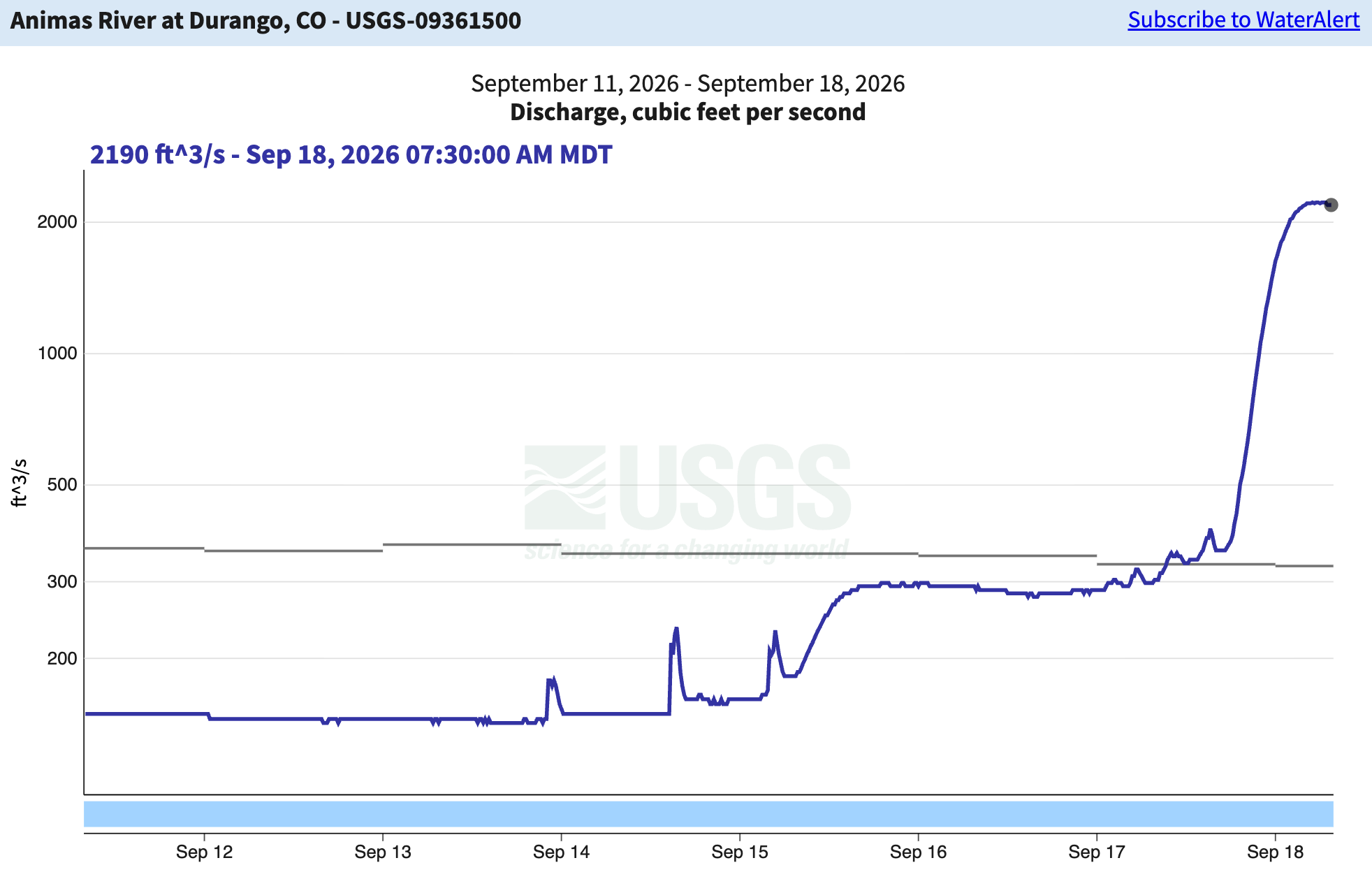
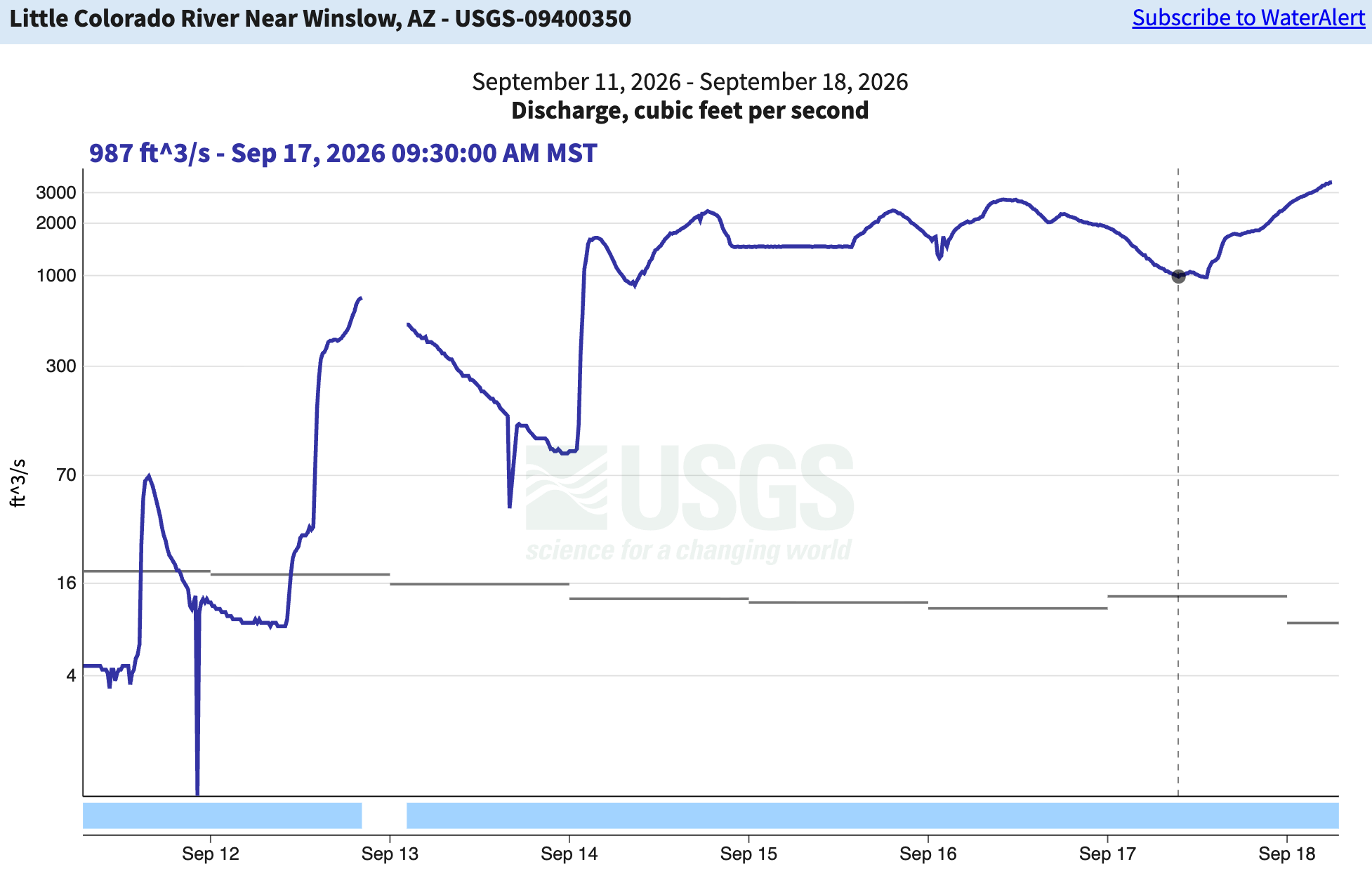
The rains have finally arrived in the Four Corners, which is a big relief, but also has had tragic consequences: A flash flood on Wednesday swept three people to their deaths near Newcomb, New Mexico, on the Navajo Nation. A flash flood watch remains in effect in northern New Mexico today.
As one might expect, the rains bolstered streamflows significantly. Here are a couple of graphs for some of the biggest beneficiaries of the extra precipitation:

A lot of us might wish he-who-shall-not-be-named had removed the Canada Goose from the Migratory Bird list. A large population of this goose was bred in captivity to be extra large, no longer migrates, drives out smaller native waterfowl, and pollutes parks, ponds, and lakes with hundreds of tons of excrement. And because they are protected, they are legally hard to manage.