Trump cancels Pecos mining ban process
Hottest March on record; Healing the earth is hard

⛏️ Mining Monitor ⛏️
The Trump administration has formally cancelled the proposed withdrawal of more than 160,000 acres in the Upper Pecos River Watershed from new mining claims and mineral leasing.
Prompted by local advocacy and New Mexico’s congressional delegation, the Biden administration began the process of protecting the watershed and surrounding mountains east of Santa Fe in 2024. But the Trump administration nipped the process in the bud shortly after taking office by cancelling scheduled public meetings. Now it has officially ended the withdrawal.
For the past several years, Comexico LLC, a subsidiary of Australia-based New World Resources, has been working its way through the permitting process to do exploratory drilling at what it calls its Tererro mining project on more than 200 active mining claims in the watershed. It has met with stiff resistance from locals and regional advocacy groups, partly because mining has a dark history in the Pecos River watershed. In 1991, a big spring runoff washed contaminated mine and mill waste from a long-defunct mine into the upper Pecos River, killing as many as 100,000 trout. That prompted a multi-year cleanup of various mining sites.
The withdrawal wouldn’t have stopped the project outright, because it doesn’t affect existing, active, valid claims. Yet it would have stopped the company from staking more claims and would make it more difficult to develop the existing ones (especially if they haven’t established validity).
I have a saying I coined while writing River of Lost Souls that goes like this: Mining is hard. Putting the earth back together again afterwards is a hell of a lot harder. That’s probably especially true when it comes to mining and milling uranium, given that along with all the other nasty byproducts of mining, it also leaves behind radioactive material. The point was recently driven home by two events:
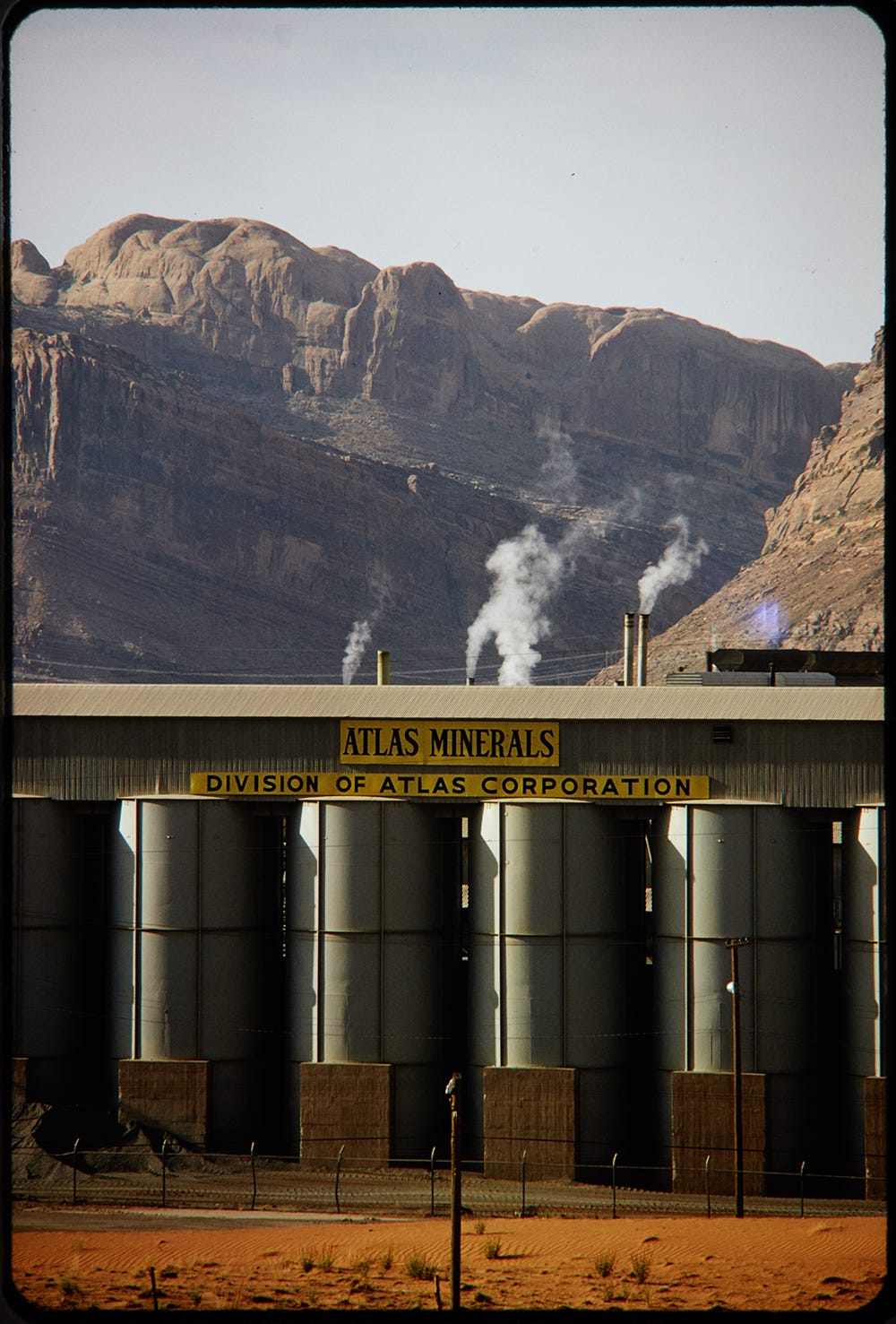
Moab officials celebrated the removal of 16 million tons of uranium tailings from the Atlas mill site alongside the Colorado River following a decades-long cleanup effort. Remediation work continues.
Meanwhile, over at the cleaned up Durango uranium mill site (now a dog park), the Department of Energy’s most recent verification monitoring report finds that natural uranium flushing in the groundwater beneath the site is happening slower than expected. There’s no reason for concern at this point: Researchers are still confident that uranium concentrations will drop below the compliance goal within the allotted 100-year time period.
I mention it here because of the time-scale involved: The Atlas mill in Moab stopped operating more than 40 years ago, and the cleanup has dragged on for close to two decades. The Durango mill shut down for good in 1963; the massive, years-long, multi-million-dollar cleanup was completed in 1991. And researchers expect it to take another 65 years for the groundwater contamination to finally get back to acceptable levels.
It’s just something to keep in mind when considering new uranium mines and mills.
🐟 Colorado River Chronicles 💧
One of the more frustrating things about the Colorado River crisis is that the federal government, which controls the big dams and most of the extensive plumbing system on the river, has hardly given even a clue as to what it might do when Glen Canyon Dam reaches the critical minimum power pool mark as early as this summer.
Will they shut down the hydropower turbines and route all releases through the river outlets, possibly compromising the outlet tubes’ — and the dam’s — structural integrity? Will they “defend” minimum power pool by cutting back releases, thereby putting the Upper Basin in violation of the Colorado River Compact? Or will they drain Upper Basin reservoirs in an effort to maintain minimum power pool while also keeping releases at a level that will keep Lake Mead from dropping too precipitously? Maybe they’ll use the bunker-busting bombs intended for Iran to very quickly blast bypass tunnels through the canyon walls to render the dam obsolete?
The answer is still a mystery, but Interior Secretary Doug Burgum finally hinted coyly about the government’s potential approach (Interior oversees the Bureau of Reclamation, which runs most dams). The Arizona Star’s venerable environmental reporter Tony Davis reports that Burgum told a Tucson roundtable this week:
“We and the Bureau of Reclamation have to announce this month operating plans for next year. We can’t have all these reservoirs and no operating plan. We have to tell them to do something that no one will like. There wasn’t enough water to start with and there’s still less water now. We’re in a super severe situation. For us to have a functioning, operating plan for 2026, decisions are going to have to be made this month. Under the current course we’re heading on, it’s unlikely there will be an agreement with the seven basin states, and the bureau is just going to have to make a decision — the best judgment it can make.
“We’re positive about one thing — no one will be satisfied. We’ll be balancing water rights, power generation and water supply.”
Okay, I don’t know what that means, exactly, but at least they’re planning to do something. The last statement hints at their intent to defend the minimum power pool on Glen Canyon Dam (lest they’ll lose power generation altogether). We’ll probably learn more during the Glen Canyon Monthly Operations Call in the coming week or two. So stay tuned.
As long as we’re on the subject of the federal government doing something about the Colorado River, when’s Trump going to order his people to open the giant faucet up in Canada and send water gushing down to the Southwest?
🥵 Aridification Watch 🐫
This won’t come as a surprise to many people, but it’s now official: March 2026 was the hottest March on record by a lot in the Southwest and beyond. The Upper Colorado River Basin’s average temperature for the month was 46.5° F, or more than 13° higher than the 1895-2026 median. The graph below makes it very clear that the place has been getting hotter over the past fifty years, with the only real break coming in March 2023, when snow was piling up in the mountains.
The March scorcher followed the warmest winter and first half of the water year (Oct-March) for most of the West.
The result is clear: Even though precipitation accumulation wasn’t terribly far below normal, the snowpack was. The April 1 snowpack across Colorado was at a record low level, according to this year’s snow course, which is done by manual measurement and so goes back much farther than SNOTEL measurements.

Early April storms have helped keep the snow around a bit longer in the mountains, but has done little to bolster the snowpack. It’s still at historically low levels.
🗺️ Messing with Maps 🧭
Maybe we’ll have a really wet spring and summer. If not, well, this is what the National Interagency Fire Center says we can expect. Not great.


Another depressingly truthful "sermon"! I went back & re-read the tdump faucet idea - that didnt really make me feel better. He was an idiot 6-7 months ago & hes more of one now. And people STILL believe him.