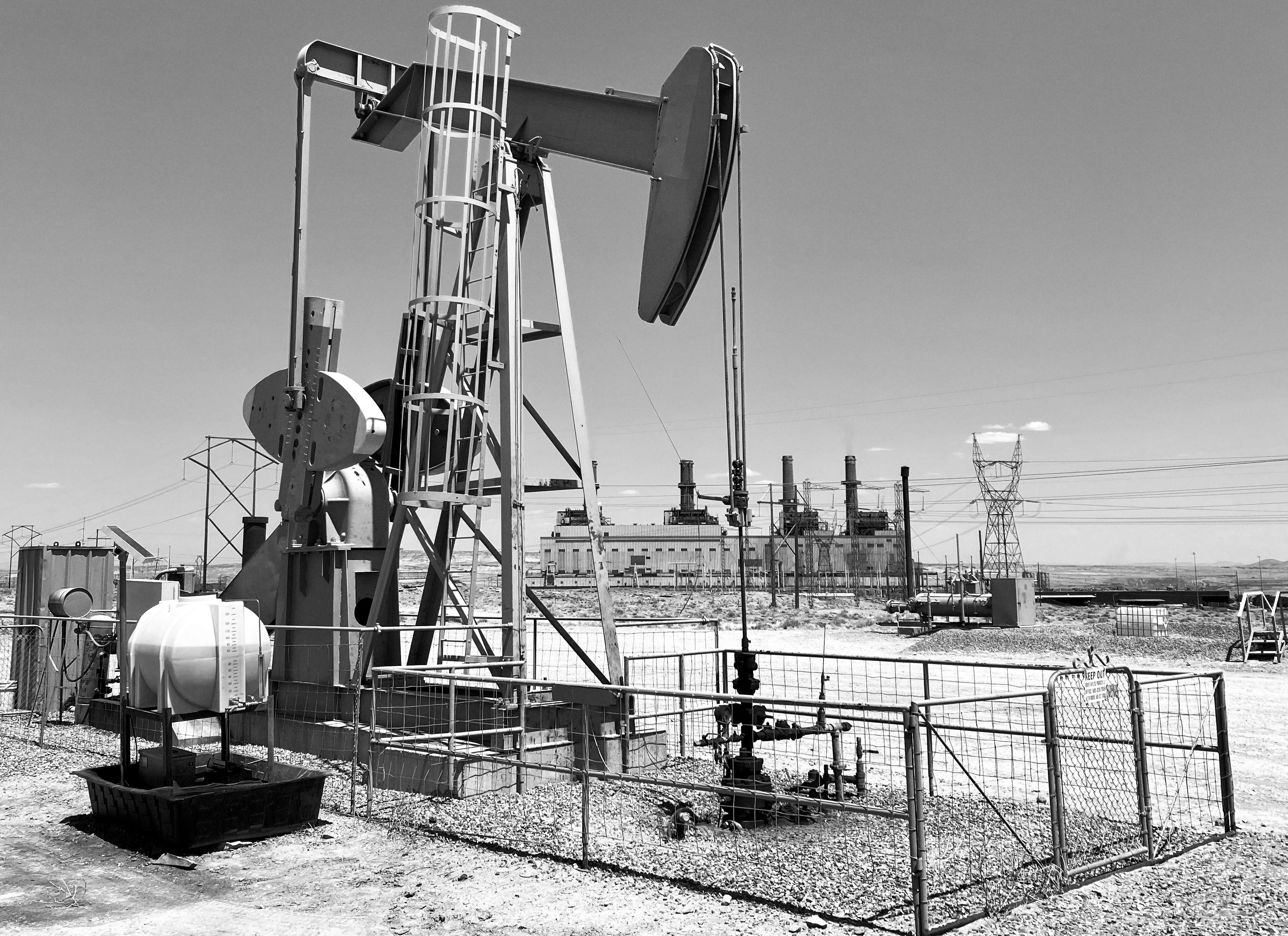
San Juan Basin fossil fuel industries keep polluting, even as they fade away
It's time to launch a land-healing and restoration economy
š Data Dump/Hydrocarbon Hoedown š

The San Juan Basin in northwestern New Mexico was once one of the busiest fossil fuel extraction zones in the nation ā maybe even the world. Now itās a gas-patch in decline, but the leftovers from more than a century of heavy drilling continue to sully the landscape, the water, and the air of the Four Corners region.
Beginning in the 1920s, petroleum companies such as Standard Oil, Sinclair, and others began drilling the 10,000-square-mile swath of mesas, valleys, and badlands that resembles a huge dinner plate. Since then, they have drilled at least 40,000 wells in search of oil and natural gas, the hydrocarbon remnants of ancient aquatic critters that plied the salty waters of an inland sea some 70 million years ago. Meanwhile, towering draglines gouged into the Fruitland coal formation, exhuming what was left of the fecund swamps along that receding seaās shores to burn it in the nearby coal plants.
While the Basin is relatively rich in coal, oil, and even uranium, it mostly became known for its vast stores of natural gas, or methane, in the form of conventional reservoirs, in tight shales, and adsorbed to coal seams, a.k.a. coalbed methane. Spurred by tax incentives, technological advances, high natural gas prices, and a friendly regulatory environment ā not to mention a willingness to turn the region into an energy sacrifice zone ā fossil fuel firms descended on the Basin in the 1990s and early 2000s and a drilling frenzy ensued.
Ironically, it was another technological advance that busted the long-running boom. The advent of āfracking,ā or the combination of horizontal drilling and multi-stage hydraulic fracturing, rendered vast stores of oil and gas stored up in tight shale formations economically extractable. That opened up the Bakken in North Dakota and the Marcellus formation in Pennsylvania and Ohio, glutting the domestic natural gas market and substantially depressing prices. When drillers started targeting more profitable oil, they also brought up oodles of methane, further deflating natural gas prices. In 2009, the San Juan Basinās gas industry slid into a slump from which it has yet to emerge.
One might hope that as drilling and production (and tax revenues and other economic benefits) subside, so would the attendant impacts, giving the land and water and air a chance to heal. But even a gas patch in decline is a busy place, what with workers driving the web of roads to service aging wells and to haul off the millions of gallons of wastewater that is pumped up with the crude and the methane. And, nearly every one of those tens of thousands of wells drilled over the years, whether producing or not, can still be a source of pollution.


The natural gas industry as a whole is hoping the Big Data Center Buildup will open new markets for its wares, possibly boosting the price enough to give drillers an incentive to return to the San Juan Basin. Not to give anyone any wild ideas, but Iām kind of surprised no one has proposed a hyperscale data center complex in the San Juan Basin with a co-located gas-fired power plant (or maybe thatās what Navajo Transitional Energy Company plans to do with power from its proposed 742-megawatt natural gas plant on reclaimed portions of its Navajo coal mine?). But even if this does take place, itās not likely to increase demand enough to spur another drilling boom.
I figured Iād check in to see whether business is kicking up in the Basin, and whether gas field āincidentsā are on the rise or fall. Drilling activity has ramped up somewhat, but since it was starting at almost zero thatās not saying much: Over the past year or so there have been no more than three or four active rigs drilling at any given time. Meanwhile, oil and gas wells ā old and new, active and idle ā continue to experience spills and releases at a concerning rate.
In fact, Hilcorp, one of the largest operators in the San Juan Basin, was named Earthworksā and the Gas Leak Projectās Polluter of the Month this June, mostly due to leaky facilities in the San Juan Basin.
Whether the Basin has a future as a gas patch or not, isnāt it about time to clean up the messes left from the last century? Itās not hyperbole to say that you could build a whole new industry around reclamation and remediation, land restoration and healing.

Some data points:
111: The number of drilling permits issued by the Bureau of Land Managementās Farmington Field Office (covering the San Juan Basin) over the last 12 months. (BLM)
3,892: The number of drilling permits issued by the BLMās Carlsbad Field Office (covering the Permian Basin) during that same time period. (BLM)
96: Number of oil and gas drilling rigs operating in New Mexico as of June 5, 2026. Thatās two less than the previous week, but five more than a year ago. (Baker Hughes)
7, 11, 26, 13, 16: Number of rigs operating in California, Colorado, North Dakota, Utah, and Wyoming, respectively, as of June 5. (Baker Hughes)
198: Number of idle oil and gas wells in the San Juan Basin as of June 2026.
315: Number of reported āincidentsā in the San Juan Basin oil and gas fields that led to spills or gas releases between June 1, 2025, and June 1, 2026. (New Mexico Energy, Minerals, and Natural Resources Department)
63,732 Mcf: Volume of natural gas (consisting of methane and other compounds) released during the aforementioned incidents via leaks, venting, or flaring. (NM EMNRD)
1 barrel = 42 gallons
385 barrels: Amount of condensate released during the aforementioned incidents. (NM EMNRD)
367 barrels: Amount of crude oil released during the aforementioned incidents. (NM EMNRD)
11,588 barrels: Amount of produced water, which consists of the briney, contaminated water that accompanies oil and gas along with drilling and hydraulic fracturing fluids. (NM EMNRD)
$850 million: Amount by which New Mexico state revenues for fiscal year 2026 will exceed previously projected revenues, due to oil price increases stemming from Trumpās war on Iran.
$750: Amount by which the average New Mexico householdās costs have increased due to oil price increases and inflation stemming from Trumpās war on Iran.

ICYMI: Also in the San Juan Basin, the Navajo Transitional Energy Company not only wants to keep running its Navajo coal mine for another 110 years, but it also wants to build a 742-megawatt natural gas plant on reclaimed portions of the mine. Oy.
š„µ Aridification Watch š«
Wildfire season has arrived, and it looks like it could be a doozy. A handful of fires were sparked on Coloradoās Western Slope, most likely by lightning. The most significant of those is probably the Bee Hive Fire north of Bedrock on the edge of the Paradox Valley; as of Monday evening it had grown to 180 acres. The much smaller Paradox Trail Fire was burning further north and east.
The Tower Fire near Scipio, Utah, had grown to nearly 1,400 acres by Monday evening, and the fast-moving South Mountain Fire near Tooele, Utah, was at 1,000 acres as of early Tuesday morning. Meanwhile, the Papa Fire northeast of Flagstaff, Arizona, is raging through grasslands and conifers.


I was just at the San Juan below Navajo Dam and was surorised at how many gas industry trucks were on that small highway. Some of the wells that had been there a few years ago were no longer visably operating, but by the truck traffic the it seems the industry isn't slowing down.