

Good morning and welcome to another edition of the Land Desk Newswire. The Trump administration is continuing to convert its fossil fuel fetish into real-world, deeply consequential policy, this time by eliminating greenhouse gas emissions limits for coal- and gas-burning power plants. Meanwhile, the BLM moves forward with selling a sizable chunk of public land to bolster Las Vegas sprawl under a 1998 law.
🐓 REGULATORY CAPTURE CHRONICLES 🦊
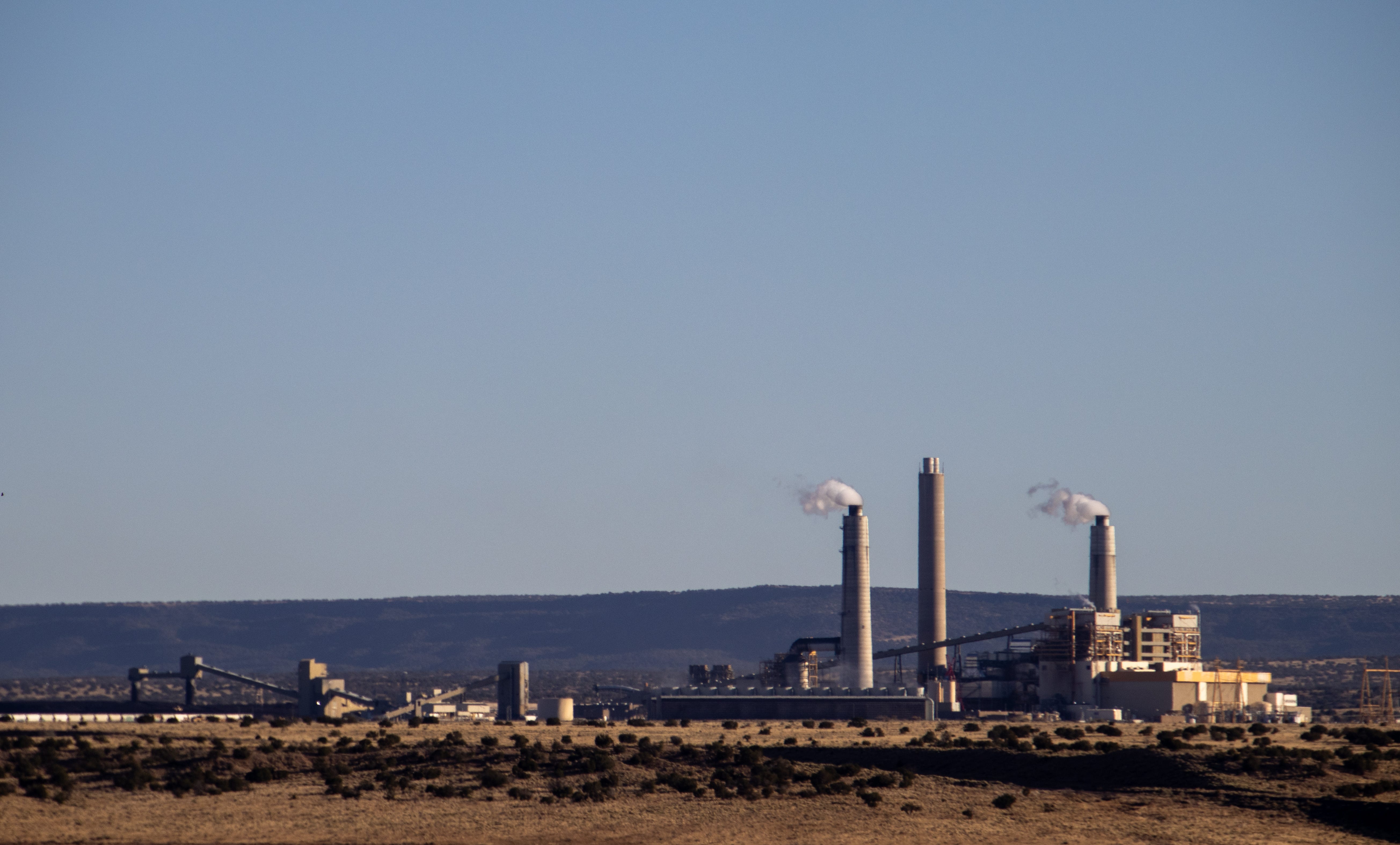
The Trump administration moves to axe Obama- and Biden-era regulations limiting fossil fuel power plants’ greenhouse gas emissions, meaning coal and gas plants will be able to spew planet-warming carbon dioxide without restraint. This could extend the lives of some coal plants, and will help clear the way for the fleet of new gas plants being developed to power hyperscale data centers. While the original rules required facilities to reduce carbon emissions, they also would have kept soot and other health-harming pollutants out of the air, preventing an estimated 1,200 premature deaths per year. Earlier this year the administration rolled back stricter limits on mercury emissions from power plants. (New York Times)
🌵 PUBLIC LANDS 🌲
The Bureau of Land Management sells 940 acres of public land in southern Nevada to the City of Las Vegas, clearing the way for a 6,000-home master-planned community on the northern fringe of the metro area adjacent to Tule Springs Fossil Bed National Monument. The sale was authorized by the 1998 Southern Nevada Public Land Management Act, which allows for such “disposals” of federal land in a congressionally designated boundary. It merely whetted Gov. Joe Lombardo’s (R) appetite for snatching more public land, however, who said he will work to “unlock more federal land for housing.” It’s not clear whence the water will come for this sprawling new development in one of the nation’s more water-constrained cities; the state faces potential further reductions of Colorado River water under the new federal plan. (news release)
A new poll finds that two-thirds of Utah voters support restoring protections to the original, pre-Trump-shrinkage boundaries of Bears Ears and Grand Staircase-Escalante national monuments, and an even larger proportion supports tribal nations having a role in managing ancestral lands. (news release)
🥵 ARIDIFICATION WATCH 🐫
Wyoming researchers say warm water and drought-reduced streamflows may be behind a kidney-damaging parasite killing hundreds of whitefish in the Salt River this summer. The tributary of the Snake River has experienced some of its lowest flows on record this summer, and it was already plagued with E coli bacteria as a result of heavy livestock grazing in the watershed. (WyoFile)
⛏️ MINING MONITOR ⛏️
The Cibola National Forest launches its environmental review of Energy Fuels’ proposed Roca Honda underground uranium mine on about 370 acres of USFS, state, and private land northeast of Grants, New Mexico, and near the base of Mt. Taylor. Ore would be hauled by truck to the White Mesa Mill in southeastern Utah for processing. Public comments will be accepted here until Oct. 14. (agency news release)
IsoEnergy, which owns the Tony M, Dineros, Rim, and Sage Plain uranium mines in southern Utah, agrees to merge with DISA, a startup that looks to use high-pressure slurry ablation technology to pull uranium out of abandoned mine waste piles, to create a “technology-enabled US uranium platform for production, processing, and remediation.” DISA’s attempts to process small waste piles in Western Colorado have yet to come to fruition, and Iso’s bid to reopen the Tony M mine near Ticaboo, Utah, has moved forward only in incremental steps. (World Nuclear News)
Union Pacific Railroad begins hauling coal from Powder River Basin mines to the Port of Guaymas in Sonora, Mexico, where it could be shipped to Asia. The new export node allows the industry to get around environmental opposition to coal exports along the West Coast, but its viability depends on demand. (Trains)
🐟 COLORADO RIVER CHRONICLES 💧
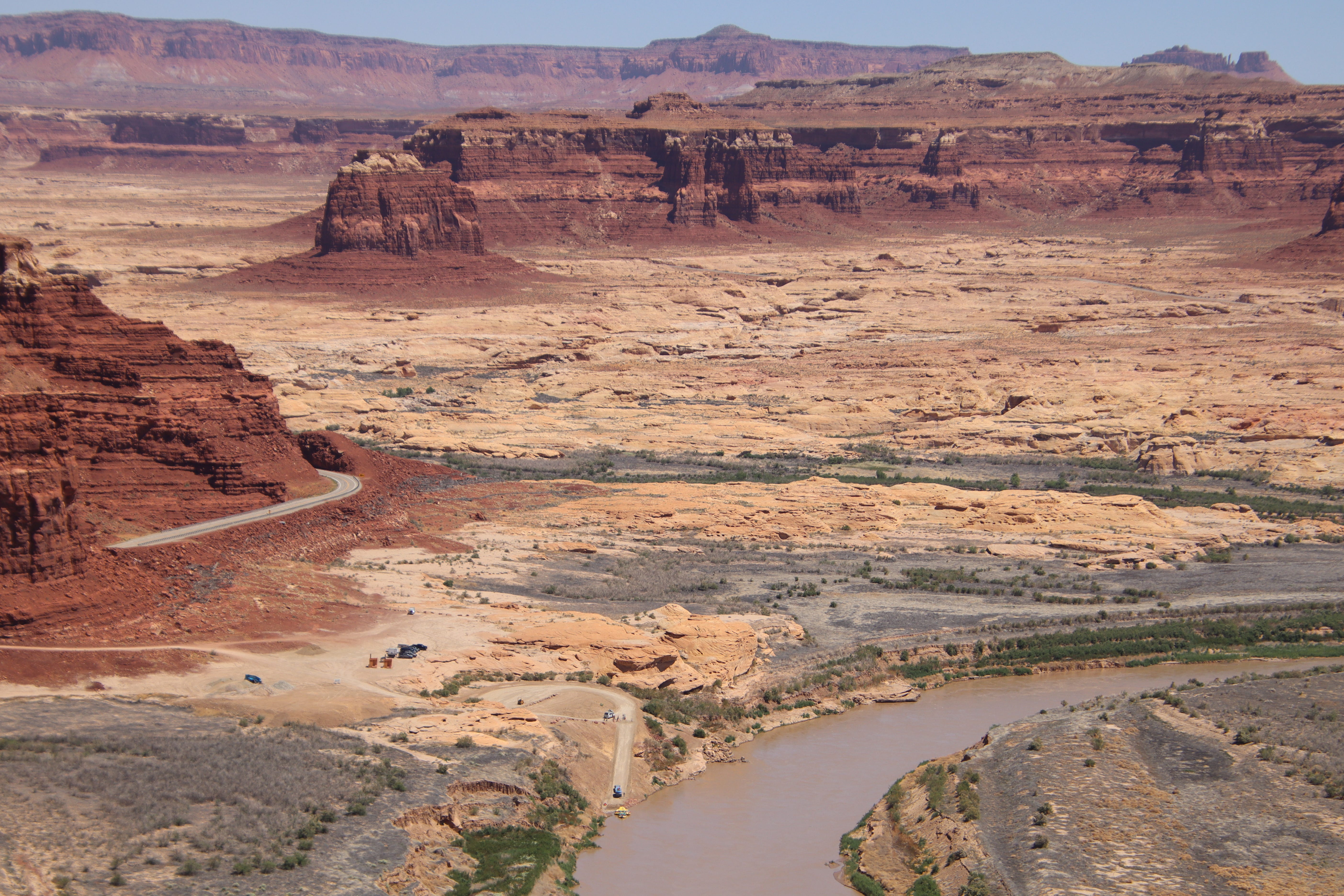
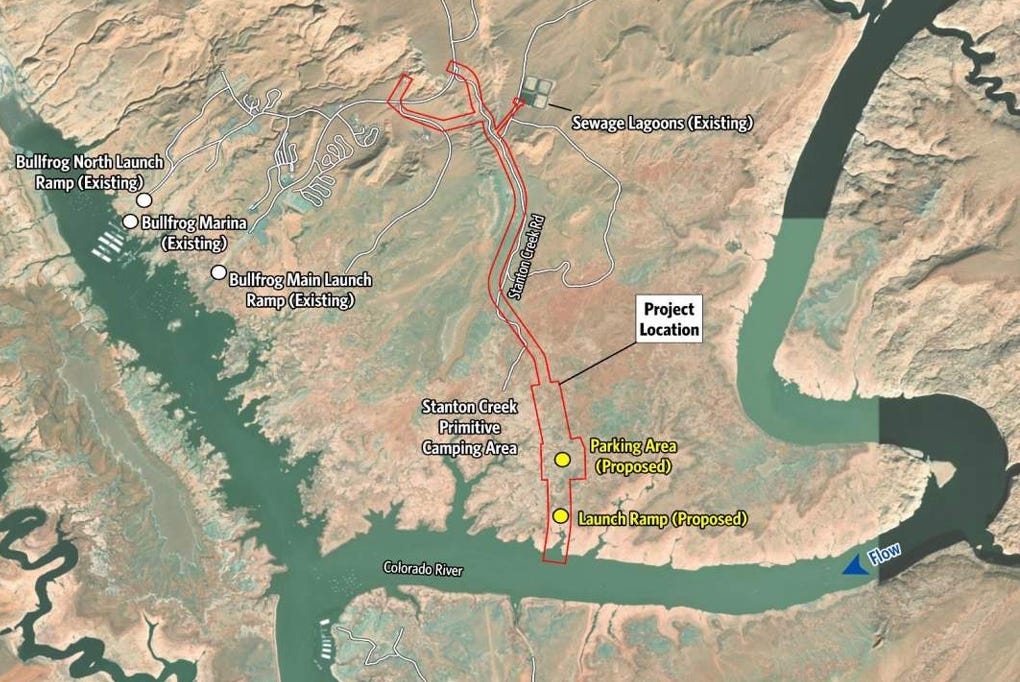
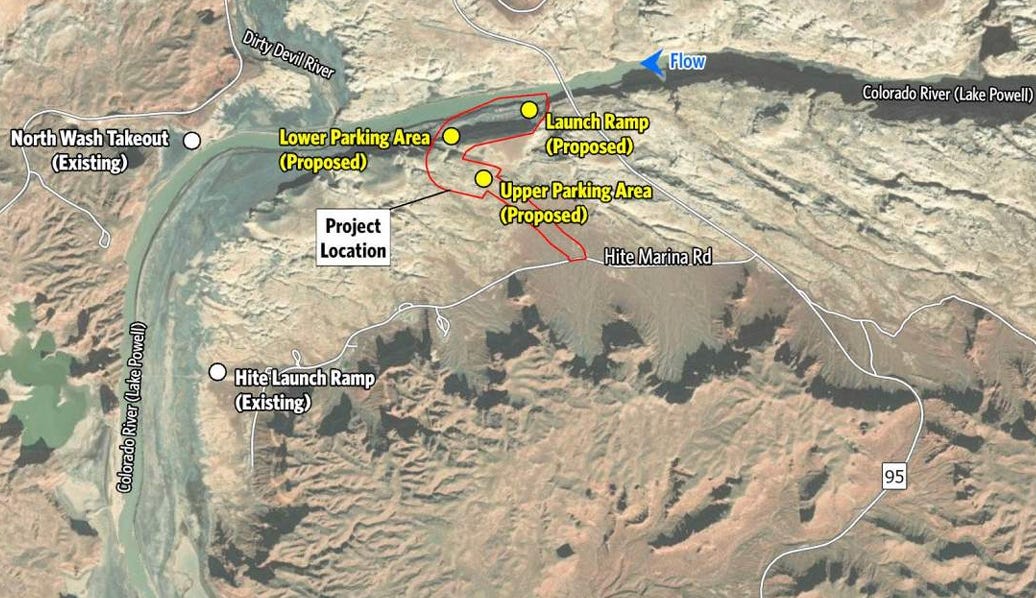
Glen Canyon National Recreation Area moves forward with a plan to develop new low-water boat ramps and other facilities at the Hite and Bullfrog districts on Lake Powell, indicating that the National Park Service expects reservoir levels not to rebound. The Bullfrog ramp is planned for the main channel of the reservoir, southeast of the current facilities, and would be usable for boats up to 125 feet long to a low lake level of 3,450 feet. The Hite ramp would be upstream from the current facilities and is primarily designed as a takeout for Cataract Canyon boaters and a safer alternative to the North Wash takeout on the opposite side of the river. (news release)
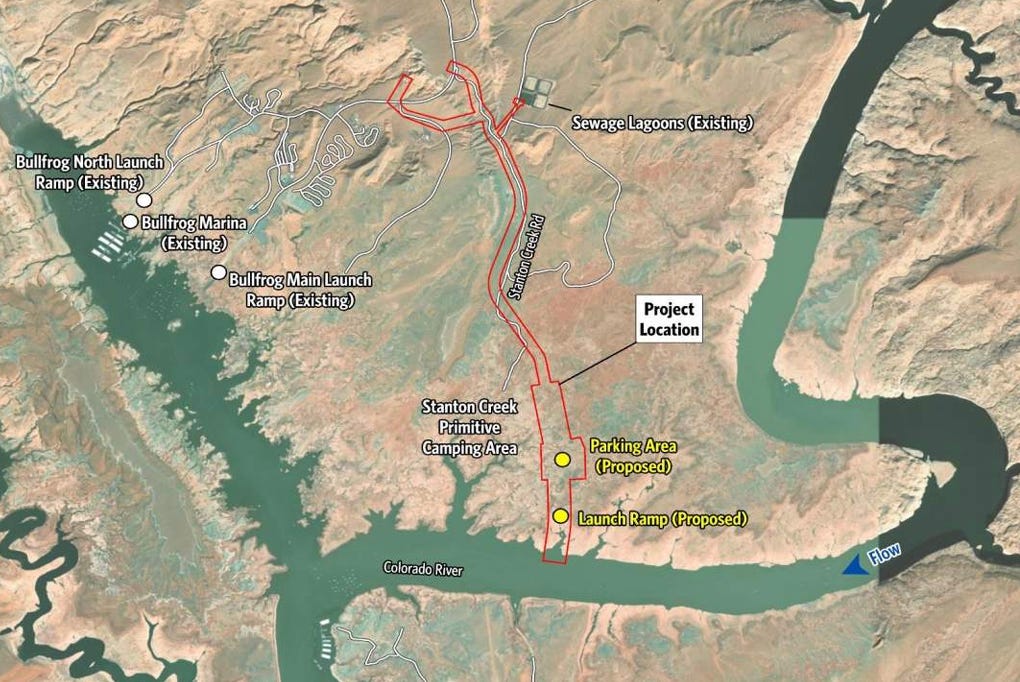
The planned Bullfrog low-water boat ramp. Source: NPS. 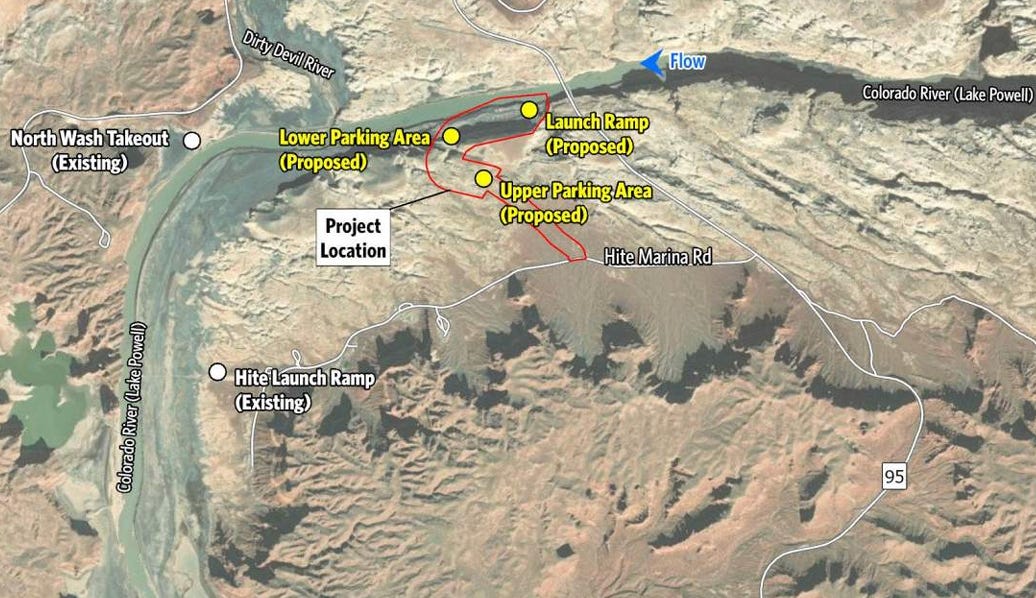
The planned Hite launch/takeout ramp. Source: NPS Arizona officials raise concerns about how the Colorado River crisis might affect its booming semiconductor and chip manufacturing industry, in which a single Phoenix-area facility, known as a “fab,” uses some 4.75 million gallons of water per day. (The Verge)
The Bureau of Reclamation again increases water releases from Flaming Gorge Reservoir in an effort to buoy water levels at Lake Powell, but Utah officials warn it is not a sustainable solution and could harm recreation on the upstream reservoir. (KSL)

🦫 WILDLIFE WATCH 🦅
Colorado Parks and Wildlife has euthanized nearly 300 bears so far this year following “unprecedented” levels of bear activity in towns across the state, as well as in Wyoming. Bryan Peterson, of Bear Smart Durango, told Cowboy State Daily the conflicts and killings are mostly due to the drought and lack of food sources, but also blamed human carelessness with garbage and food. (Cowboy State Daily, WyoFile)
Colorado Parks and Wildlife kills an uncollared female yearling wolf from the One Ear Pack in Grand County after the animal evaded non-lethal deterrents to prey on livestock. (news release)
🤖 DATA CENTER DIGEST 👾
Bureau of Land Management leadership reportedly orders state directors to identify federal parcels suitable for data center development, indicating that the administration is looking to skirt communities’ opposition to and ban on the facilities by approving them on nearby public lands. (Washington Sun)
Corner Venture Capital applies for an air quality permit for a 300-megawatt natural gas-fired plant to power a proposed hyperscale data center in southwestern New Mexico, raising concerns over air pollution and water use. (Silver City Daily Press, news release)
Google’s proposed 2.7-gigawatt, $17 billion Project Tembo data center complex on 700 acres near Cheyenne, Wyoming, clears local regulatory hurdles, but still has a lot of red tape to tangle with before final approval. The firm says the facilities will use less water-intensive closed-loop cooling systems and draw from deep wells, not surface supplies, and that it will be powered with natural gas fuel cells paired with carbon capture. (Wyoming Tribune Eagle)
🔋NOTES FROM THE ENERGY TRANSITION 🔌
Array Technologies opens its $50 million, 200,000-square-foot solar component manufacturing facility in Albuquerque, where it employs about 300 people. (KRQE)
Black Hills Energy moves forward with its planned 50-megawatt battery energy storage system at its Pueblo Airport Generating Station in Colorado. (Energy Storage News)
🛻 TRANSPORTATION 🚂
Denver West Express pitches a “concept” of an electric rail line designed to carry skiers from Denver International Airport to the resort town of Avon in less than two hours. The line would cost an estimated $28 billion to $33 billion to construct, but it might go a long ways to alleviate the I-70 ski season gridlock, which makes for one of the nastiest drives in the state — and where high traffic costs about $2.3 billion annually. (Steamboat Pilot)
📈 DATAVIZ OF THE DAY 📊
The Land Desk recently reported on how solar, wind, and battery storage is pushing coal off the West’s power grid, despite the Trump administration’s hostility toward cleaner energy sources. As of June of this year, the trend appeared to be continuing into the future, as a bulk of the generating capacity in the planning pipeline comes from cleaner sources. Click on the graphics for an interactive view, and specifics on each planned power plant.


You're either an AI bot in disguise, or have an extremely impressive predilection for processing a lot of information!
My micro-response: I'm glad the NPS is considering upgraded river access at Bullfrog and Hite. Recreation is good. And while the Colorado is at 1360 CFS, the Green is 2140, showing the release from Flaming Gorge, and allowing paddlers to have a fine fall trip whether its Deso, Labyrinth, or Stillwater.