

🔭 OVERSIGHT 👮🏼
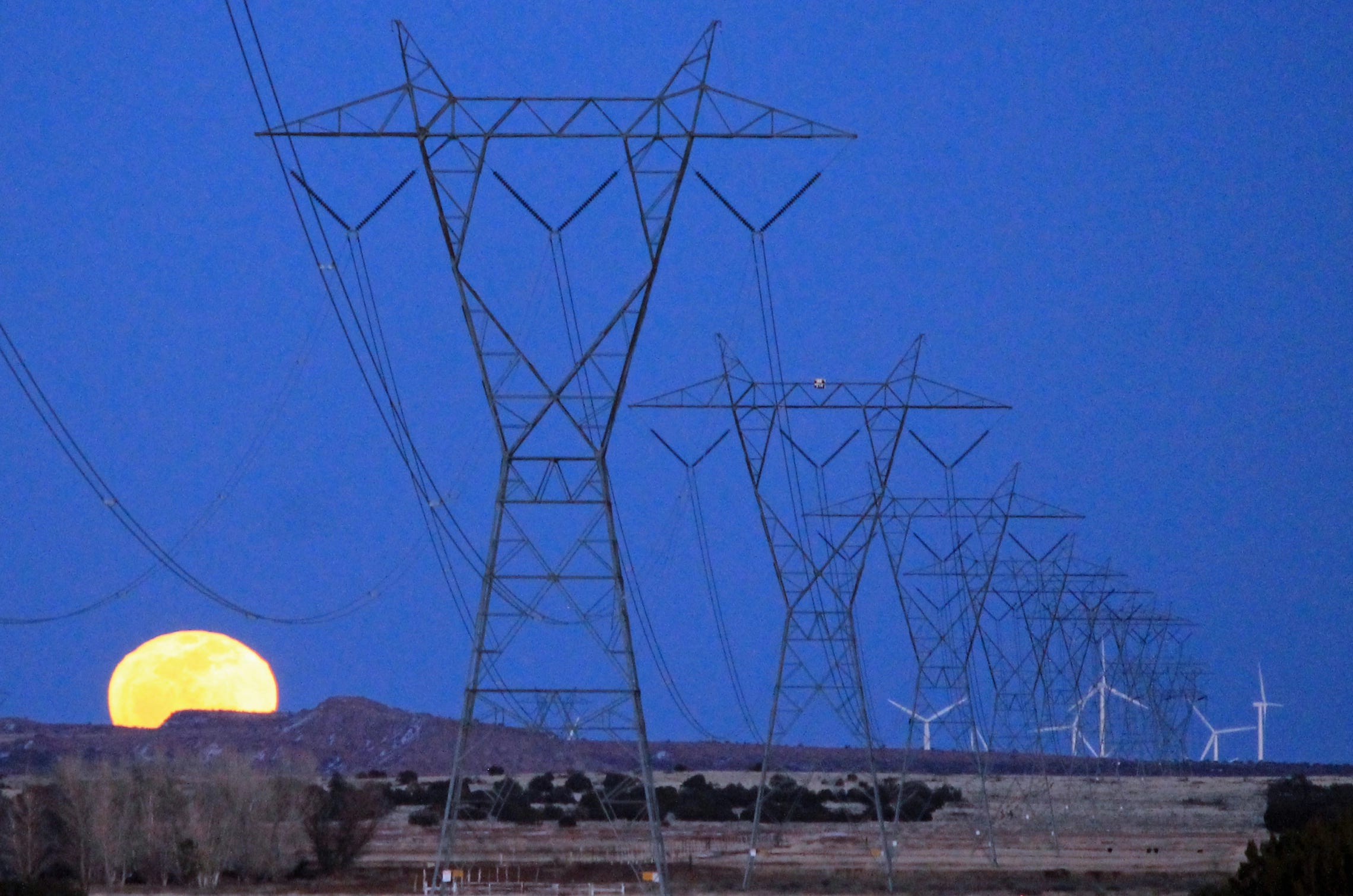
A bipartisan group of federal lawmakers, including Sens. Martin Heinrich (D-NM) and Mike Lee (R-UT), introduced legislation aimed at streamlining and accelerating federal environmental reviews and permitting for major projects on Sept. 30. The Bipartisan Affordability and Jobs Act would lower or remove regulatory hurdles for large-scale renewable and transmission projects, fossil fuel pipelines, mining projects, and other industrial projects such as data centers and accompanying power facilities.
The push for faster permitting has been in the pipeline for years, and garnered the support of the renewable energy industries and climate advocates in more recent years, after seeing huge transmission projects such as SunZia and TransWest Express languish in red tape for nearly two decades due to potential impacts to wildlife and cultural sites. The lines were purportedly designed to carry renewable energy back and forth across the West to provide what’s known as “geographical smoothing” of variable solar and wind resources. These sorts of delays, according to permitting reformists, were stifling the energy transition.
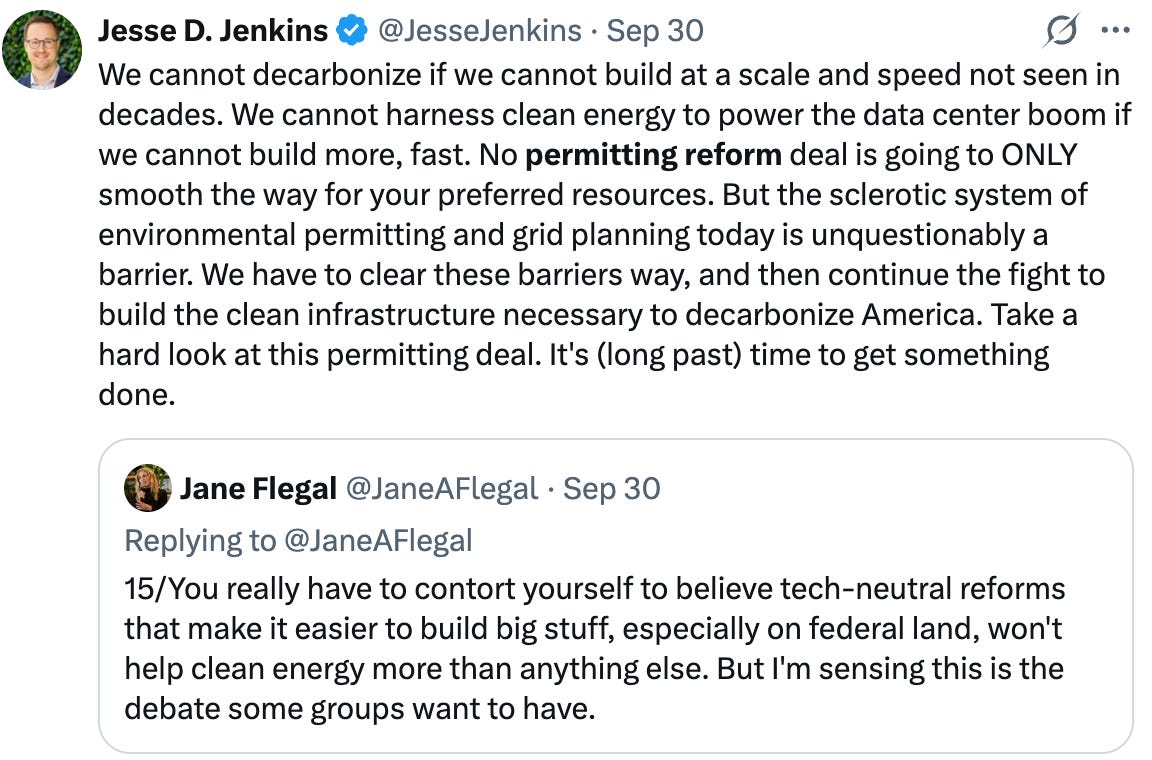
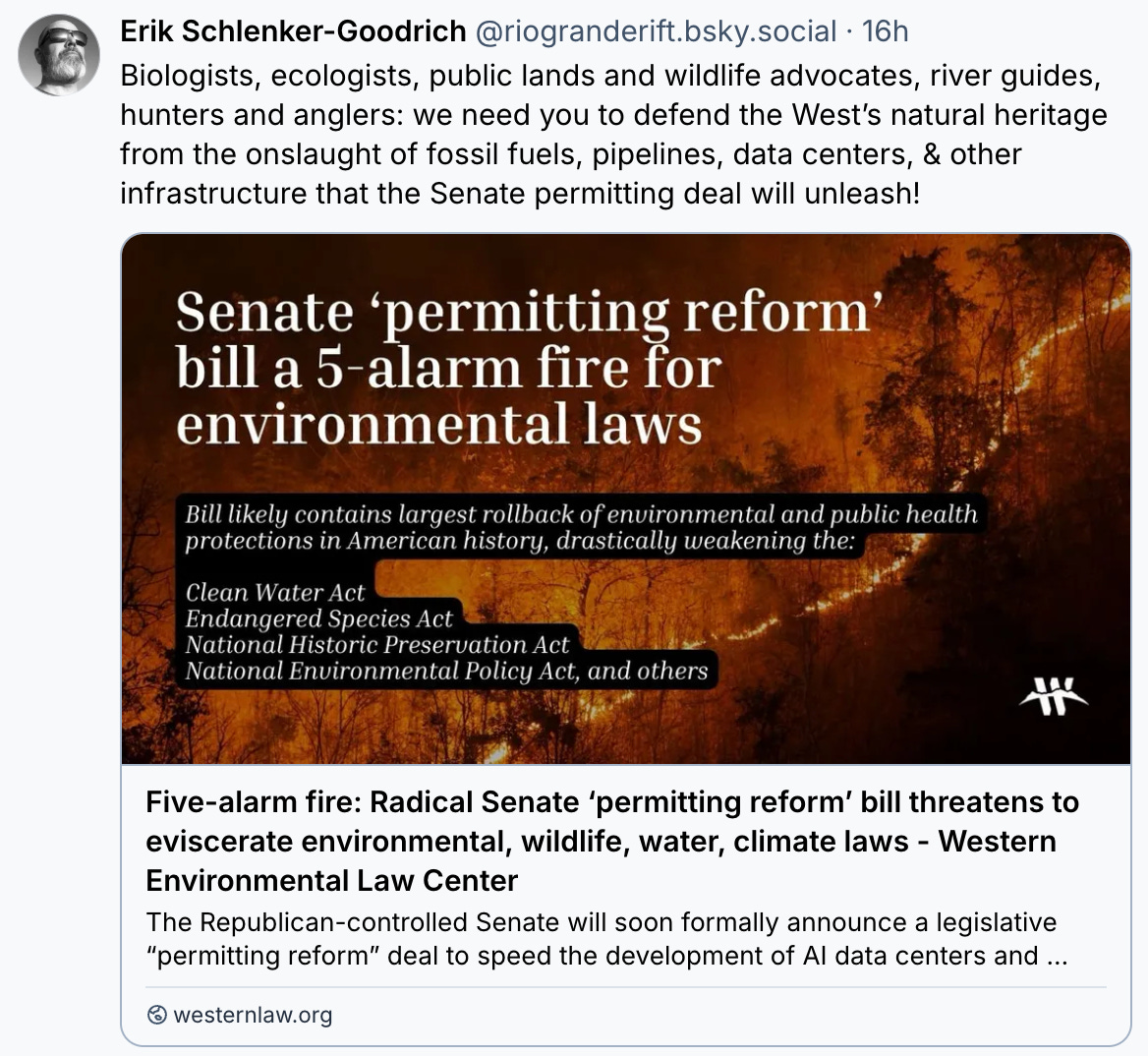
Shortly after the bill’s details were made public, ecologically minded environmental groups raised red flags, warning that, as written, the legislation would weaken bedrock environmental laws, including the National Environmental Policy Act and Endangered Species Act, and take away the public’s power to block or force revisions to projects of all kinds, including ones that will lead to more fossil fuel burning and more greenhouse gas emissions. They pointed out that not only was the notoriously anti-environment Lee sponsoring the bill, but it also had a full-throated endorsement of the American Petroleum Institute.
This triggered a vehement, some might even say toxic, reaction from the climate hawks and Abundance adherents that support reform, and ignited a rhetorical civil war within the environmental movement on social media.
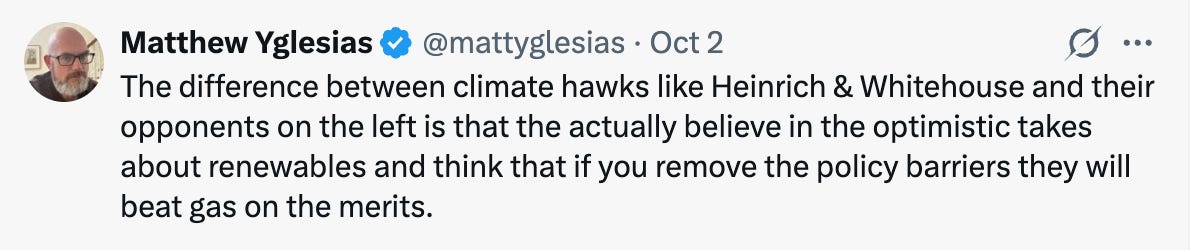
The Abundance movement supports the bill, allying itself with the petroleum and tech industries, because it would make it easier to build large clean energy facilities and the transmission needed to move it around. They are operating on the belief that building more and bigger clean energy projects is the only way to battle climate change — even if it also opens the door to more fossil fuel burning. This theory assumes that the market will favor clean energy projects, even if policy favors “all of the above.”
Marc Levitt, director of environmental regulatory reform for the Breakthrough Institute, called the bill a “heroic breakthrough for permitting reform” and “a massive down payment towards the energy abundant future that Americans deserve.”
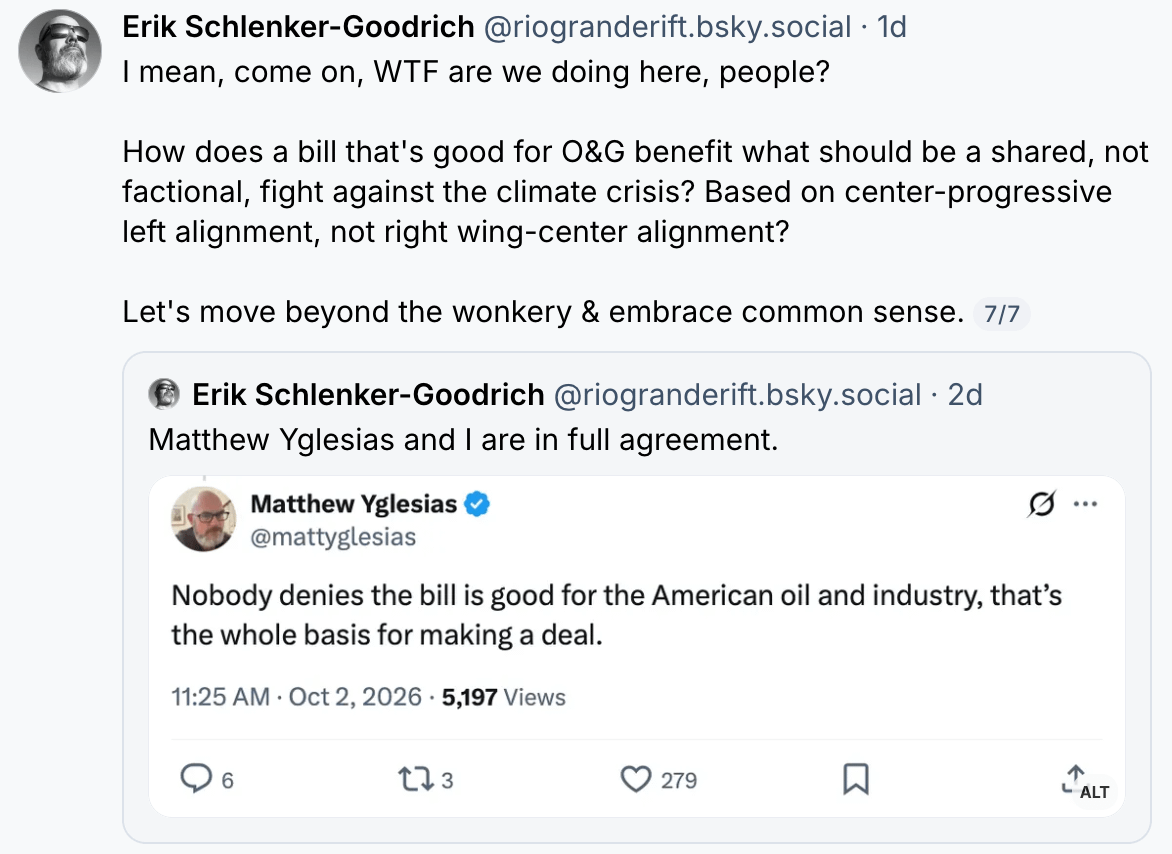
Opponents, however, say that pushing energy development of all kinds will not only decimate cultural and natural resources and burden humans and wildlife, but it also will not do much to solve the climate crisis if every new solar array or transmission line is matched with a new natural gas pipeline or power plant.
“The permitting deal is a betrayal of public lands, water and wildlife, and environmental justice values that Westerners depend on for clean air and water, places to hike, hunt, and fish, and the inestimable sense of freedom the West provides us all,” said Erik Schlenker-Goodrich, executive director of the Western Environmental Law Center based in New Mexico.
The legislation also raises concerns that the Trump administration could use the legislation to further weaken environmental protections to benefit the fossil fuel, nuclear, mining, and data center industries, while still throwing up roadblocks to solar and wind development.
The Land Desk will have an analysis of the bill and how it might play out on the Land Desk’s beat in the coming days.
🔋ENERGY TRANSITION 🔌
California Gov. Gavin Newsom signs legislation allowing residents to install plug-in or balcony solar without getting utility approval, along with a suite of other bills that should advance the energy transition. (Climate Colored Goggles)
🐓 REGULATORY CAPTURE CHRONICLES 🦊
The developer of a proposed pumped hydropower storage project on Black Mesa on the Navajo Nation reportedly tried to pay off, coerce, and bully non-profit Tó Nizhoní Ání into dropping its opposition to the project. The group has stood its ground. (KNAU)
⛏️ MINING MONITOR ⛏️
Advocacy groups file a lawsuit challenging the U.S. Forest Service’s and Fish and Wildlife Service’s approval of South32’s Hermosa mine expansion onto about 52,000 acres of federal land in the Patagonia Mountains of southern Arizona. The groups accuse the agencies of violating the Endangered Species Act by failing to adequately analyze the projects impacts on threatened wildlife. (Center for Biological Diversity)
🛢️ FOSSIL FUEL FOLLIES
Arizona Public Service and the Navajo Transitional Energy Company sign an agreement that could allow the Four Corners coal-burning power plant in northwestern New Mexico to continue operating until 2038, seven years later than its scheduled retirement date. APS officials say they need the facility online to meet growing data center-driven energy demand and ensure reliability as grid-battering extreme weather events increase in frequency. (Arizona Republic)
Tó Nizhoní Ání and San Juan Citizens Alliance file an appeal seeking to block the Interior Department’s approval for the expansion and 110-year life extension of the No Name area of the Navajo Mine in northwestern New Mexico. The mine feeds the Four Corners Power Plant, which is now slated to close in 2038. “It’s disturbing that a federal agency could fast-track a project of this size and scope with almost no credible review, analysis or public consultation,” said Nicole Horseherder, Tó Nizhóní Ání’s executive director. “This permit continues a legacy of corporate interests abusing our resources, tearing up our land, depleting our water and displacing Navajo citizens. Worse still, it’s being done by a Navajo enterprise.” (news release)
State data show the West Elk coal mine near Somerset, Colorado, is emitting potent greenhouse gas methane and other harmful compounds at nearly four times the permitted rate, spurring environmental groups to call for the mine’s operator to be sanctioned and forced to use the best available technology to slow the leaks. (Colorado Sun)
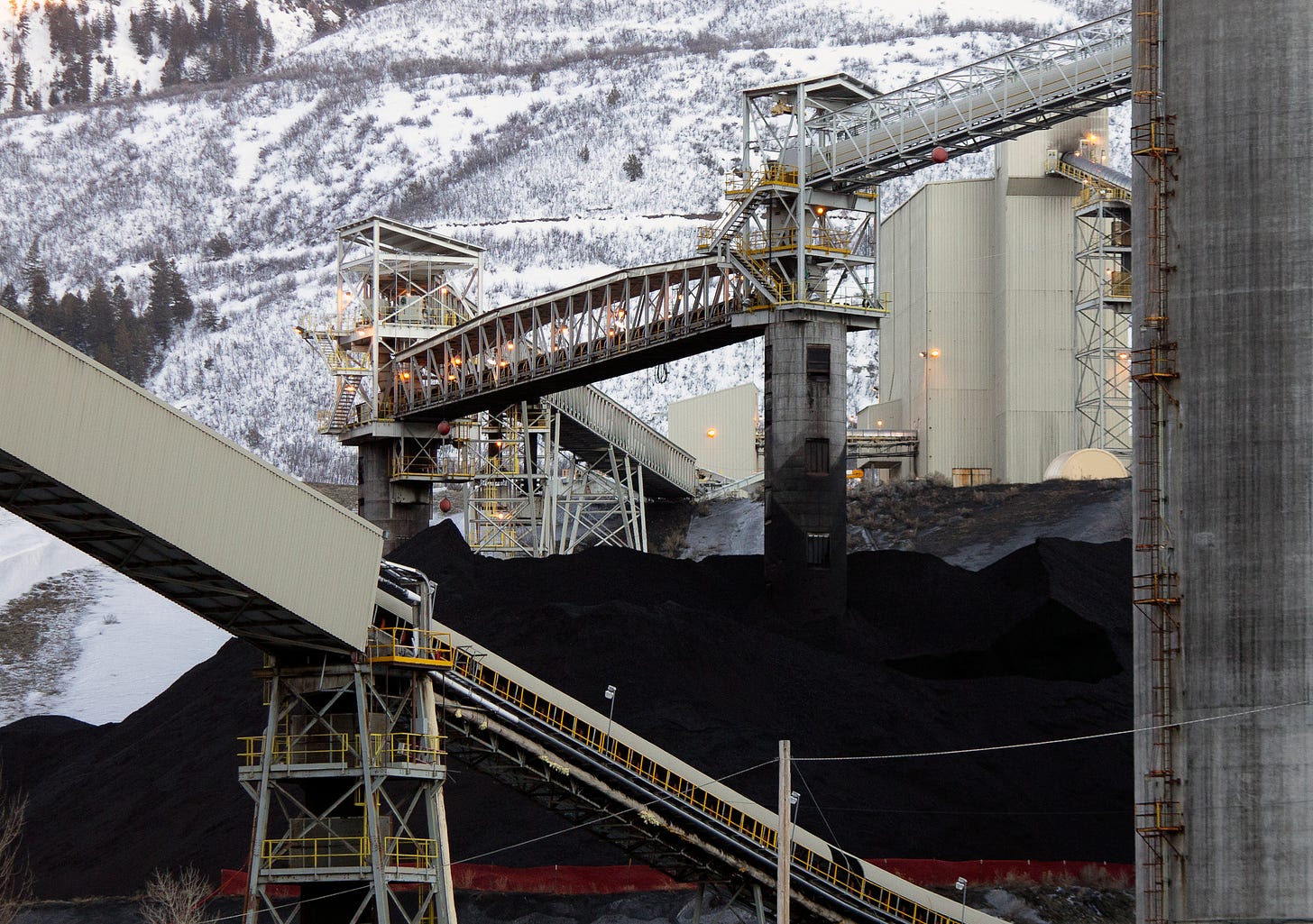
The West Elk coal mine near Somerset in winter. Jonathan P. Thompson photo. Wyoming Gov. Mark Gordon (R) considers legally challenging a new California law that requires a contentious proposed coal export terminal in Oakland to go through a full environmental impact review prior to local agency approval, potentially stifling Wyoming’s effort to send Powder River Basin overseas via a West Coast port. (Cowboy State Daily)
⛈️ WACKY WEATHER WATCH⚡️
The recent deluges have done a real number on the roads leading into Chaco Culture National Historical Park in northwestern New Mexico. The south road, according to the park’s Facebook page, “is still muddy and slick in places, with patches of deep standing water and wet clay.” Meanwhile, “the former north road (CR 7950) has sustained catastrophic damage at Escavada Wash. This road is completely inaccessible as an entry point to the park. We expect the repair will take a long time. Please do NOT attempt to enter Chaco from the north road.” (NPS)
Flash flooding washes out sections of the BNSF Railway’s main line alongside the Rio Puerco near the Arizona-New Mexico border. The Rio Puerco lacks reliable streamflow gauges, but the Little Colorado River just downstream from its confluence with the Rio Puerco hit an astounding 6,800 cubic feet per second during the late-September storms in a place that is normally virtually dry. (Navajo Times)
🐟 COLORADO RIVER CHRONICLE 💧
Reduced water releases from Glen Canyon Dam diminish the Colorado River’s flows in the Grand Canyon, which in turn affects recreation, river ecology, and tribal nations’ sacred places. (High Country News)
🦫 WILDLIFE WATCH 🦅
A bear wanders into the Aspen farmers market and starts chowing down, apparently unfazed by the high prices. Things like this look cute, but it can end up being deadly for the bear.
🪦 OBITUARY 🏜️
Ken Sleight, the inspiration for Seldom Seen Smith in Edward Abbey’s the Monkey Wrench Gang, died on Oct. 2 in Moab. Sleight was a river-runner, canyon lover, and lifelong protector of and advocate for Utah’s “Standing Up Country.” “We just lost such a wonderful person,” John Weisheit, director of Living Rivers and friend and mentee of Sleight’s, told The Salt Lake Tribune. “We need more Ken Sleights, not less.” (Salt Lake Tribune)
📖 READING ROOM 🧐
The New Yorker has again ventured into the Four Corners Country, this time with a story by Peter Hessler about the Million Dollar Highway between Silverton and Ouray, “one of America’s scariest roads.” I always enjoy Hessler’s writing, whether about Cairo or Nucla, and this story’s no exception. His descriptions of the many accidents and ensuing rescues on that stretch of road are vivid and, yes, scary. And his history of the area and Otto Mears, the road’s original builder, is compelling. But I have to take issue with the framing of the story, and the headline, which is: “Why doesn’t anyone want to fix one of America’s scariest roads?” To which I’d respond: Does it really need fixing?
Look, traversing Red Mountain Pass can be daunting, especially during the spring freeze-thaw cycle when rocks are dislodged from the cliffs and tumble down onto the asphalt and the Mother Cline’s human-sized icicles hang perilously over the pavement.Sometimes folks tragically go over the edge. Several plow drivers have perished on the road after getting pummeled by the Riverside Slide. In 1963, Reverend Marvin Hudson and his two teenaged daughters were hit by the Riverside, swept into the gorge, and buried (oddly, Hessler leaves this story, one of the most nerve-chilling, out of the story). This problem has been largely solved by simply shutting the road when danger is high.
So sure, the road can be dangerous and nerve-racking, but frankly, I can think of plenty of far scarier — and statistically more dangerous — stretches of road. Highway 550 between Albuquerque and Bloomfield is a virtual carnage factory, especially when the oil and gas fields are busy with water and oil-hauling trucks. Highway 191 between Monticello and Moab is super sketchy — and deadly. Or how about I-10 in the Phoenix area, I-40 just about anywhere, or I-70 dropping from the mountains into the Colorado’s Front Range on a weekend afternoon?
Back in the late 1980s, Colorado spent about a half-billion dollars to “fix” I-70 through Glenwood Canyon. Now it’s the site of multi-vehicle accidents, rockslides, debris flows, and not infrequent closures due to the above. So, yeah, Red Mountain Pass doesn’t need fixing. People just need to slow the hell down and pay attention.

I’ve had it with the ‘abundance bros’…..
I appreciate your coverage of how Lee’s Drill Baby Drill Gang is impacting the most vulnerable, the Indian tribes ability to get water, hold on to sacred sites, etc. Speedy permitting is not only short sighted in this case but cruel and destructive. Have these power hungry (all senses of those words) walk in Navajo moccasins for a week.