My million-dollar hometown!? + Warmest water year + Trump guts more public land protections
š Random Real Estate Room š¤

What in the holy gentrification hell is this news?! The median price for a single-family in-town home in Durango, Colorado, surpassed $1 million this month. Yes, a million buckaroos.
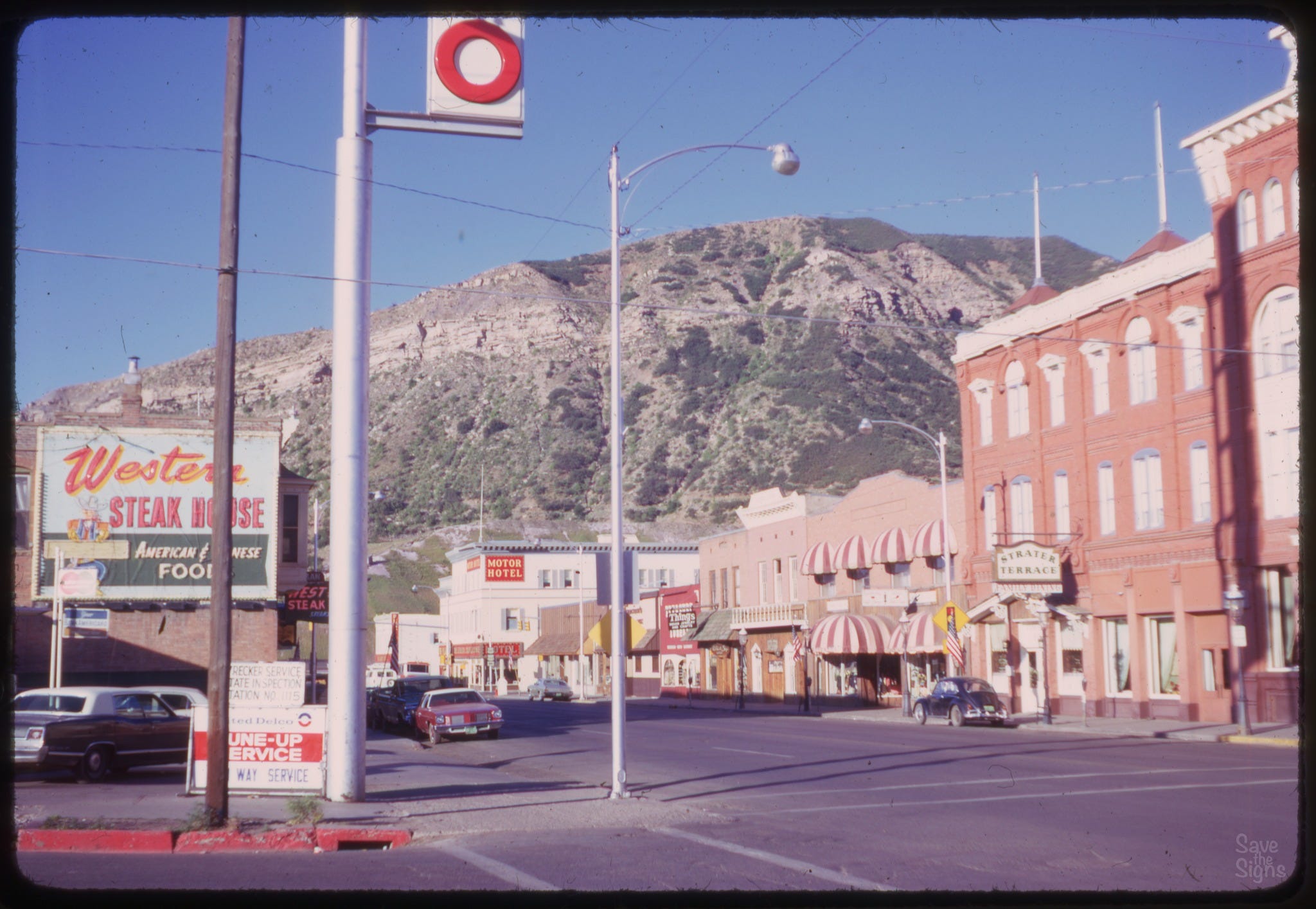
Sure, Aspen and Jackson and Park City and Telluride surpassed that revolting number long ago. But this is the town where I was born, grew up, ran around in the streets, and played in the river. Itās where we messed around among the old workings of the power plant and climbed on the splintery railroad freight cars on the siding behind Kroegers, where we fished and waded in the shadow of the massive uranium tailings pile at the base of Smelter Mountain, and where we had sword battles and BMX rallies up at the Test Trax. It was a tourist town, sure, and kind of a regional hub for doctors and lawyers, but it was also a ski-bum town and a working-class town and an agricultural town and a college town and one-time mining-service town on the edge of the gas patch.
It was a place where my parents ā a freelance writer and a freelance artist without any independent wealth ā could afford to buy a historic home in a lovely neighborhood just across the swinging bridge from downtown. They were not an anomaly. Our neighbors were working folks, too, from a chef to a bank teller to a sanitation worker to a day-care operator to a retired coal miner.
The house needed some work, I suppose, but I didnāt notice. I was too busy running around in the big yard, or climbing the old apricot tree that we outfitted with a treehouse, or sitting on the low-angled roof on the addition in the back that needed to be shoveled during big snowstorms. There was room for a garden and even an old garage that was a pretty nice clubhouse, black widows and all. The big maple in the front yard served as a good base for epic block-wide hide-and-seek contests on long, summer evenings, and the side streets were perfect for soccer games or setting up bike jumps.
I realize Iām romanticizing a bit, but Durango, especially that neighborhood, was a great place to be a kid. Iām sure it still is, and may even be better now: Todayās young Durangotangs donāt have to worry about radon-emanating uranium dust blowing across town, they can ride their bikes all the way through town without ever encountering a car ā stopping by the beautiful library and the rec center in the process, and the river water has less metal loading than it did back then.
But those amenities come with an ever-increasing price tag. In the mid-eighties, after they split up, my parents sold the house for something like $10,000. About a decade later, it sold for $122,500, and the new owner pretty much gutted, rebuilt, and added on to it. According to Realtor.com, the same house would sell today for about $1 million (itās not on the market). There are seven single-family houses in that neighborhood listed for sale on Zillow. They range in price from $850,000 to $3.2 million; a townhome six blocks away from our former house is going for $635,000.
Clearly, these kinds of prices are far out of reach of most wage earners. Even if you could come up with a 10% down payment for the townhome, your monthly payment would still be almost $3,500, which is considered affordable for someone making about $200,000 or more per year. There are just three in-town homes on the market for under $300,000: Two single-wide mobiles with $800-$1,100 monthly lot rents, and a small 80s-era condo. Even these would be a tough haul for someone making the local median wage of about $45,000. Paying rent in Durango isnāt much better, with advertised long-term monthly rates ranging from about $1,100 for a studio, to upwards of $4,000 for a big house.
Obviously, Durangoās not alone. The entire nation is grappling with a housing unaffordability crisis. But Durango and the public lands gateway towns/amenity economies in the West are among the worst, because not only are housing prices rising more dramatically (the statewide Colorado median sales price is about $560,000), but wages are not increasing proportionately.
The reason prices are so high is simply because Durangoās a desirable place to live, not because it is a high-paying job hot spot. And this kind of desire is bottomless, limited only by the amount people are willing to pay to own a piece of the place. And, it seems, a certain percentage of the population has virtually unlimited funds for investing in real estate, whether itās a primary residence, a second home, or a short-term rental income property.
To be clear, this is not a critique of folks buying or selling real estate, or of the people brokering the deals. I donāt blame people for wanting to live in Durango or for paying market rates to do so, nor do I fault anyone for selling out while prices are high. Real estate agents, meanwhile, are just doing one of the few locally based jobs that can support a life in Durango; they donāt set the prices, the market does. And because their income is derived from the community, they are more likely to invest back in that community via philanthropy, volunteering, or running for public office.
People who are attracted to Durangoās unique amenities and spend big bucks to be here are also more likely to support improvements, whether itās pushing for better sidewalks and services and more trails and recreational infrastructure, spending money on better restaurants, or donating to the arts and charity and nonprofits. Maybe theyāll bring in money from outside to start up new businesses, creating jobs while also adding to the pool of amenities, thereby potentially improving all residentsā quality of life.
I donāt think Iām stretching when I say that this phenomenon is exactly what a lot of forward-thinking locals, including my parents, were going for back in the 1970s and 1980s. The extractive industries that had built the town ā and polluted it ā were on their way out. Tourism, alone, couldnāt fill the resulting void. So they planned on banking on quality of life, or the not-yet-named amenities economy, to attract new, cleaner industries and the people to run them.
They didnāt seem to anticipate that the resulting feedback loop rotates in both directions. As the place becomes more desirable, it drives up home prices. Higher prices dampen entrepreneurship and innovation and imperil economic class diversity. The working class is pushed out to the only slightly more affordable surrounding communities, increasing traffic and pollution and making the roads even more unsafe. Businesses have a harder and harder time finding employees. And, eventually, quality of life will begin to suffer, and the Durango that folks bought into for a million bucks wonāt be so desirable anymore.
Durangoās not near the breaking point, yet. There are still plenty of locals, young and old, who have been around since long before the market went berserk, and who are committed to the community. There are a lot of established businesses and, somehow, a handful of new, innovative ones have managed to get going and even thrive. And the place still attracts enough new, full-time residents, even ones who canāt really afford to live there, to keep it dynamic and vibrant.
There are also inklings of efforts to ease the housing crisis. The local school district has raised teachersā starting salary to just above $50,000, which is still way less than they deserve, but itās significantly higher than a decade ago. And it purchased a 35-unit apartment building for workforce housing; Fort Lewis College also owns an apartment building for staff housing. The city has several affordable housing projects in various phases of development, and a number of non-profits and other organizations have their own workforce/affordable housing initiatives in place.
Whether these efforts will be enough to keep Durango whole amid the rapidly escalating prices isnāt clear. I just hope Durangoās kids of the future, regardless of economic class, will be able to derive as much joy from the place as I did a half-century ago.
"Shaping an urban area" in the rural West
PART I The manila envelope arrived in the mail last summer, containing a long-tabloid-sized document on aged, brittle newsprint. The washed out cover photo was black and white, but it was framed by a thick blue square. Sunday, August 15, 1971, it said on the top right hand corner, then:
š Regulatory Capture Chronicles š¦
THE NEWS: The Trump administration moved yesterday to roll back Biden-era oil and gas leasing reforms for public lands, and to do away with the Bureau of Land Managementās oil and gas waste prevention rule. The two-pronged assault continues the administrationās relentless evisceration of regulations aimed at protecting the land, air, water, climate, and American taxpayers from oil and gas drilling. The administration claims the rollback is to clear the way for its āenergy dominanceā agenda, which is code for helping petroleum corporations to rake in even more obscene profits (which are already high thanks to Trumpās war on Iran).
THE CONTEXT: The environmental movement gave Joe Biden a lot of grief for failing to shut down oil and gas drilling on federal land, for permitting big projects like Willow in Alaska, and for handing out quite a few drilling permits.
But throughout his term, the administration was doing important work to reform oil and gas leasing and to try to get a handle on pollution from oil and gas wells on federal lands. These new or revised rules included:
The oil and gas waste prevention rule: required oil and gas operators on federal lands to find and repair leaks in their infrastructure and to phase out flaring and venting of methane ā a.k.a. natural gas. The rules complement the EPAās similar regulations.
Methane is a potent greenhouse gas, having about 86 times the warming potential of carbon dioxide over the near-term. Oil drillers tend to vent or flare it and other associated gases, since it isnāt as profitable as oil. Between 2010 and 2020, oil and gas operations on federal and tribal land vented and flared an average of 44.2 billion cubic feet of methane annually. Thatās as bad for the climate as burning around 9 million tons of coal. And since operators donāt pay royalties on gas they throw away, that cost American taxpayers some $166 million in lost revenue over a decade.
The rules aimed to rein that in by gradually decreasing the maximum amount of methane that can be flared or vented and charging royalties on the gases that are wasted. It was expected to slash greenhouse gas emissions and result in about $50 million annually in added royalty revenue.Revisions to the BLMās oil and gas leasing rules: Included raising the reclamation bonding rate from $10,000 to a minimum of $150,000 per lease, and $500,000 for all of a companyās wells in one state. This acts as an insurance policy to ensure the company pays at least some of the cost of plugging and reclaiming a well once itās done producing, taking some of the burden off taxpayers.
The changes also increased minimum bids, ended non-competitive lease sales, and raised the 12.5% royalty rate to 16.67% to give taxpayers a slightly better return on their oil and gas.
Those are not onerous changes, by any means. They really are incremental ones, that donāt go nearly far enough: A statewide reclamation bond of $500,000 is a mere drop in the bucket for a major oil and gas company, yet it will only fund the cleanup of a handful of wells (whereas a company can have dozens to hundreds of wells in a single state).
Nevertheless, the Trump administration has decided that the rules are ābeing weaponized to penalize energy development,ā which can be translated as: They are marginally reducing petroleum corporationsā obscenely high profits.
And so, the administration is:
Reducing the statewide reclamation bond amount to just $25,000, which might cover one-third of the cost of reclaiming a single well, potentially leaving you and me and other U.S. taxpayers to pick up the millions of dollars remaining on a single companyās cleanup tab.
Bringing back non-competitive leasing.
Shortening public comment periods on proposed leases from 90 days to just 10 days, effectively cutting the public out of the process altogether.
Reducing filing fees, and more.
And gutting the waste-prevention rule by eliminating waste minimization plan requirements and otherwise opening the door to more venting and flaring.
The āBig Beautiful Billā already slashed the royalty rates back to the 100-year-old 12.5% rate.
Oy.
āļø Wacky Weather Watchā”ļø
The May data are in and itās now official: The first eight months of the 2026 water year were the warmest on record for the Southwest and much of the Northern Rockies. This isnāt all that surprising, given that it was also the warmest meteorological autumn, winter, and spring for the same areas.
This explains why the snowpack was so weak, and streamflows are now so dismal, even though precipitation accumulation has been closer to ā but still below ā normal so far this water year. June appears to be on pace to set another record average high temperature for the region, and forecasts are calling for a warmer-than-average July and August, as well. El NiƱo-driven monsoons could cool things off a bit, however, and soothe drought conditions.
That monsoon canāt come too soon. Several large fires are now burning in the Interior West, with the highest concentration in western Utah. Active blazes include:

The 10,000-acre Cottonwood Fire near Beaver, Utah, which just blew up on June 22. By the time you read this it likely will be far larger.
The 3,800-acre Sawmill Fire, just east of the Nevada-Utah line.
The 24,000-acre Iron Fire four miles from Eureka, Utah.
The 20,000-acre Hastings Fire south of the Great Salt Lake.
The 566-acre Bonneville Fire on the foothills in northeast Salt Lake City. This one is scary because of its proximity to neighborhoods, but it was 43% contained as of Tuesday morning and no evacuations were in place.
The Kane Springs and Grapevine fires in eastern Nevada, each at about 15,000 acres.
There are also a number of blazes in Arizona.