

☘️ ANNALS OF ALFALFA 🍀
It seems like only a few years ago that a PR person from the East Coast emailed me to tell me how surprised she was to read in the Land Desk that alfalfa and other livestock forage crops guzzled up a lot of the West’s water. “I didn’t even know they still grew alfalfa,” she wrote, incredulously. Actually, it was only a few years ago, but my how things have changed in the realm of alfalfa discourse. I’m guessing she and just about everyone else who pays attention has figured that one out by now, as it’s become vogue in certain circles to assert that the solution to the West’s water crisis is simply to stop growing alfalfa and other “low-value” agricultural crops and use the water for cities and data centers, instead. At the very least, they argue, we shouldn’t be exporting alfalfa overseas.
I’m not going to jump into that hornet’s nest again, at least not today. Instead, I dug up a bunch of data and used them to build a handful of graphs that will, hopefully, illuminate the situation a bit and give all parties — alfalfaphobes and alfalfaphiles alike — something to chew on. Call it statistical cud that I’ve gnawed on, masticated, partially digested, and now am handing over to you to derive some nutrients from. (Eww. That’s gross. Sorry.)
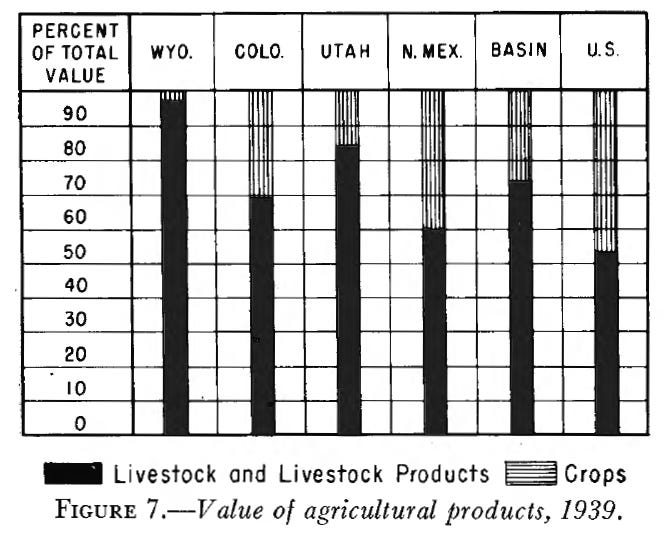
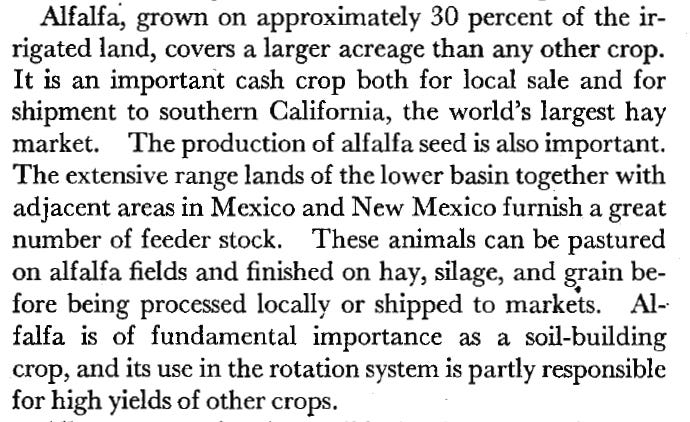
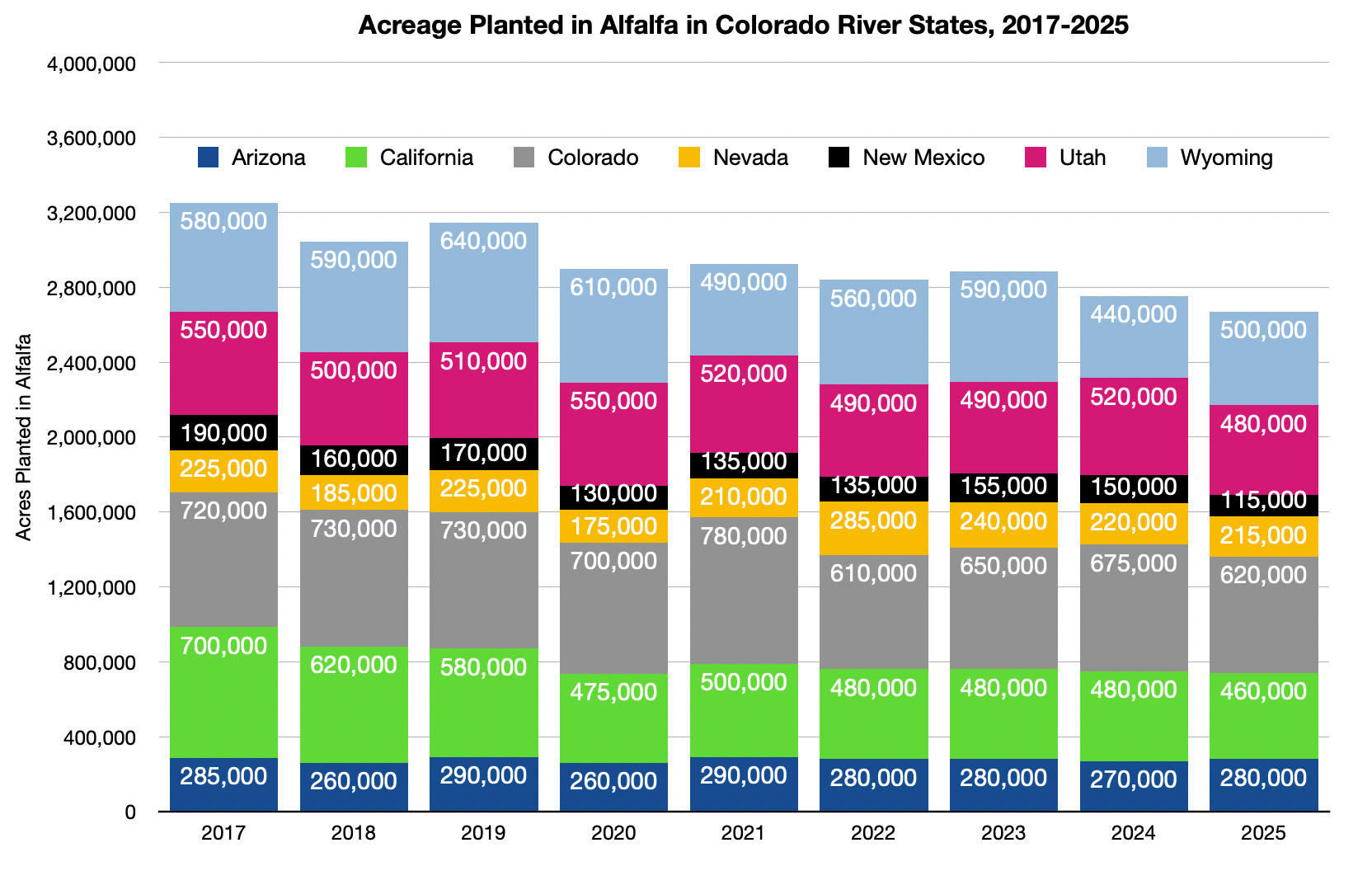
By now most Land Desk readers know that irrigated alfalfa and hay crops guzzle up more water in both the Upper and Lower Colorado River basins than cities, industry, and golf courses combined. This is partially because alfalfa is a fairly thirsty crop, though not as water-intensive as some. Mostly, however, it’s because farmers across the watershed and the West grow a lot of hay, and have been doing so for a long time. They grow it to meet the demand from the region’s many, many head of cattle. And they grow it because it’s drought tolerant, does not need to be replanted every year, is a nitrogen fixer, has relatively low input costs, can be harvested by machine, and stores well as long as it’s kept fairly dry.
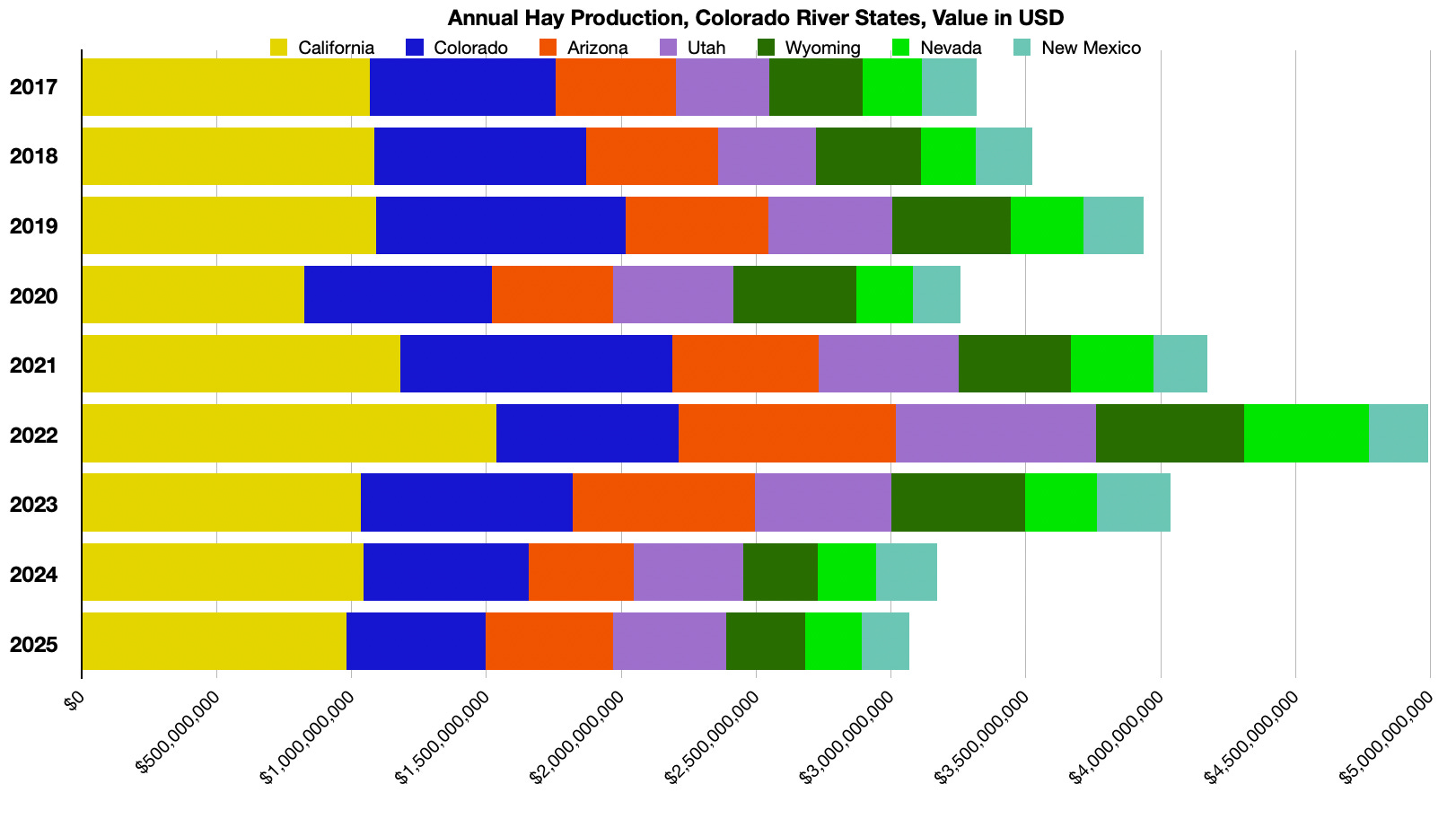
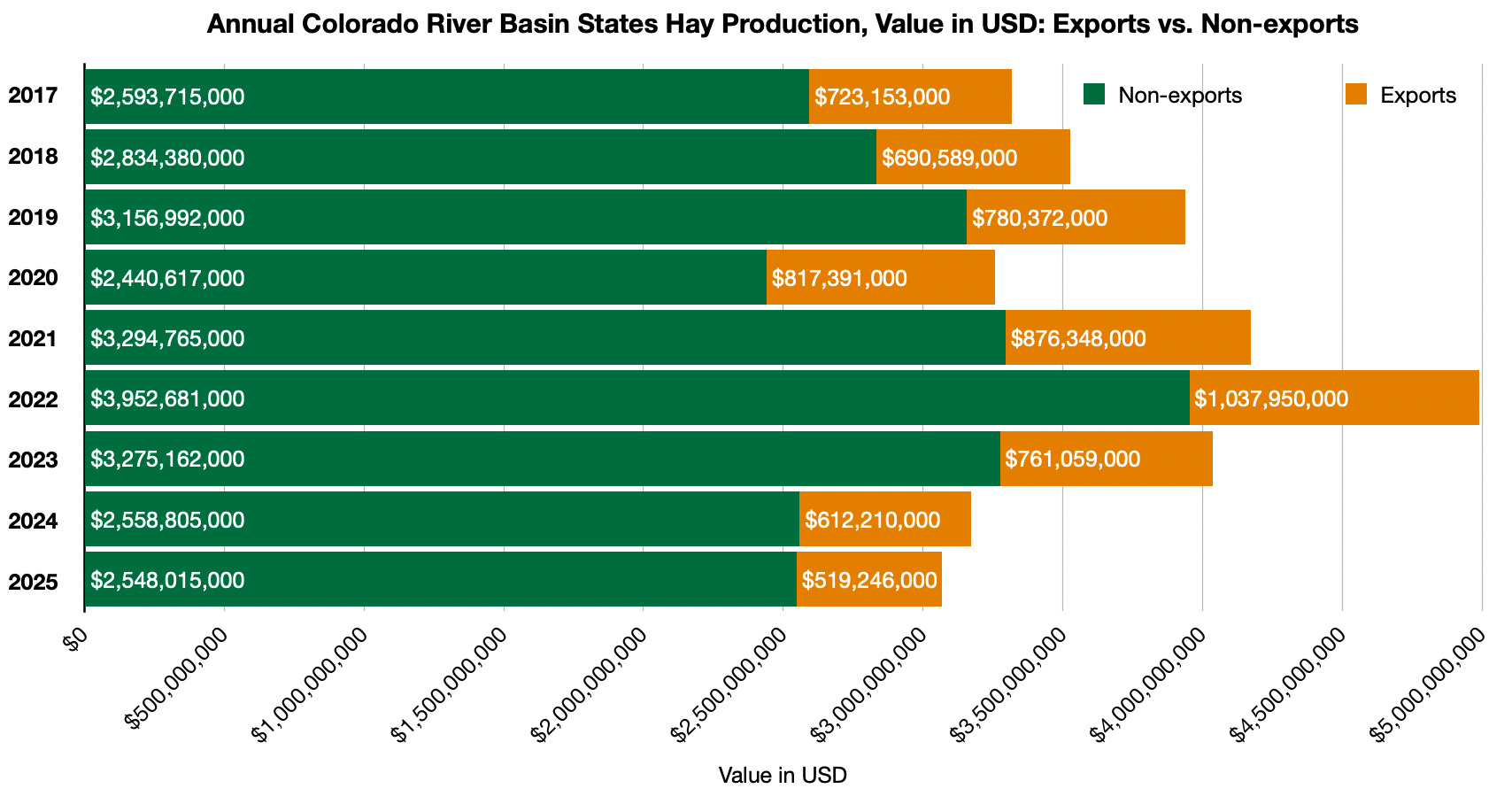
While hay and alfalfa are often maligned as “low-value” crops, farmers also grow it to make money. As you can see from the chart below, farmers in Colorado River Basin states harvested nearly $5 billion worth of hay in 2022. That’s on a par with the Colorado ski industry’s annual economic output.
Over the last two decades or so, Western state farmers have sold an increasing amount of hay, especially alfalfa, to overseas buyers. This is largely due to the growing global taste and demand for cow-milk products. Alfalfa is favored by dairy operations because its high protein content increases milk yield. So if you’re trying to reduce alfalfa demand by quitting beef, you’re barking up the wrong tree; you’ll have to ditch the ice cream and cheese, as well (or switch to goat or sheep milk products).
While hay exports are a billion-dollar-per-year industry, they are dropping off for a variety of reasons, from tariffs and trade wars to China’s shrinking dairy herds and gradually decreasing production here at home.
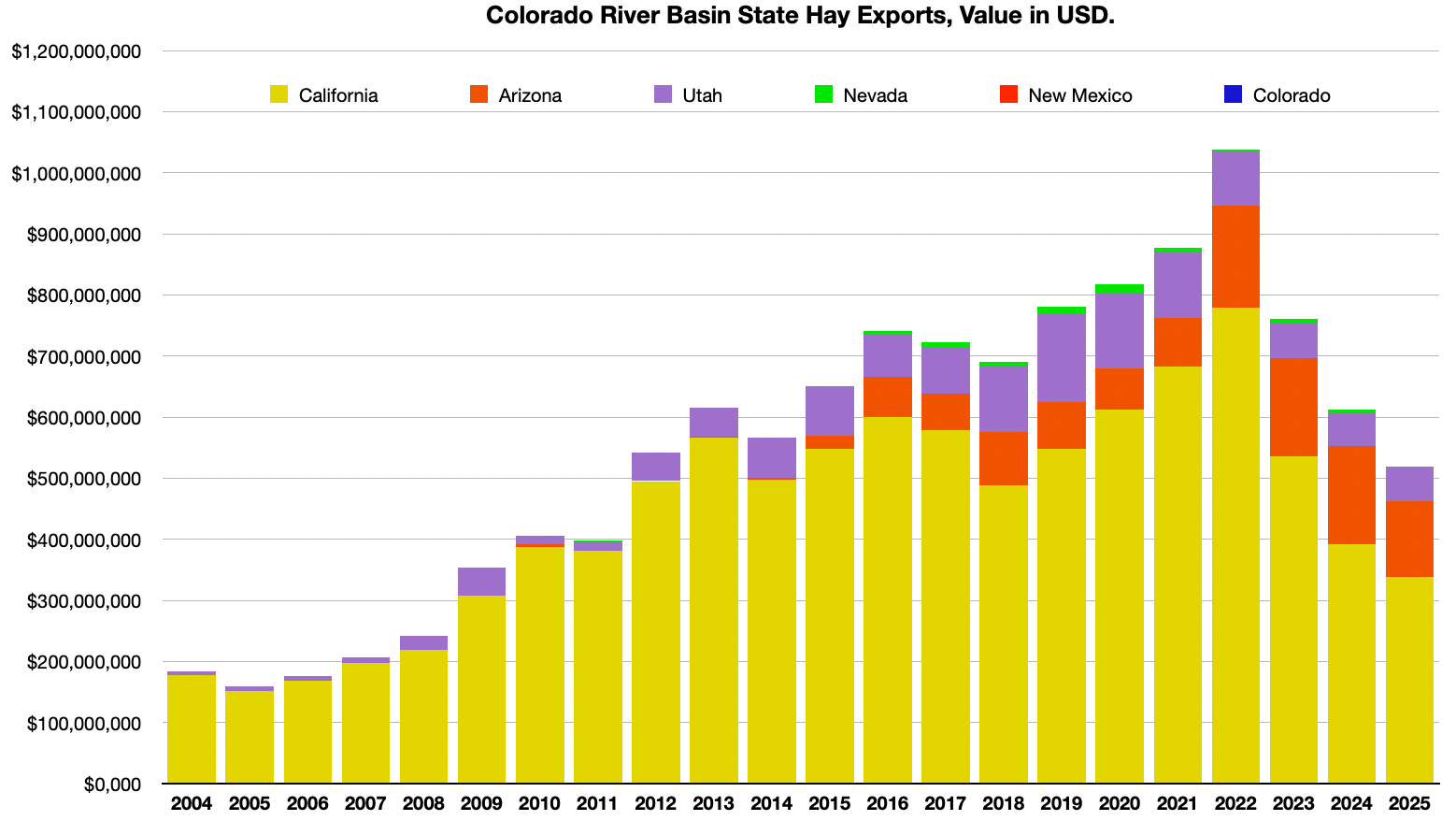
While the Western hay-export industry brought in over $1 billion in 2022, it’s not quite accurate to say that most of the region’s hay production is for export. Still, more than 20% is quite a lot of Western water to be sending overseas on giant container ships.
The largest hay exporter in the West is California, with Arizona and Utah trading second and third places. Other Colorado River Basin states export insignificant amounts of hay, according to the USDA’s Foreign Agricultural Service.
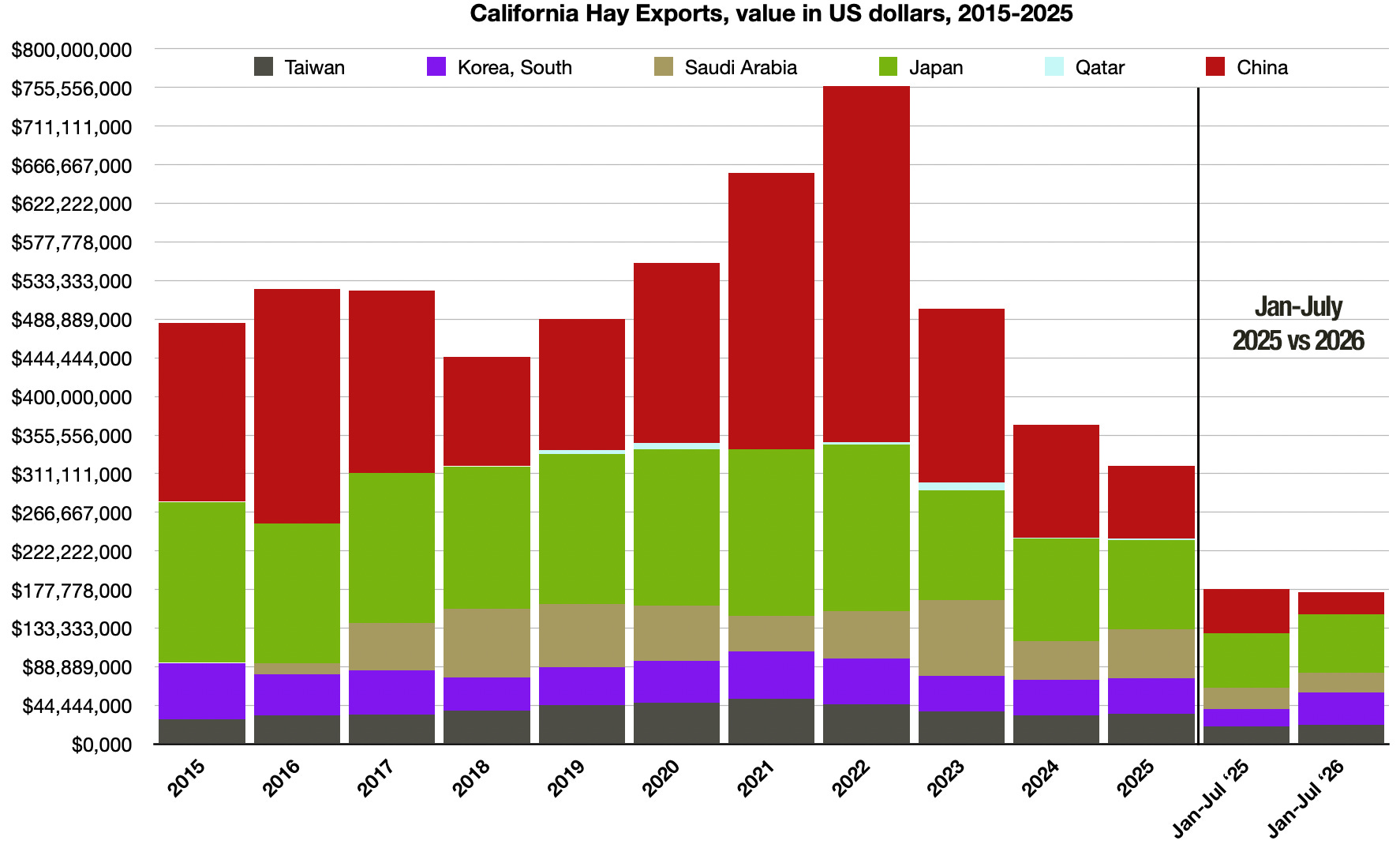
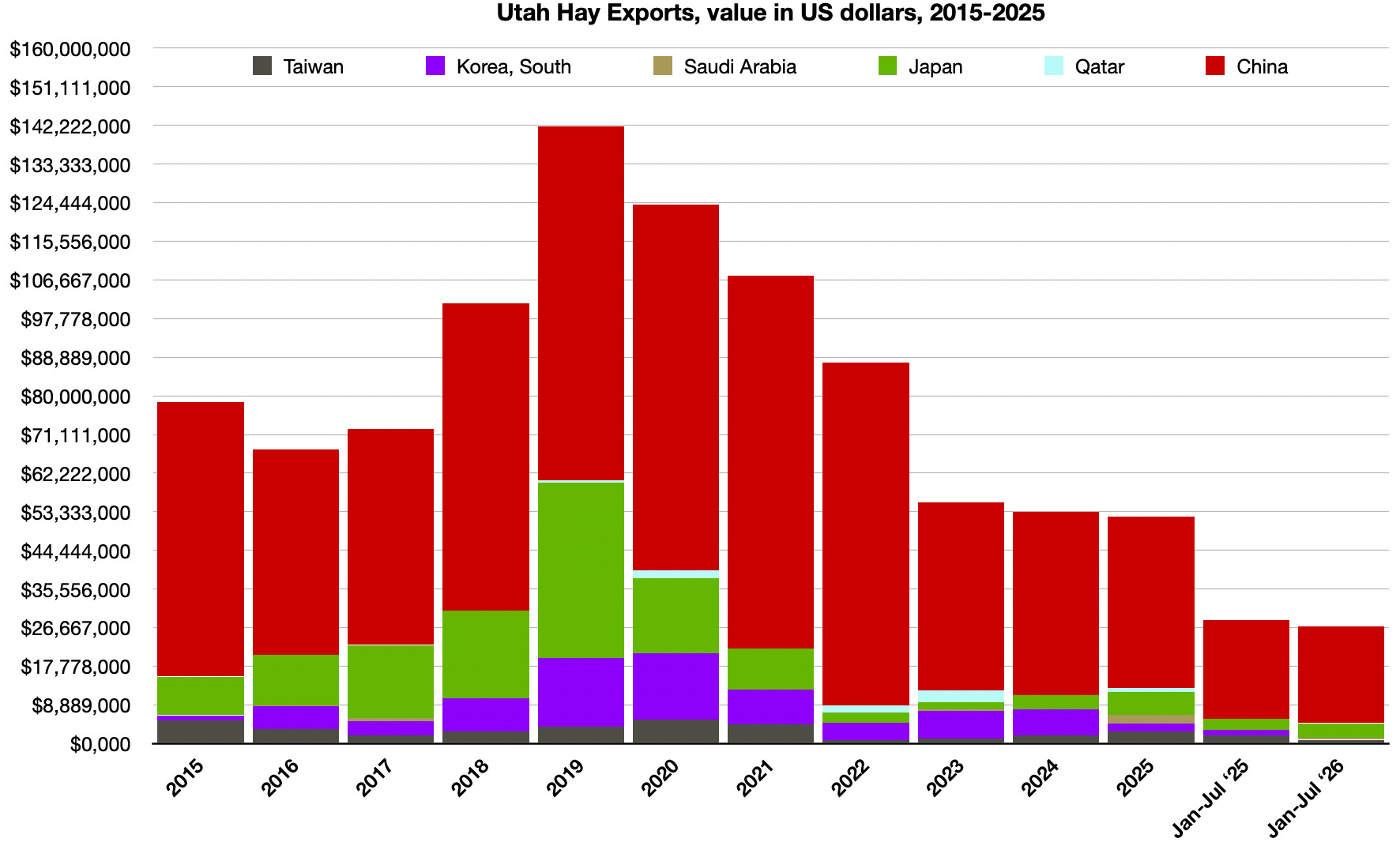
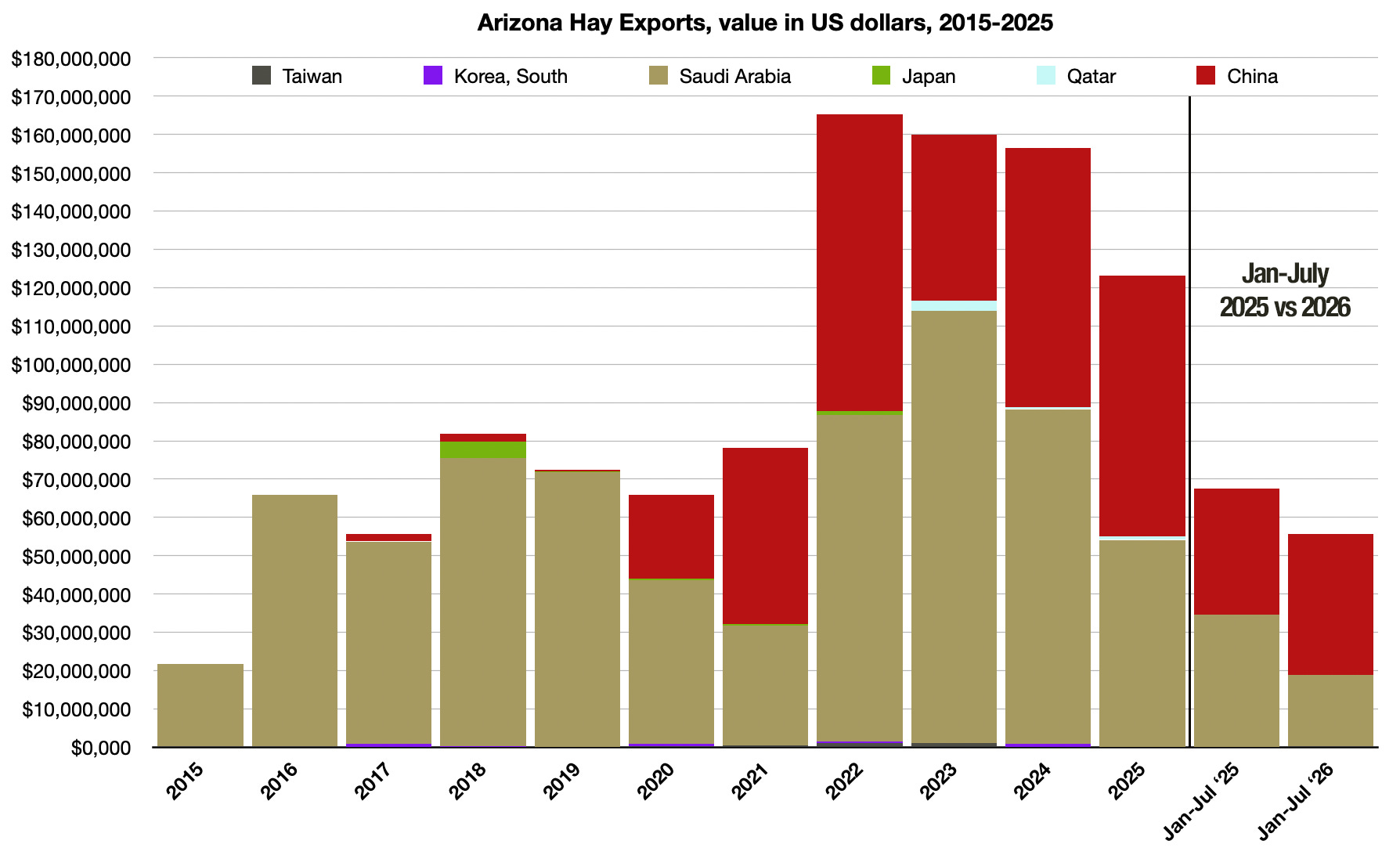
So what’s the takeaway from all of this? Well, like I said, I’m just providing the fodder for you to ruminate on, so to speak.
But it does definitively show that alfalfa and hay aren’t just some kind of side gig for Western farmers. They are important crops. And trying to convince farmers to give them up — along with the nearly $5 billion per year they can generate — is going to be tough, even if it is necessary.
⛏️ MINING MONITOR ⛏️
In last week’s dispatch on more mining claims staked in the shrunken Bears Ears National Monument I mentioned a few dozen that appeared to have been located by Land Survey Advisors, including some in the former monument. I was able to finally get past the glitches in the San Juan County database and get confirmation that all 36 claims were, in fact, staked within Bears Ears’ pre-shrinkage boundaries. That brings the total number of new claims in Bears Ears to 72.
I’ll map all of the claims for a future dispatch and will continue to keep my eyes open for more new ones.
📖 READING (&LISTENING) ROOM 📰
The Magic Southwest podcast has an insightful episode about the lost working-class neighborhoods that once lined the Animas River in Durango. Well, I shouldn’t say they’re “lost.” They were mostly destroyed by the city to make way for roads, sewage treatment plants, parks, or just as a form of urban renewal, if you will. Give it a listen below:
Heads up Four Corners area folks: I’ll be giving a presentation on the Dolores River as part of a Dolores River Boating Advocates’ event on Friday, Nov. 6, from 6 p.m. to 8 p.m. at the Powerhouse in Durango. Following a short film about Snaggletooth Rapid I’ll speak about my personal relationship with the Dolores River, its history, the way it is a sort of microcosm of the Colorado River as a whole, and about its potential futures. I’ll also throw in a funny little tale about the time I saw Ed Abbey go through Snaggletooth. Tickets are $10 — which will help DRBA defray costs — and seating is limited. There will also be a cash bar. Reserve your spot now.
⛈️ WACKY WEATHER WATCH⚡️
Things are getting crazy down in southern New Mexico, especially near Hatch, where the Rio Grande has jumped its banks and inundated fields, homes, and even I-25. Check out the video below for more. And stay tuned next week when I have a recap of the 2026 water year, which may have been the wackiest on record.
There is much discussion about international exports. It is also important to consider the "virtual water" exports when alfalfa et.al is sent outside of the watershed in which it is grown.
For instance, Utah alfalfa grown in the Great Salt Lake watershed then sent to Idaho (Snake River drainage) or the Central Valley of California, then the GSL is diminished. Same for Upper state feed grown in the Colorado River drainage and then sent outside of it.