Climate, conflagrations, and calamities
Plus: A little meditation on the water-energy-ag nexus
đ„” Aridification Watch đ«

Three federal firefighters were killed and two seriously injured when the Knowles and Gore fires overtook them southwest of Grand Junction near the Utah-Colorado line. The fires joined with others to become the Snyder Fire, which had grown to 30,000 acres as of Monday.
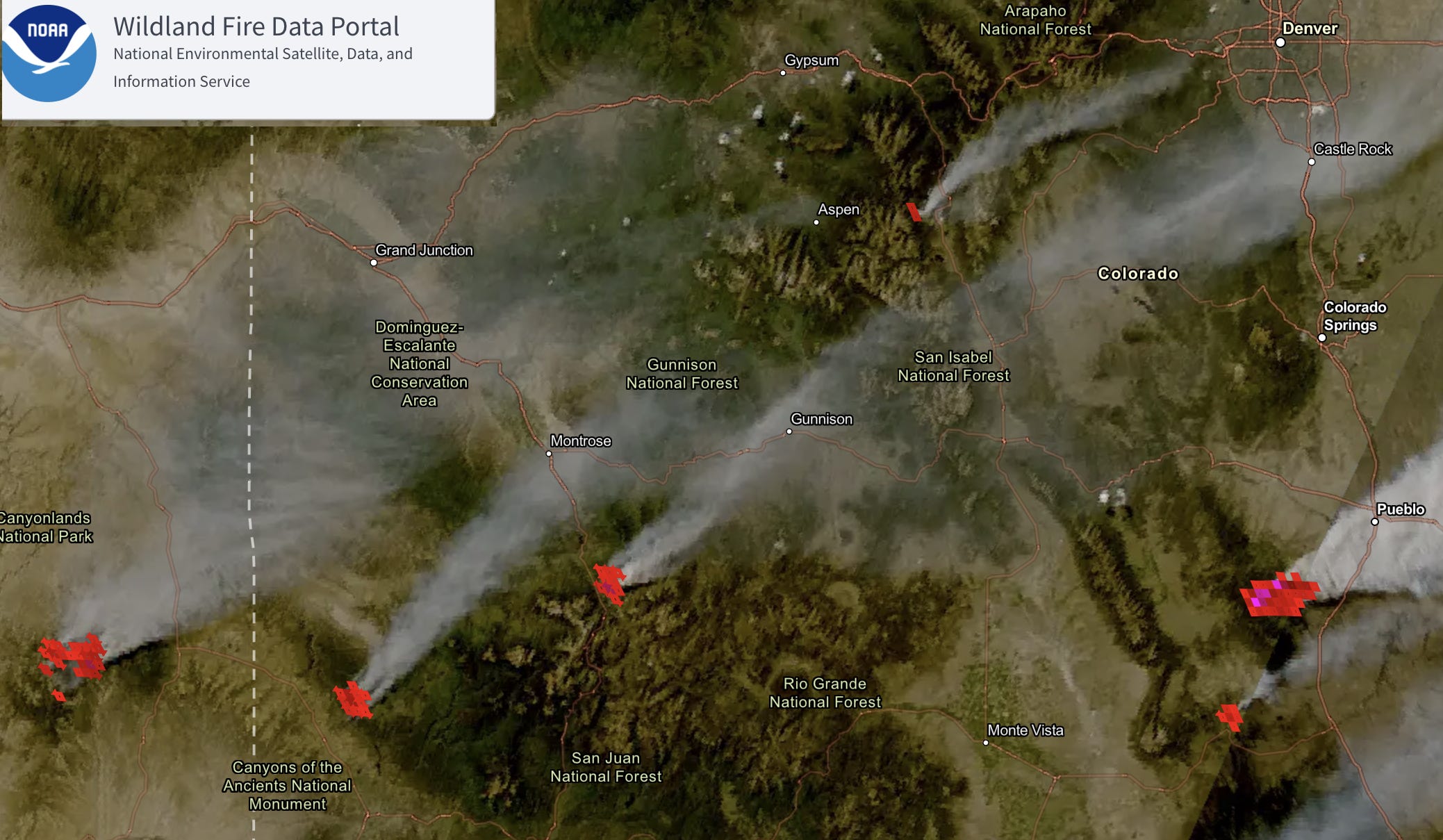
The fatalities were the tragic result of what has become a downright terrifying wildfire situation in the Interior West, with more than a dozen 1,000-acre-plus blazes tearing through forests in Utah, Colorado, Arizona, and New Mexico during the last days of June. Without substantial and soaking rainfall soon, itâs likely to get even worse.
The fury of these conflagrations is evident in their rapid rate of growth.
The Babylon Fire within Bears Ears National Monument, for example, was first reported on the afternoon of June 26 on Elk Ridge north of the Bears Ears Buttes. By the evening of June 29 it was mapped at over 48,000 acres and was spreading northward. The National Park Service closed the Needles District of Canyonlands National Park as a result and the Manti-La Sal National Forest shut down the entire Elk Ridge area.
Further east, in Colorado, the Ferris Fire was first reported late on June 27 just north of the Dolores River along the Dolores and Montezuma county line. It quickly tore through piñon and juniper, then scrub oak and ponderosa forest toward the Disappointment Valley, and had reached about 20,600 acres as of Monday night.
The Gold Mountain Fire, apparently ignited when a tree fell on a powerline, was first reported Saturday afternoon near the Bachelor Syracuse Mine Tour north of Ouray. By Monday night it was over 8,300 acres and had forced evacuations and the closure of Highway 550.
On the eastern side of the Divide the Aspen Acres Fire grew to 23,000 acres in less than 24 hours, driven through a parched landscape by 100-mile-per-hour winds, and was threatening the towns of Beulah and Rye. The Willow Fire in Lake County is at a relatively small 1,900 acres, but is perilously close to Leadville.
Many factors contribute to the intensity, size, and frequency of the fires, from decades of fire suppression, to human encroachment in forests, to flammable noxious weed infestations. But the biggest driver of this regional calamity is clearly the hot, dry weather, which has been exacerbated by human-caused climate change.
Winter was an utter dud as far as the snowpack was concerned, in large part because of the unusually high temperatures. The hot, dry weather continued into the spring â with July-like temps at the end of March â sucking moisture from the soil and vegetation, and pushing huge swaths of the Interior West into severe to extreme drought conditions. Throw in gusty wind and a June heat wave â nearly 1,000 daily high temperature records were tied or broken in the West this month â and youâve got a recipe for disaster.
There have been hot and dry years in the past, along with catastrophic wildfires: In 1879 the Lime Creek Burn charred 26,000 high-country acres south of Silverton, burning through what later became known as the âasbestos forestâ due to its apparent blaze-resistance.
Back then, however, 1879-like dry and warm years were anomalous, as were mega fires. The Lime Creek Burn stood as the stateâs largest blaze until 2002; now itâs not even in the top 20 for acreage burned. This year, while relatively extreme, is no outlier. The Westâs temperatures have been trending upward since reliable record-keeping began some 130 years ago, and the Southwest is suffering through year 26 of an ongoing megadrought, the most severe in at least 1,200 years.
Nor is the phenomenon isolated to the arid West. A heat dome is on its way to the Midwest and East Coast. And a record-breaking heat wave has gripped much of western Europe. France has recorded over 1,000 heat-related fatalities in recent days, and was forced to shut down nuclear reactors because the rivers from which they pull their cooling waters are too warm (and the discharged water is even warmer, threatening river ecosystems).
So itâs utterly surreal to, on the one hand, breathe in the blanket of smoke thatâs settling into the Westâs valleys, to observe new flame icons popping up on the Watch Duty map, and see satellite imagery smoke plumes stretch across the region, and on the other to hear U.S. Energy Secretary Chris Wright downplay the deaths in Europe. Unlike his boss, President Trump, Wright acknowledges that human-related greenhouse gas emissions are heating the planet, but he says itâs not a crisis and that its effects are âmanageable.â
Wrightâs disrespect for the victims, including the injured and killed firefighters in Colorado, is dumbfounding. And his willful ignorance of the science and reality on the ground in order to perpetuate Trumpâs drill-baby-drill agenda and bolster oil company profits is simply sickening. The same goes for Trumpâs Interior Secretary Doug Burgum. His department now oversees the nationâs wildland firefighting force. And yet he is also leading the charge to deregulate the oil and gas industry and allow them to spew more planet-warming methane in order to spur more oil and gas drilling on public lands â ultimately leading to more fossil fuel burning, carbon emissions, warmer global temperatures, and more severe fires.
It reminds me a little bit of the story of the California firefighter who admitted setting dozens of fires as a job-creation scheme, allowing him and his colleagues to earn overtime pay. The difference here is that Burgum is not only playing his dangerous game with the lives of the firefighters under his command, but also with the planet as a whole.
One of the many things Iâm interested in is the water-energy nexus: The way a coal plant requires vast amounts of water to make steam to turn turbines to generate electricity to run the pumps on the Central Arizona Project canals, for example. Now, with dry times in full-swing and electricity prices on the rise almost everywhere, the spotlight is on the water-energy-agriculture/food nexus.
In the arid West, most agriculture is of the irrigated kind. In many cases, this means relying on pumps to move the water across the land, to bring groundwater up from a well, and to pressurize sprinkler systems. And pumps require energy, in the form of electricity from the grid, from distributed solar or wind systems, or from diesel or gasoline motors or generators.
During a dry year like this one, farmers need to start irrigating earlier in the season, meaning their pumps run more often and consume more energy, which costs more money. Thatâs the situation Wyoming farmers and ranchers Tim Teichert and Jason Thornock are up against this year, according to a June 11 WyoFile report by Dustin Bleizeffer. These guys fork out up to $150,000 annually for electricity, the drought is pushing that bill higher, and now Rocky Mountain Power â a subsidiary of Berkshire Hathaway â is looking for a 37.7% rate increase on irrigators. Ouch.
Hereâs where the nexus comes in: If the rate hike goes through, it will make it prohibitively expensive for other farmers to switch from flood irrigation to more efficient sprinkler systems. While this would seem to be the perfect opportunity for farmers to go solar, thatâs not so easy in Wyoming, either. State law caps the size of solar arrays eligible for net metering, or the system by which the utility credits a customer for exporting excess power into the grid, at 25 kilowatts, which is far smaller than most farmers would need to power their pumps.
Down in Arizona the stakes are even higher, according to a study by Andrew Berry and Mikhail V. Chester published in 2017 in Environmental Research Letters. They highlighted the fact that in Arizona, most irrigation is powered by electricity.
The Central Arizona Projectâs 15 pumping stations guzzle 2.8 gigawatt-hours of electricity annually to move water more than 300 miles from the Colorado River to the middle of the state, with a total vertical climb of about 3,000 feet. Then the farmers have to pump it from the canal to their fields and rely on pumps to power sprinkler systems. Arizona farmers that donât rely on the canals use groundwater, which also requires pumping.
When temperatures go up or precipitation decreases, the farmers need more water, which means they also use more energy, putting more strain on the electrical grid. And even without all of those irrigation pumps churning away, heat stresses the grid in other ways, primarily because power demand surges in the afternoons, when everyone cranks up their air conditioners. Also, hot power lines are less efficient, wildfires can take out transmission lines and other electricity infrastructure, smoke diminishes solar output, and low streamflows can deplete hydropower generation.
All of this has the potential to take down the power grid, which would cause the irrigation and water-movement systems to shut down, which would affect crops and food supplies.
Over the last century and a half, especially in the years following World War II, the federal and state governments, utilities, and private interests have created huge networks for generating and moving power and for diverting, storing, and delivering water. Research and stories like the ones mentioned here just go to show how inextricably intertwined the two systems have become, how important they both are to Western communities, and how fragile they can be. Climate change â along with increasing demand â is raising the risk of a catastrophic, cascading failure in these systems, which would be calamitous for the entire region.


And the critics said the episode of spontaneous combustion that Dickens so vividly describes in "Bleak House" was merely literary exaggeration, an exercise in poetic license that would never occur in real life! I tell you, just reading about Wright & Burgum & all those other greedy idiots is enough to set ME on fire, and the last thing western Colorado needs is a reenactment of the fate of the fictional Mr. Krook. Is it a bad sign when you're grinding your teeth so hard that sparks are leaping out onto your keyboard & scorching your computer screen? Grrrrrr.
hmmm. how bout another shot of tequilla?